Friday, December 14, 2012

Here We Come A-caroling: My Christmas Playlist

Around this time last year I posted a list of Christmas songs I don't hate. Here they are again, with new entries in bold type. Go get em.

***

These Are A Few of My Favorite Singles

  • "O Holy Night," by Tracy Chapman. A song that's far too often overblown (see this for an example) is made especially poignant and pensive by a reliable folkie.
  • "We're Following the Wrong Star," by Billy Bragg and Ben Sollee. I can never seem to get enough of Billy Bragg, and the fact that he even has a Christmas song fills me with Christmas cheer.
  • "Gabriel's Message," by Sting. Sting recorded this song for the Very Special Christmas project years ago; the version on his more recent holiday album isn't as good, but it's still good.
  • "St. Stephen's Day Murders," by Elvis Costello with the Chieftains. Leave it to Elvis to sing about murder for a holiday album.
  • "Angels We Have Heard on High," by Crystal Lewis. This contemporary Christian musician turned jazzy for her Christmas album, and this one is the best tracks among a number of greats. "Slow down, fellas," she jokes during the band's jam. "What's your hurry?"
  • "God's Own Son," by Nicole C. Mullen. I want to write a Christmas play just so I can choreograph this song. Funky tuba--what else needs to be said?
  • "I Saw Three Ships," by Bruce Cockburn. I've actually only ever heard this once, and I've never found it since. But it's awesome.
  • "Go Tell It on the Mountain," by Margaret Becker and Jennifer Knapp. I've always liked these two singers, and here they sound defiant and strong, singing a song that often sounds campy and quaint.
  • "I Don't Need No Santa Clause," by Fiction Family. Another great pairing--Jon Foreman of Switchfoot and Sean Watkins of Nickel Creek--this is snappy and jangly.
  • "Getting Ready for Christmas Day," by Paul Simon. This isn't on a Christmas album, but it's incredibly catchy. Samples from a gospel preacher just add to the fun.
These Are a Few of My Favorite Albums

  • Shawn Colvin, Holiday Songs and Lullabies. I'd listen to this all year round if it didn't make me self-conscious. Best tracks are "Love Came Down at Christmas" and "Little Road to Bethlehem."
  • Jars of Clay, Christmas Songs. I like Jars a lot; we've seen them in concert several times. They interpret songs in really interesting ways. Best tracks are "Winter Skin," "Wonderful Christmastime" and "I Heard the Bells on Christmas Day."
  • The Brian Setzer Orchestra, Boogie Woogie Christmas. Seriously, who's cooler than Brian Setzer? Best tracks are "Blue Christmas," "Sleigh Ride," "The Nutcracker Suite" and "The Amens."
  • The Blind Boys of Alabama, Go Tell It on the Mountain. The singing group collaborates with an eclectic bunch of singers. Best tracks are "Last Month of the Year," ""Born in Bethlehem" (with Mavis Staples) and "I Pray on Christmas" (with Solomon Burke).
  • Oh Starling! Joy. This is probably hard to find, since it was produced as a fundraiser a couple of years ago for Scum of the Earth Church in Denver. But it's cool. Look for "God Rest Ye Merry Gentlemen."
  • Bing Crosby, The Voice of Christmas. C'mon. It's Bing. "Mele Kalikimaka" is wildly entertaining, and "Adeste Fideles" is old-school brilliant.
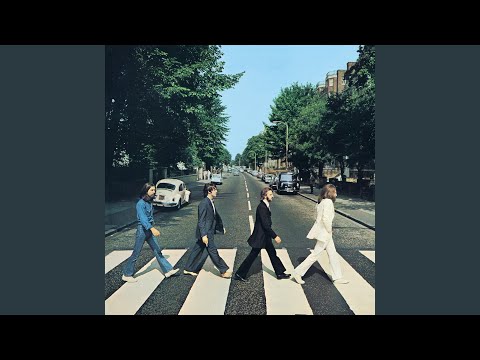
  • The Fab Four, A Fab Four Christmas. Christmas songs arranged to sound like Beatles songs. "Away in a Manger" sounds just like "You've Got to Hide Your Love Away." This will probably eventually get old, but it hasn't yet.
  • Sufjan Stevens, Songs for Christmas. Every year for five years, Sufjan and friends put out an EP of Christmas-themed music. Then they boxed it. I lost volume 2 somewhere along the way, which is bitterly disappointing, since it includes "Once in Royal David's City." But "We're Goin' to the Country" and "Lo! How a Rose E'er Blooming" are great, as is everything else.
  • She & Him, A Very She & Him Christmas. Zooey Deschanel and M. Ward run Christmas hits through their ethereal 50s pop-chanteuse filter for some great tracks. Best singles are "Little St. Nick." and their gender-bending "Baby It's Cold Outside."
That's what I've got. What have you got?

Wednesday, December 12, 2012

Come Thou Unexpected Jesus: Intro to a Parable

Once upon a time there was a knock at my door.

I didn't typically get a lot of knocks. I live on the top floor of my building, and (at that time, at least) most of the other apartments on my floor seemed empty. I kept my door locked anyway, just in case.

You can imagine my surprise, then, when I heard the knock.

Now imagine my surprise when I found myself answering it.

I wasn't particularly social, to be honest. I avoided others when I could. I tended to think of people generally as . . . two-dimensional, more like objects than people--annoying, or dangerous, or beneath me, or (I can admit it now) better than me.

See what I mean? Not exactly the "answer the door" type.

But this time, for whatever reason, I answered it. And there he was, standing at my door. Looking pretty wild, too, and not in a particularly attractive, Johnny Depp-y kind of way. His hair--messy, but in a way that suggested fresh air, not neglect. His skin--tight, wrinkled around the eyes, not clean exactly but not unclean either. His clothes--simple and functional, but not quite in style, like he never stopped walking.

Of course, I recognized him immediately. I guess I should have seen him coming.

He locked at me and smiled. I smiled and looked away.

"He you," he said. "Can I come in?"

I paused. Just because I knew who he was didn't necessarily mean that I could predict what would happen next. Especially when I realized I didn't actually know him well.

And yet . . .

There was just something about him standing there. The knock on the door had morphed somehow from an irritation, to an invasion, to a relief. Now that I had a guest, I suddenly felt less secure in my apartment by myself, and more isolated, alone.

"Sure," I found myself saying as I stepped aside to let him enter.

I still can't say why I did it. What will the neighbors think? crossed my mind, until I remembered that I didn't really have neighbors. Still, it is mildly scandalous for a single woman to let such an odd-looking man into her home. Maybe that's why I let him in.

He came inside. I took his coat and asked if he would remove his shoes, which he did immediately.

"Nice to see you, Jesus," I said.

***

Contact me for a special holiday discount on The Parable of the Unexpected Guest.

Monday, December 10, 2012

Mayan Apoca-Mix

On December 21, the world will end--not with a bang, but with the whimpering wind-down of an ancient Mayan calendar. For the Mayans, there was no December 22. There may be for us--only time will tell--but just in case, here are some songs I'll be listening to on the last day of the world. (In alphabetical order, with the exception of R.E.M.)

"It's the End of the World as We Know It (and I Feel Fine)," by R.E.M. An obvious choice. I performed this once, and my audience was wildly impressed with me.

"The Afterlife," by Paul Simon. This is on his most recent album. Pretty dang catchy.

"Airline to Heaven," by Wilco (with Billy Bragg). I play this track off of Mermaid Avenue, Vol. 2 as I drive away from every funeral.

"All That You Have Is Your Soul," by Tracy Chapman. Possibly my favorite of her songs--possibly the last thing I ever want to hear.

"All the Trees of the Field Will Clap Their Hands," by Sufjan Stevens. Winsome and melancholy--not a bad way to put a world to bed.

"Bad," by U2. Why not, really?

"Break It Down Again," by Tears For Fears. "Fast off to heaven, just like Moses on a motorbike."

"Bring On the Night," by the Police. "Time to kiss yesterday goodbye."

"Consider Me Gone," by Sting. A little jazz won't prevent an apocalypse, but it'll make it a little more snappy.

"Could Be a Lot Worse," by the Vigilantes of Love. All things considered, it probably could be.

"Dance Me to the End of Love," by Leonard Cohen. Or you could just listen to only Leonard Cohen.

"Dirt to Mud," by Paul Westerberg. This song ends mid-thought, which is probably how everything ends, come to think of it.

"Dog Days Are Over," by Florence + the Machine. I like it because it's accurate.

"Don't Dream It's Over," by Crowded House. I might pick the live one for this, because if it's over, it'd be nice if we all went out singing together.

"...Dust," by Elvis Costello. Nihilistic, atheistic. Given the circumstance, appropriatistic.

"The End," by the Beatles. Everyone wants the last word, but the Beatles might actually get it with this song.

"Final Hour," by Lauryn Hill. "Keep your eyes on the final hour." Not bad advice, actually.

"Glad Tidings," by Van Morrison. If you want a happy ending for the end of the world, this will make you smile as you fade away.

"Gone," by Ben Folds. If the end of the world were a break-up, this would make for a good break-up song.

"In My Life," by the Beatles. If the world is ending, everyone should look back at least once.

"Last One Standing," by Neil Finn. "Show what you're made of; surprise us both."

"Let It Be," by the Beatles. In the end, this one will beat out "Hey Jude" as the closer.

"Love This Life," by Crowded House. "Don't wait till the next one comes."

"The Luckiest," by Ben Folds. Hold someone close and tell them you're glad they existed.

"My Year in Review," by Bill Mallonee. Pensive, which I expect to be at the end of the end.

"O Come O Come Emmanuel," by the Civil Wars. It is Advent, after all.

"Out of Time," by Sam Phillips. A little dated, but hey, aren't we all?

"Redemption Song," by Bob Marley and the Wailers. Won't you sing with me?

"Sigh No More," by Mumford & Sons. Not a bad way of reframing an apocalypse.

"Sing Their Souls Back Home," by Billy Bragg. I want Billy Bragg in my last mix ever. You can't stop me.

"That I Would Be Good," by Alanis Morissette. One last prayer before we hit the road.

"True Love Will Find You in the End," by Mates of State. So say we all.

"Wanderlust," by Paul McCartney. "O, where did I go wrong, my love?"

"Wild Mountain Thyme," by Lucy Wainwright Roche. "Will you go, laddie? Go, and we'll all go together."

"I'm Gonna DJ (at the End of the World)," by R.E.M. These guys know how to jam when everything comes crashing down. This might be the first song of the rest of my life.

OK, that's my list. What's yours?

Friday, December 07, 2012

Be on the Lookout--There's a New Book Out

One of the great advantages of my job as an editor in Christian publishing is that I get to walk right up to significant authors and, because they may need me at some future point, they indulge me in conversation. Margaret Feinberg is one such significant and gracious author, and our preliminary conversation soon evolved into friendship. I've sought her advice over the years, solicited endorsements from her, but also played with her dog, Hershey, and ate fondue with her and her husband, Leif. Margaret is one of the good ones.

She's also one of the good writers. I've enjoyed her books, recommending many to friends and endorsing at least one of them. And now she has a new book coming, with an accompanying seven-session DVD Bible study.

Wonderstruck: Awaken to the Nearness of God releases Christmas Day. I haven't read it yet, but Margaret has shared some key cuts from it, some of which are below. As is typical of Margaret's books, Wonderstruck is warm and personal, an invitation for you to "toss back the covers, climb out of bed, and drink in the fullness of life." She tells me that readers of Wonderstruck have been observed to suffer the following side-effects:

-An inability to stop smiling
-An uncontainable desire to pray
-A loss of interest in judging others
-A quiet, unshakable confidence in God
-A renewed ability to see the wonders of God all around

Those are all good things, things that wouldn't kill me, for one--only make me stronger.

Anyway, here are a couple of bits from the book, which I'm sure will read like a breeze. And if you're in a small group, I suspect you'll like the video guide as well; Margaret is infinitely charming and enthusiastic, and that comes across both live and on screen. So if you're looking for a new read in the new year, or some excuse to never stop smiling, tack this one on to your Christmas wish list.

“The wondrous calling of God on our lives is to become conduits of a holy replenishment. As children of God, we’re meant to live on high alert, watching for the possibility of divine restoration in the lives of those around us. We’re called to look where no signs of life are found, where others dismiss its possibility. And we’re invited to speak life—words of encouragement, hope, and peace that embody the goodness of God—whenever possible.”

"Breathing life begins with the simplest of actions. See someone. Really see. As you reach out and interact, offer your full attention to whoever is in front of you. Listen to someone. Really listen. Give someone the gift of your presence—your fully present, undivided attention. Pray for someone. Really pray. Though it may feel awkward in the moment, ask if you can offer a prayer, and bless the person with kindness. Give to someone. Really give of yourself. Find an unexpected way to help someone whose needs remain unmet. Radiate the generosity of Christ."

***

For more information on Wonderstruck, visit Margaret's website.

Wednesday, December 05, 2012

Wayne Made Flesh

I see Wayne pretty much every Wednesday. I know I see him on Wednesdays because four or five times every Wednesday morning he asks me what day it is, and I tell him it's Wednesday. Some people tell him it's Thursday just to mess with him, but I always tell Wayne the truth.

Wayne is one of the guys who stays at the temporary shelter that I volunteer with most weeks. I've written about him before; he's sort of an icon for me of what homelessness looks like. Wayne is big and bedraggled, long-haired and unkempt. He's a little withdrawn and hard to talk to (at least for me), but his presence is unmistakable and his absence (when he's absent) is noteworthy. He's an icon for me because he's one of those people who is, you know, iconic.

So when I hear "Wednesday," my first thought is Wayne, and when I see Wayne on other days, I get a little confused. And then this Sunday I was sitting in back of church when I saw Wayne walk down the aisle, settle in to the first row, turn around and wave to a friend, and start singing Christmas carols along with the entire congregation.

Wait a minute. This is Wayne the Silent, Wayne the persecuted homeless guy, Wayne the slightly and lovingly addled. This is Wayne who can't keep his days straight. And to top it off, this is Sunday. Isn't it?

The trouble with icons is that they can so easily slip into caricature. Wayne had become a caricature to me--not a person. Maybe he'd always been a caricature to me. Maybe I'd never really related to Wayne human to human. Maybe that's why I was so flummoxed by seeing Wayne do such human things as entering a church for worship, greeting a friend and singing Christmas carols. Maybe Wayne had been made flesh.

It strikes me that this is what incarnation is--that thing we celebrate on Christmas. Jesus existed prior to being born in a manger in Bethlehem; he existed prior to the angel Gabriel visiting Mary and the Holy Spirit overshadowing her and making her pregnant. "Before Abraham was born," he told the outraged Pharisees, "I am." Jesus existed before anybody saw him, just like Wayne existed before this past Sunday, and at Christmas his existence entered our material reality and blessed it for all of us.

When you know someone exists but don't see them, though, you fill in the blanks yourself. That's why Jesus was so controversial. His fulfillment of messianic prophecies didn't register in the minds of people who watched him fulfill them. Rather than celebrate the presence of God on earth, everyone from Herod to Pilate to his friends and neighbors tried to kill him. We love our icons to the point of idolatry, and when they take on flesh and don't match our imaginations, we don't know what to do with them.

This isn't just a problem for Jesus. It's a problem for everyone, including Wayne. We prefer to think of people as the icons they represent for us, and we fail to relate to them as the people they present themselves as to us. It's easier that way, for one; why mess with complexity when caricature is so neat and tidy? It's also more convenient in that it doesn't challenge our will to power. My idea of Wayne makes him the needy and me the hero, sacrificing myself on his behalf. My idea of my wife makes her the object of my affection and me the guy who loves well. If everyone around me is a caricature, then I'm the only real, whole person. In a two-dimensional world, the three-dimensional man is king.

Nevertheless, Wayne and my wife are not just ideas. They're flesh and blood. So was Jesus. Fully God, Jesus was made flesh, and it changed the world. And because Jesus was made flesh, I am called to repent of every time I treat anyone else as anything less.

***

That picture above isn't of Wayne; it's of activist author Shane Claiborne--another flesh-and-blood person who often gets reduced to a two-dimensional caricature.

Monday, December 03, 2012

Stuff Your Socks

It's that time of year again--the time when people take socks and hang them near where they set fires in their homes. Be careful, everybody!

If you're going to go to the trouble of hanging stockings by the chimney with care, may I suggest you stuff them with something? As a matter of fact, I have just the thing: The Parable of the Unexpected Guest!

This thirty-two-page booklet is an imagined story of a visit from Jesus--which, if you think about it, is what Christmas is all about. The booklet has always been available for cheaper than the price of a good song on iTunes (if you know the right people, such as me), and from now till Christmas I can do better than that.

Order ten or more copies of The Parable of the Unexpected Guest from me and I'll give you 50 percent off the retail price--that's $.75 a copy--and I'll eat the shipping. If you want I'll even sign them for you, although that ruins the mystique a little, in my opinion.

Sound good? Message me on Facebook or DM me on Twitter and before you know it you'll be decking the halls with tens of booklets.

Friday, November 30, 2012

You May Find Yourself

Lately I've been reading How Music Works by David Byrne, lead singer of Talking Heads. It's a fun read--parts of it come off like an undergraduate discourse on music theory, frankly, painting whole movements with very broad brushes, and I can almost see him shrugging his shoulders in that giant suit of his as he occasionally opines and moves on--but it's David Byrne, for crying out loud. Who wouldn't want to get inside his head about how music works? Brilliant.

Anyway, I'm at the point where he's describing the creative process for the album Remain in Light, in which the band tried to effectively learn pop music from scratch, as though they'd found their instruments at an archaeological dig. Their funk is post-funky, their rock is post-rocky. Byrne and producer Brian Eno had recently collaborated on a "found music" project that mixed together snippets of radio broadcasts, street sounds and the like from all over the world, and the experience was still in the foreground of Byrne's creative process. So as he sat down to write the lyrics (the very last stage of the game--all the instrumental tracks had already been laid down) he let the groove guide him. Here's how he recalls the writing process for "Once in a Lifetime," a song I loved as a kid and love even more today.

The gently ecstatic nature of the tracks meant that angsty personal lyrics like the ones I'd written previously might not be the best match, so I had to find some new lyrical approach. I filled page after page with phrases that matched the melodic lines of the verses and choruses, hoping that some of them might complement the feelings the music generate. . . .

In keeping with the rapturous nature of some of the tracks, I was also drawing lyrical inspiration from the radio preachers I'd been listening to. . . . At that time, American radio was a cauldron of impassioned voices--live preachers, talk-show hosts, and salesmen. The radio was shouting at you, pleading with you, and seducing you. . . .

I started by taking on the character of a radio preacher I'd heard on one of my cassettes. There was a serious use of anaphora--employing the same phrase to begin each sentence. It's a common device that preachers use, and it brings their speechifying one step closer to poetry and song. One or two fragments that I used--the repetition of the phrase "You may find yourself," for example--were straight lifts from the radio preacher, but from there I'd improvise and change the focus from a Christian message to, well, I wasn't sure at first what I was getting at. The preacher was focusing on the lack of spirituality in material striving. . . . I'd get myself worked up, pacing back and forth, breathing in sync with the preacher, phrases would come into my head and I'd jot them down as quickly as possible. I maybe went off topic once or twice.

Pardon me, but that's amazing. So method. "Once in a Lifetime" had become, for me, a kind of life sermon, an existential shout defying the vagaries of circumstance and declaring existence to be fundamentally good. It's preaching without the modernist fundamentalist hubris. Here's the video--perhaps you've never heard or seen the song, but having now read this passage from How Music Works I'm inclined to declare it the ultimate anthem of Generation X.

And now for the benediction: Wherever you find yourself, may you find yourself.

Thursday, November 22, 2012

Please Pass the Funk

Happy Thanksgiving! You think your family is funky, check out Sly and the Family Stone:

Something gets me to put my head on tight
Because I know the future everything'll be alright
Until then I'll kick back and let the light shine
Remember all yours coulda been all mine
That's why you ought to be thankful

Wednesday, November 14, 2012

I heard this song over the weekend and then found it online. I don't know who Alan Cohen is, but he may be weirder than Yoko Ono. Anyway, I found the song oddly entertaining and thought you might as well: a mashup of the Greek tragedy Oedipus the King and the Beatles song "Your Mother Should Know" (a Paul song, not a John song, just for the record).

Thanks to Teri Hemmert at WXRT in Chicago for turning me on to this song during her program Breakfast with the Beatles.

Tuesday, November 13, 2012

Ethics for Elitists: Part Two of Two

This summer, with three simple words, a friend of mine offended both me, an editor of Christian nonfiction books, and the editor of a magazine for Christian anarchists. "You're both elites," he told us, to our shared chagrin. "Don't worry," he quickly averred. "You're elitists, yeah, but you're elitists in Christian publishing." That's what we in the biz call a backhanded compliment.

Elitism isn't something you're born with, although it is something many people are born into. Elitism is a byproduct of power, and since power corrupts, elitism is corruptible and potentially corrosive. The power of an elitist can be godlike, and godlike power is something mere mortals should always handle with care.

So, what should we elitists do with all our power? Jesus sums up all the Law of Israel and all the commandments of God in two ideas: Love the Lord your God with all your heart, all your soul, all your mind, and all your strength; and, love your neighbor as yourself. In a previous post I reflected on loving God as elitist ethic; here I'll spend a little time on what it looks like for an elitist like me to love his neighbor as himself.

(Please feel free to interact critically with both these posts. We elitists need to stick together, and two elitist heads are better than one.)

When elitists would ask Jesus how to be good, he would generally tell them to strip themselves of the trappings of power. Some of those trappings are material, consumable; to the rich young ruler, for example, Jesus suggested that he no longer be rich or a ruler. (I write about this encounter in my book Deliver Us from Me-Ville.) To the teacher of the law who asked Jesus to list the most important commands of the Bible, he responded with two: Love God, and love your neighbor the way you love yourself. When this elitist pressed Jesus to elaborate, Jesus told the story of the Good Samaritan.

Teachers of the law in Israel were, like me (and maybe like you), the upper crust of a crustless sandwich. Governed as they were by Imperial Rome, they nevertheless mastered the ancient Hebrew law and lorded it over their fellow Hebrews. By contrast, Samaritans were outcasts, scorned by Israel and left to their own devices. Samaritans had been the first to slide into idolatry in Israel's complicated history with God. The prophet Micah called Samaria's sin "incurable." If this teacher was the upper crust, Samaritans were the crumbs.

So when Jesus tells a story that makes the hero not a teacher of the law or a liturgist of the ancient ways but a stinking Samaritan, you can imagine the bristling and blustering that went on. To think of a Samaritan as a good neighbor, let alone a heroic neighbor, was a kind of betrayal of centuries of tradition.

It's worth noting that Samaritans weren't falling all over themselves with love for Israelites. Jesus' interaction with a Samaritan woman at a Samaritan well is testy long before it ever gets warm or reverent. The story Jesus is telling this teacher of the law is outlandish, audacious: it suggests that people who would never have anything to do with each other could in fact love one another.

The moral of the story of the Good Samaritan is not that there are good nonelitists out there. It's not that since even nonelitists can show mercy, we elitists ought to do excel in it. The moral of the story is that there is no such thing as elitism. There are only neighbors in the world, and each of us must decide daily whether we will be a good one or a bad one.

Now, this lesson is easily coopted by elitists. "Ah yes," we mumble, the leather elbow pads on our tweed jackets straining as we stroke our salt-and-pepper beards thoughtfully. "We are all cut from the same cloth. Why, the wisest man I ever met was the janitor in the library at university. Jesus is right." We claim Jesus for our elitist team and pay lip service to some iconic nonelite. This sort of move is classic: its nearest neighbor, perhaps, is "I'm no racist. Some of my best friends are ____________."

Meanwhile we continue to enjoy our power, and we smile and nod at the janitor as we leave for the day, without considering what this neighbor might need from us, what we might need from this neighbor. We self-segregate, we elitists. So do nonelites, of course; the rules of the game are such that we all accept the status quo and operate within it, even find comfort in it. But self-segregating is not consistent with an ethic of Jesus.

As he unpacks Jesus' parable of the sheep and the goats, Jamie Arpin-Ricci reminds us of an important point: "How are we to love the least of these [described in this parable as the poor, the sick, the imprisoned, and so on] if we never encounter them?" Elitists are, I suppose, "the most of these"; by contrast, everyone around them is the least. They are also, we know from Jesus, our neighbors, regardless of their or our station in life. But as Jamie reminds us, in Jesus' parable the least of these are also, somehow, mystically, Jesus. And so those who we think are the least are no such thing; it is we, the elite, who need the encounter. It is we, the elite, who need our neighbors.

Trippy, I know. The point remains that there are no elites, and there are no nonelites. There are only neighbors, and it is important to God that we love our neighbors as ourselves. For elites like me, that means using our power to engender a more loving culture, to make it more likely and not less likely that we will encounter our neighbors, regardless of their status, so that we can love them like we should, and so that they can love us like they should. Every neighbor brings something with them to the relationship. We elites may not bring much, but we do have power--cultural, financial, political, whatever. Good neighbors don't hoard what they have; they share it, and they make their neighborhood better for everybody.

Monday, November 12, 2012

Ethics for Elitists: Part One of Two

This summer I was talking to a friend of mine when a friend of his happened to walk by. Like me, this new friend was an editor in Christian publishing. I edit books; he edits a magazine. "You two should really know each other," our mutual friend told us. "You're both elites."

We were both deeply offended, actually--I, because I've made a rather unelitist habit of drawing books out of previously unpublished and relatively underground writers; my new friend, because his magazine is a bastion of Christian anarchy, and you may well imagine how anarchists feel about elitists. So we blustered and bristled, at which point our mutual friend decided to reassure us. "Don't worry. You're elitists, yeah, but you're elitists in Christian publishing."

In other words, we are the upper crust of what is essentially a crustless sandwich.

The publishing industry depends on elitism, I will begrudgingly admit: if we were to throw the doors open to any old writer, the business model would collapse on itself. Publishing thrives on celebrity and scarcity; the books that perform best are few and their authors are famous. The problem with publishing unknown authors is that they're unknown, and most readers buy books by authors they know--or who are known by people they know. Demonstrate to a publisher that a benchmark number of people are buying what you have to say, no matter how oddball or unorthodox it is, and that publisher will be inclined to make some money off you. Being the arbiter of elitism is an asset, and what good is an asset if you don't exploit it?

Not exactly inspiring, is it? Still, plenty of unknown authors get published, which we might think of as the more trailblazing side of the business. Even that side, however, is vulnerable to ethical lapse. We can bestow credibility and authority on writers simply by granting them a publishing contract, sure; but we require that they contort themselves to make their book our book. More insidiously, we can whittle away at an author's credibility or subvert their authority by refusing to offer them a contract. The power of a publisher, like any power, is godlike, and godlike power is something mere mortals should always handle with care.

Publishers aren't the only elitist enterprise out there, I hasten to add. It's the one I know most intimately, but there are plenty of others, each wrestling with its own ethical dilemmas, its own little god complexes and petty jealousies that intrude upon its decision making. What we elitists need, I think, is an ethic.

As elitist as I am, I like things simple. Fortunately for me, so does Jesus, who sums up all the Law of Israel and all the commandments of God in two ideas: Love the Lord your God with all your heart, all your soul, all your mind, and all your strength; and, love your neighbor as yourself.

Here I'll focus briefly on loving God as elitist ethic; in another post I'll spend a little time on what it looks like for an elitist like me to love his neighbor as himself.

There's actually not much to say about the God part. Loving God comes immediately into conflict with the god complex that so many elitists suffer from. We find it harder to appreciate the unique contribution God makes to life when we see ourselves as Godlike: God holds life and death in his hands? Well, so do doctors. God has the final word on the execution of justice? Well, so do lawyers and judges. God claims responsibility for souls as they move about the earth? Well, so do airplane pilots.

(When I was a kid, my mom and dad wanted my brother, my sister and me to pick our careers from a list of three: a doctor, so they'd get free medical advice; a lawyer, so they'd get free legal advice; and an airplane pilot, so they'd get free plane tickets. My parents, God love them, are stinking elitists.)

Once you've allowed yourself the conceit that you have sovereign control over some facet of your existence, not only do you feel a little more godlike, but God looks a little less godlike. It is much easier to objectify God--to make God the it to your I--if you've managed to displace even a little bit of your awe of him. God becomes at best your physician's assistant, your legal aide, your copilot. You can very easily dispense with God and get yourself another.

Elitism is a form of idolatry because of this two-part process. We objectify God while idolizing ourselves, or our work. Everyone suffers as a result. I once heard a speaker (itself an elitist enterprise) suggest from the stage that all idolatry ends ultimately in child sacrifice. Such sacrifice can take many forms, but even at its most benign--the paternalistic condescension of the elitist to the mere mortals around him or her--such sacrifice is tragic, the kind of thing that inspires lament.

So the first ethic for elitists is to undo the objectification of God that so easily, surreptitiously inserts itself into elitist enterprises. It is to stop thinking of God as a neighbor you're supposed to love, a peer you can identify with, and start thinking of God as the author of your existence.

It is to recognize that those lesser beings around you are still made in the image of God, and while you can do a lot of really unique, powerful things, you can't make someone in your own image. Only God can do that.

It is to acknowledge that while you often objectify God, God never objectifies you. God created you and is for you, wishing you well and acting for your good.

It is to humble yourself in the sight of the Lord, and to trust that humility is not defeat but a proper calibration of our attitude. And it is to trust that this God you have humbled yourself before will in turn lift you up, like a good neighbor might.

Coming soon: part two, in which we consider how elitists might love their neighbors.

Both Inspiration and Cautionary Tale: Excerpts from Middling

What follows is an excerpt from the Winter 2021 edition of Middling, my quarterly newsletter on music, books, work, and getting older. I...