Monday, April 16, 2012

The Pilgrimage Is Never Over: My Review of Chasing Francis

Chasing Francis: A Pilgrim's TaleChasing Francis: A Pilgrim's Tale by Ian Morgan Cron
My rating: 4 of 5 stars

At the end of 2011 I was invited to write a brief review for a best-of list. The book was Jesus, My Father, the CIA, and Me, a memoir by Ian Morgan Cron about growing up in a car wash. Just kidding. The title was as accurate to the content as it was creatively uncreative, and the book was absorbing. I wrote an effusive review of the book and resolved that I would eventually, finally, read his first book, Chasing Francis: A Pilgrim's Tale.

Then I forgot about it for a while.

Then I had the chance to meet Cron, where I told him face to face how much I enjoyed his memoir, and where he asked what I thought of his first book, and where I had to red-facedly admit I'd let it slip by. I was embarrassed for a number of reasons: Chasing Francis has been influential on a number of my friends as they think about living out their faith in the twenty-first century, and because I admire them, I really should have read what they admire by now. As an editor for a Christian publisher, I've solicited endorsements for several books from Cron in the few years since Chasing Francis was released, itself a tacit acknowledgment of his importance, but never bothered to read what this important writer had written. And perhaps most embarrassingly, I had advance notice that I might get to meet him, might get to talk about his writing with him, and I still let his book go unread. Lame lame lame all around. In any event, Cron was gracious and, in an act of Franciscan charity, gave me two copies of the book. This being my personal Year of Overdue Books, I chalked it up to providence and read Chasing Francis over the weekend--maybe a bit faster than I should have--and thoroughly enjoyed it.

My copies of the book bear the subtitle "A Novel," which is a change from the subtitle at first release: "A Pilgrim's Tale." That change is unfortunate, as calling it a novel sets up the wrong expectations of the book and would likely disappoint. This isn't a novel; it's "wisdom literature," a style that's been used to good effect in recent years by philosophers such as Peter Kreeft and Christian gadfly Brian McLaren, among many others. Cron's goal for the reader in this particular wisdom writing is not to enjoy a subversive work of literary fiction but to enter into a time of reflection by way of imagined scenario: an accomplished but increasingly frayed pastor of an evangelical church, who represents the angst felt by many such pastors and laypeople today (including myself, I freely admit), loses it in the pulpit one day and is forced into a leave of absence by his elder board (who represent the tyranny of sameness that actively, though unconsciously, suppresses the redemptive imagination in all kinds of settings, not just the church), and sets out on a pilgrimage to the world of St. Francis of Assisi, the medieval child of privilege whose epiphany on the road to war led him to arguably (and it's a strong argument) rescue Christianity from its own obsolescence.

That's a long sentence, but it gets the gist of the book across. The main character, pastor Chase Falson, reads a little thin and implausible at the beginning; so does his church, actually. Both sound more like an amalgamation of evangelicals from all over America, moreso than a congregation specifically set in New England; Chase's initial ignorance of St. Francis, his casualness in the face of a startlingly unsympathetic reaction to his breakdown, his utter innocence in the face of betrayal by the congregation that he planted and cultivated--this initial setup serves the story almost too well. I would have liked to see Chase's feet of clay a little more clearly in the beginning.

But to ask for that is to judge the book as a novel, which is not what it is. And you'll grow quickly to root for and identify with Chase as he flies to Italy and takes up with several Franciscan brothers and sisters, conveniently speakers of English and mostly American, and makes the compelling case that the church at the beginning of the third millennium CE looks a lot like the church at the beginning of the second millennium CE: unmitigated materialism, regular scandals of the predictable sort, and a growing irrelevancy to the daily lives of loosely committed adherents. Francis, who expressed his faith in such wild and crazy ways as kissing lepers, walking through a war zone unarmed to offer a blessing to a Muslim emir, and stripping naked in front of a crowd to divest himself of his family's wealth, was a shock to the church's system--just the shock, it turns out, that the church needed. A Christian counterculture spread across Europe in Francis's wake, taking vows of poverty and simplicity, blessing communities in real, tangible and agendaless ways, and just generally taking the words of Jesus really, really seriously while taking the serious challenges of life lightly and joyfully. No wonder Chase falls in love with Francis; no wonder he has his world rocked.

I was surprised and impressed at the end of the book by how Chase was able to offer a vision for the contemporary church that is informed by Francis but achievable by modern evangelicals. Cron identifies five themes that capture the heart of Francis's ministry and challenge the mores and protocols of today's churches: transcendence, community, beauty, dignity and meaning. That these sound a little "duh" to me is a tribute both to how effectively Cron portrayed the zeitgeist in this book (he's not the only person to have been thinking along these lines in the past decade) and how influential his book has been in the six years since its release. The most interesting books do exactly that: they make you think that you already accepted the premise by showing how self-evident the premise is, even while honestly representing how controversial the premise will be. That's what good wisdom literature does too, frankly: we get fooled by the parable into thinking that we're something we've never yet been, and then we start to live into that something in redemptive and joyful ways. Chasing Francis is fiction in service to the pursuit of truth.

A running tension throughout the book is the contrast between evangelicalism and Catholicism, and the mutual suspicion between the two traditions. I've personally been on both sides of this chasm, which may be why I got this book so much more quickly than I've gotten similar treatises by other writers. Brian McLaren and others have written compellingly about the latest emergence in the arc of Christianity's history, and I have a great deal of sympathy toward the insights from those writings. But this look backward, this story of a textbook evangelical learning from an unmitigated Catholic, is for me touched with a special grace. There's no going back, Chase seems to understand, as he resists moving permanently to Italy, converting to Catholicism and joining a traditional Franciscan order. But there is historical continuity to the work of God in the world through the church: when there's nothing new under the sun, then what Francis discovered in his day can be rediscovered and freshly applied in our day. We move forward into history best when we carry the best of our history with us. As one of the priests in Chase's adventure reminds him, and us, "the pilgrimage is never over."

View all my reviews

Friday, April 13, 2012

An Essay Is an Attempt: A Review of The Lifespan of a Fact

The Lifespan of a FactThe Lifespan of a Fact by John D'Agata
My rating: 3 of 5 stars

"What is truth?" Pontius Pilate spits out that question, as much to himself as anyone, in the middle of his heated debate with Jesus Christ on the eve of his execution. The story is told every year during Holy Week, the most sacred seven days of the Christian calendar. It happened to be Holy Week as I read The Lifespan of a Fact, a short book that like Holy Week centers on a death and wrestles with the nature of truth. Unlike Holy Week, this story has no happy ending, no resurrection to redeem the tragedy. It's just two men arguing over the nature of truth while a third man leaps to his death.

OK, that's not exactly what the book is. A slim 123 pages of text, the book is based on an essay by John D'Agata about a young man's suicide in Las Vegas, written for a journal that employs interns and has them, among other things, serve as fact checkers for its content. Jim Fingal happily and naively (and a bit too familiarly) challenges some of the details in the opening lines of D'Agata's essay; D'Agata bristles at the cheekiness of the content and refuses to either defend or correct his loose use of facts; and the game is on. Fingal wants precision and clarity and coherence; D'Agata wants rhythmic sentences and thematic symmetry and literary beauty. They argue back and forth, their passions get the better of them, they bang their heads against each other's walls. They get nowhere with each other, raging back and forth while a young man muddles through a day that ends with him taking an elevator to the top of a casino, waving goodbye to a security guard and falling 9-make-that-8 seconds until landing on the ground below, dead.

The heart of the question between these two begins with the basic question of what the article is: is it essay-as-literature, as D'Agata contends, such that facts are secondary and modular utilities in the search for truth; or is it essay as explanation, which Fingal assumes and which, frankly, must have been the assumption of his boss as well, hence the assignment. D'Agata's casual relationship to factual precision is admittedly shocking, and he waits a frustratingly long time in the book to even begin to justify his approach and explain his writing ethic. Meanwhile Fingal is frustrating throughout, dissecting each detail of every sentence and passing judgment on it as only a punk intern can, trying to prove his mettle with the wrong set of proofs. We reach the impasse between these two within the first couple of pages, and wait nearly ninety pages before really broaching the question that plagued Pilate as he sentenced Jesus to death. And even then, we're haunted by the fact, undisputed on either side of the debate, that all 123 pages of back-and-forth have sprung from, and none of the 123 pages can remedy, the tragic death of a young man in a city that is far to resigned to the shocking numbers of suicides that plague its citizens year after year after year. As Fingal puts it, in a moment of moral clarity that is almost as tragic as the event itself, "Even if everything that's in question could be verified by unbiased third-party witnesses . . . well, then . . . I don't know. I'd have done my job. But wouldn't he still be dead?"

You will choose a side in this debate between D'Agata and Fingal, but it won't be easy, because both are clearly flawed characters, reacting out of their own insecurities and righteous indignation. They also both are great exemplars of their convictions; they confront each other with conviction and intellectual heft. It'll boil down to whether (a) you think an essay in a journal is a work of art or a piece of information and (b) you think truth is something that can be uncovered only by an amalgamation of facts or by the assertion of meaning. You might also be influenced by which of the debaters you find more obnoxious. D'Agata states his point concisely: "An essay is an attempt, Jim. Nothing else." Fingal states his conviction equally pungeantly: "You've got to ask yourself how far on the fringes of facticity someone is if not even Wikipedia agrees with them." And both of them ultimately fade to silence, appropriately, in the mutual acknowledgment that whether precise and accurate or mosaic and felt, unnecessary death is tragedy to be mourned and a wrong to be fought, never something to be trifled with.

View all my reviews

Sunday, April 08, 2012

Christ Is Risen, Hallelujah

"Left the house this morning
Bells ringing filled the air
Wearin' the cross of my calling
On wheels of fire I come rollin' down here."

"May I feel your blood mix with mine."

Happy Easter Sunday.

Tuesday, April 03, 2012

Consent of the Consumer: My GoodReads Review of Unequal Protection

Unequal Protection: The Rise of Corporate Dominance and the Theft of Human RightsUnequal Protection: The Rise of Corporate Dominance and the Theft of Human Rights by Thom Hartmann
My rating: 4 of 5 stars

A couple of years ago I asked a friend who works with a progressive evangelical magazine whether they had anything in the hopper about corporate personhood. I had become intrigued by the term and a little wigged out by the concept, and I was looking for something to read (and, frankly, something to write) about it. My friends quickly (and wryly conspiratorially) responded, "No, but that's a good idea. You should write it." I smiled and inwardly leaped with joy over the opening, and then I went home and promptly forgot about it.

Not before adding a book to my wish-list, though. I had heard Thom Hartmann mention his book Unequal Protection on his radio show, and I thought it would be good research for my fantasy article. Because the people around me are not slackers like me, I got the book a couple of months later for my birthday. And then I let it sit around for a couple of years--until now, when I included it on my must-read list for my self-imposed Year of Overdue Books.

One of the reasons it took me so long to start Unequal Protection--and, quite frankly, one of the reasons it took me so long to finish it--is that it's crazy long. Clocking in at twenty-seven chapters and 330 pages (plus acknowledgments, plus notes), the book is almost as big as the multinationals it confronts. The length is only partly justified by the scope of the issue and the depth of research, which is admittedly impressive: I learned a heap ton about the issues surrounding corporate personhood, the world and national history behind it, and the breadth of implications from it. But much of the length is not so much daunting as it is frustrating: Hartmann narrates in great detail the way in which he acquired some of his information; he makes repeated passing reference to right-wing corporate-stooge conspiracies such as scrubbing the Internet of the facts surrounding corporate bad behavior; he gives the first forty-eight pages (about a seventh of the book) to the clerical error that lies at the foundation of the principle of full human rights to corporations. I'm an armchair historian; I dig this stuff, and I got worn out by it. I blame the editor, who should have pushed Hartmann to keep the book under 300 pages and winnowed the storytelling and politicizing much more aggressively. The kind of laissez faire editing on display in Hartmann's book doesn't serve the author or the reader.

Sorry. I had to get that off my chest. Given that rant you might be surprised by how enamored I am by the book, but I am enamored by it. Hartmann knows this issue inside and out, and he knows it (and articulates it) in really critical ways. We see, thanks to Hartmann, the concern for governmental safeguards against (and tension with) corporate power among the American Founding Fathers, who revolted against England at least partly because of the economic tyranny of the East India Trading Company. We read Jefferson and Paine and Adams and Madison in their own words attacking the problem of corporae hubris from their own distinct angles but never legitimizing the free market rampages so prevalent in our world today. We see the logic of corporations pursuing full human rights even as we see the absurdity of human beings giving it to them. We see the very real negative impact of corporations privileging profits over basic human values--again, as is logical for an organization that exists to make money and minimize risk for its investors, but is inherently against the best interests of every human being in its path. We see corporations acting in ways that are illegal and even physically impossible for humans to act--hopping from country to country without the burden of changing citizenship, existing in multiple places at one time, that sort of thing--and all the while we watch them continue to appeal to human rights to continue to do so. We see, by looking first into the past, what may very well be our near future thanks to the unrelenting, systematic global human rights grab of these fundamentally nonhuman entities: the decline of democracy and the return to feudalism.

Feudalism was the economic system that dominated the world prior to the Enlightenment. Political power was a calculus of military might and economic strength: some people owned the land or controlled the seas; the rest of us worked the land and stayed put. Human rights were a minority concern; might made right, and the weak dealt with it. Democracy's long history, as much as anything, is an ever-expanding acknowledgment that justice and human dignity, while not a priority for feudal lords, are natural rights and even essential to the divine order of things. Those that take the privilege of determining the destinies of people "derive their just powers from the consent of the governed," Jefferson wrote in the Declaration of Independence, and the people retain the right to change things when prudence, justice and human dignity demand it. It was the collusion of British government and the corporations it chartered that whittled away at the dignity and rights of early American society, and it was the assertion of democracy that put government and business in their rightful place. As Hartmann ably demonstrates in his book, the task of business ever since has been to get its power back, which it can only achieve by weakening the duly elected government of the people, thereby disenfranchising them and relocating power in boardrooms and tax havens all over the world.

I sound like a conspiracy theorist, I know. And the book certainly does make one look askance at every poor innocent business one comes across. But it's hard to come out of this book not thinking that Hartmann is right, that we are near the end of a long, sustained erosion of democratic government, and that to not reassert the "rights of man" (Thomas Paine) over against the rights of corporations is to acquiesce to multinational, disembodied overlords.

Here's what I would have liked to see more of in Hartmann's book. I would have liked to see a more robust discussion of feudalism--its historical context and its essential elements. I would have liked to see Hartmann line up "human" values against "corporate" values for a straightforward compare-contrast. I would have liked, most of all, to see some very plain-spoken, incremental and concrete steps for mere human beings like me to take to strengthen democratic governments in their interactions with multinational corporations, to hold those governments more accountable for those ways in which they collude with or acquiesce to the corporations they ought to be protecting us from. Corporate personhood is a daunting concept, made more overwhelming by the 330-page expose Hartmann has written. I'm just wee little me; what can I do to turn this thing around?

It's entirely possible that Hartmann has written a shorter, more focused, more constructive book. If you know of it or something like it, I'd love to hear about it. But even though I wish this book did somethings a little differently, I'm very glad I read it, and I'm glad Hartmann wrote it. Forewarned, they say, is forearmed, and knowledge, they say, is power--and power is what we need, what we have, and what's at stake.

View all my reviews

Saturday, March 31, 2012

Subway Is People!!! Corporate Personhood on TV

I've been on an anti-corporation kick lately, partly because I live in perpetual mortal terror, on behalf of the publishing industry in which I work, of the virtual/multinational behemoth known as Amazon.com; partly because of how clearly the political process of electing people to public office has been overshadowed by monied interests in the wake of the corporation-friendly Citizens United case decided by the Supreme Court in 2010; and partly because I'm reading Unequal Protection by Thom Hartmann, which challenges the notion of corporate personhood using as many words as most publicly traded companies have shareholders. All this to say, lately I'm a little obsessed.

Of course, my obsession is helped by the glut of news stories showcasing the shadow side of corporate personhood--strategic outsourcing that cripples communities, threats of relocation that extort crippling tax incentives from state and local governments, the way an entire country freaks out over every little dip on the Dow Jones, not to mention the millions of dollars funneling into presidential campaigns Republican and Democratic alike from monied interests. It's almost enough to cause someone like me, with no business savvy but a pretty strong streak of paranoia and an even stronger populist impulse, to run as fast as I can off the grid.

Don't worry, Amazon et al., Inc., I'm not going anywhere. I'm too indebted to my tech products, brand-name clothes, movie previews and broadcast television to venture too far. Also, I occasionally get a little pressure release from said broadcast television, which is self-aware enough (in a way only an artificial person such as a corporation can be self-aware; think Skynet in The Terminator) to poke fun at itself in a way that amuses and mollifies me and thus increases its profits. The National Broadcasting Corporation (Nnnn . . . Bbbbbb . . . Cccccc . . . ) has taken the lead in this effort, so far as I can tell: its show 30 Rock has been built largely on its wry mockery of the network and its ownership by first General Electric ("We bring good things to life!") and more recently Comcast (referred to on the show as "Kabletown"). I laugh and I laugh and I laugh, and I stay on my couch while NBC brazenly announces, through its online product Hulu.com, its "evil plot to destroy the world"--seriously, that's the tagline on their ads.

This week the other Must-See-TV show Community got into the act, mocking corporate personhood by introducing "Subway," a new student at Greendale Community College who meets the requirements of the school's bylaws for Subway ("Eat Fresh!") to open a store on campus. I laughed and I laughed and I laughed. Here's the opening scene; I apologize for the thirty-second Lexus commercial you'll have to watch first. You can, by the way, watch the whole episode on hulu.com--where you can also watch the world descend into a new landless feudalism that can only end in a scenario not dissimilar to that of The Hunger Games (now in theaters).

Tuesday, March 27, 2012

Being Zimmerman, Mourning Trayvon

A friend of mine recently posted on my Facebook wall: "'Arrest Zimmerman!' What did you do to piss Al Sharpton off?" It'd be funny if it weren't sad. Being a Zimmerman these days is difficult, if only because being a Zimmerman is normally so innocuous. The last time the name Zimmerman made headlines, so far as I know, was World War I. Zimmermans aren't often newsworthy, so I rarely hear my name bandied about. These days, though, since George Zimmerman shot and killed a young black man named Trayvon Martin in Florida, the name Zimmerman is everywhere.

I wince a little every time I hear it, even though I'm not related to the shooter and I'm nowhere near the Florida town where the shooting took place. We are known by our names; we are, in fact, in many ways the sum of our names--the genetic and cultural information that has gathered and compounded over generations of our ancestry. By shooting an innocent kid, George Zimmerman has changed the culture surrounding my name, from innocuous associations with Ford dealerships and cinematic art direction to murder and racism.

I know, I know. Nobody's proven racism on Zimmerman's part. That's because it's impossible to prove empirically, even as it's impossible to deny the presence of racism in contemporary culture. Oh, we try to deny it--or at least if we must begrudgingly admit it as a cultural problem, we deny it as a personal problem. Ask around, though, and countless black men will tell you specific (often multiple) instances in which their ethnicity got them into trouble--not their conduct, their words or their reputation, but their race. These men get in trouble at gas stations, at libraries, driving from point A to point B, walking through their parents' neighborhood. Trayvon's name has become a symbol of a chronic and pervasive spiritual problem: hear "Trayvon," think systemic, structural racism. My name has also become a symbol: hear "Zimmerman," think racial violence.

When President Obama reflected on the senseless death of this innocent kid, he noted that "if I had a son, he would look like Trayvon." He's right, and I'm glad he said it: the president is himself a symbol of cultural progress on racial issues, and his notoriety actively subverts the social separation of races that pervades American culture and impedes racial harmony. Trayvon has a name and, thanks to the news and the president, a familiar face; because we can imagine him in our lives we can mourn his death. But I have a name too, and now when I hear it, I'm reminded that we, and I, continue to have a race problem. That being the case, we, and I, have an obligation to actively subvert that race problem wherever we encounter it--even if we encounter it in the dark corners of our unconscious.

Tuesday, March 20, 2012

Learn to Love the Hard Way: The Shaping of Things to Come

The Shaping Of Things To Come: Innovation And Mission For The 21st Century ChurchThe Shaping Of Things To Come: Innovation And Mission For The 21st Century Church by Michael Frost
My rating: 4 of 5 stars

I've been stalking the missional church for the past three years. My first exposure was somewhat accidental; someone put Mike Frost's Exiles on the free table at work, and I poached it and read it and loved it. It's ridiculously long, but his vision for the church was brilliant and the people he profiled were doing things, and calling it church, that I wanted to do and call church.

Eventually my pursuit of the missional church turned mercenary, as I thought perhaps I could compel some of these folks to write books for my book-publisher employer. I lived not far from the home base of Forge America, a training network for missional church issues, and from Wheaton College, where missional church guru Alan Hirsch was working to develop a master's degree program related to these topics. So I downloaded Hirsch's The Forgotten Ways onto my phone so I could be more conversant with the issues. I loved it; his ecology of the church and mapping of a missional DNA was intriguing and exciting and hopeful. My mercenary heart was strangely warmed, and I became a believer.

Finally I started reading The Shaping of Things to Come: Innovation and Mission for the 21st-Century Church . . . and then I put it down. Finally this week, three months into my Year of Overdue Books, I finished it. And it's really good and inspiring, just as all the other books I've read that touch on these themes are good and inspiring. It took me a while, but I'm glad I've read it.

In The Shaping of Things to Come, Hirsch and Frost work together to paint a picture of the kind of church that can survive the end of the Christendom era and reassert the centrality of Christ and the sovereignty of God. They argue for a Hebrew understanding of God and the world, as opposed to the Hellenistic worldview that dominated the church from the fourth century onward. A Hebrew perspective, according to Frost and Hirsch, is more earthy, more alert to the immanence of God, less preoccupied with theological abstractions and imperial hierarchies. God goes before his people, follows behind his people, oversees and understands his people, in the Hebrew theological mind. It's this mindset that is most conversant with the spirit of the contemporary age, which has grown weary of the scientific method and longs for a ground of being that speaks as effectively to the soul as it does to the left brain.

This Hebrew mindset allows for a more grassroots approach to the establishment and development of faith communities. Frost and Hirsch see missionaries, moreso than priests, as the appropriate template for a post-Christendom era. Priests serve in a church or cathedral, ministering to those who freely gather and transmitting the modes and mores of the past to the faithful of the next generation. This model is not a model for the expansion of the church; it's maintenance at best and managed marginalization at worst. It's fundamental to the idea of Christianity that the church is a base camp for the ongoing outreach and witness to the world around it. "How, then, can they call on the one they have not believed in? And how can they believe in the one of whom they have not heard?" (Romans 10:14). Not to disparage priests, but they no longer carry the credibility they once did; they no longer preside over temples at the center of town and in the center of the people's imagination. The church is now on the periphery, a dangerous anachronism in the minds of many. The church, such as it is, is in trouble.

My boss likes to quote someone or other as saying, "There's nothing like the gallows to sharpen the mind." We think most creatively, we act most assertively, when we're in trouble. Our model can't be those who enjoy the favor of empires but must be those familiar with gallows. We have to look, in our era, to the martyrs for our model of being the church--the people of God.

The martyrs of the church have always been missionaries--loving the land of their sojourn but not bending the knee to it, reserving their praise and fidelity for God alone. Missionaries and martyrs learn to love the hard way, from a place of modesty and marginality. They form churches in the shape of the people they long to see in worship and fellowship. They see arbitrary hierarchy for what it is--occasionally helpful but always dangerous and sometimes inherently counterproductive--and they structure themselves in ways that most effectively serve their chosen mission. They don't settle for a ministry; they keep their eyes peeled for God's next movement.

It's this missionary impulse that drives the missional church that Shaping defines. Frost and Hirsch draw deeply from Martin Buber's writings to learn how Hebrew thinking interacts with the postmodern world; they draw on the work of Marshall McLuhan to understand how the habits and practices and shape of an organization such as the church can subvert the explicit and self-conscious message of the organization. Frost and Hirsch are able and nimble philosophers, and their theological work is rigorous and energizing.

But the particular genius of these two is their firm resistence to the gravitational pull of abstraction that attends to so much philosophy and theology. These two are storytellers as much as they are scholars, and they are fiercely committed to the notion that whatever the church is, it's people made in the image of God bearing the good news of Jesus Christ. As intricate as the book is, it's eminently practical and remarkably hopeful.

The type is too small; I think that's what killed my momentum on this book the first time around. I may also have hit a little "missional fatigue" somewhere along the way, maybe a sense of dissonance between the church of Frost and Hirsch's imaginations (and experiences) and the church in which I participate. I may have been too old when I started the book; I'm feeling a little younger now that I've finished it.

View all my reviews

Thursday, March 15, 2012

This Year's Blagojevich

Today, disgraced and defiant, former Illinois Governor Rod Blagojevich surrenders himself to a federal prison in Colorado to serve his fourteen-year sentence for political corruption. Local news programs are doing nothing but tracking his vehicle from home to airport to airport to prison. What follows is a repost from the month after his initial arrest.

***

Pardon my long post, but I'm feeling a bit heady. Illinois is a heady place these days, after all: the Bears may make the playoffs, the junior U.S. senator is about to become president, and the governor is about to be impeached and imprisoned. The 2016 Olympics are a possibility here that is strengthened by our favorite son ascending to the presidency but weakened by our chief executive allegedly conducting a political crime spree.

I’m fascinated by the governor’s story. He’s been in view here far longer than President-Elect Obama, to be honest, and his own presidential aspirations have never been far below the surface. Senator John McCain, the “maverick” reformer cum failed presidential candidate, told David Letterman that Governor Blagojevich once told him that he considered himself a reformer like McCain, thanking him for being a political role model. McCain and Letterman shared a laugh over those comments, absurd as they sound alongside transcripts of foul-mouthed shakedowns from the governor’s office.

The conversation about Governor Blagojevich has shifted, at least temporarily, to the question of his mental health. People think he must have been crazy to conduct so brazen a campaign as the one to sell a senate seat and force the firing of critical journalists. The mental health community, however, is stopping short of calling the governor psychotic; instead, they’re calling him a narcissist.

Dr. Daniela Schreirer is a forensic psychologist at the Chicago School of Professional Psychology and she does not see any sign of mental illness in the public Blagojevich, but believes he does have sociopathic traits.
"We're just talking about traits. We're not talking about full-blown diagnosis. But certainly, there's the same sense of entitlement, the same sense of thinking I am superior. I can do whatever I want. I am not going to be caught," Schreirer said.
Blagojevich was, at one time, a rising star. He achieved office initially by being charming and self-deprecating; an advertising campaign consisted of everyday Illinoisans struggling to pronounce his last name but admiring his qualifications and energy. He eventually became a U.S. Representative and made a name for himself by helping to negotiate the release of three American soldiers, who were being detained in Yugoslavia under dictator Slobodan Milosevic.

Three years later he was running for governor, but the presidency was on his mind. In an ad that cemented his reputation in my mind as a twerp, he had grade-school students quiz him about American presidents: “Sixteenth president?” “Abraham Lincoln! . . .” Ostensibly about his commitment to education, the ad told me that he viewed the governorship as a stepping stone to his true destiny as president of the United States. And yet he spoke clearly, candidly and winsomely with interviewers, among other things stating with enthusiasm that he and his family “love Jesus.” This at the time was one of the most plainspoken, unambiguous comments on personal faith I'd heard from a candidate who wasn't in the pocket of the religious right. So while I didn’t vote for him (remember, I thought he was a twerp), I had hopes that his tenure as governor would be marked by policies that reflected his love for Jesus—just and compassionate programs, ethical policies and practices.

Blagojevich became governor in what might be considered the easiest campaign ever: the current Republican governor, George Ryan, was on notice that he’d be facing trial after his term ended, and the Republican candidate to replace him shared the same last name: Jim Ryan, no relation. For the second time in his career, Blagojevich’s last name carried him into office. Four years later the Illinois Republican party still couldn’t get its act together; State Treasurer Judy Baar Topinka was the only Republican holding statewide office, and when she ran against the governor on the argument that he had failed both to manage the state’s economy and to fight corruption, one video of her dancing with former Governor Ryan put an end to her chances to unseat Blagojevich. He made Elvis jokes about being “All Shook Up” over his victory and settled into his second term.

The governor’s second term has been characterized mainly by gridlock. It seems that he’s systematically alienated everyone in state government, such that the legislature and the Chicago Transit Authority, among other institutions, faced near-implosion while he sat in the bleachers enjoying hockey games. Some tried to call a constitutional convention for the express purpose of making it legal to recall his position; others spoke explicitly and frequently about his grandstanding and bullheadedness.

Barack Obama, it’s presumed, frustrated Blagojevich’s career plans by taking the national spotlight in 2004's Democratic National Convention and launching an ultimately successful presidential campaign in 2007. This was to be Blagojevich’s year, if you believe the scuttlebutt, but public and peer opinion had turned against him, so that by election day 2008 he had, among his liabilities, a federal investigation into his office and a devastatingly negative reputation among his constituents, and as almost his only asset, a recently vacated senate seat.

I feel bad for Rod Blagojevich. That’s a relatively new feeling for me; I’ve typically dismissed him as a mere worshiper of “the characteristically American bitch goddess of Success,” as Mark Stritcherz put it in America magazine. But Blagojevich is merely the most recent and most pronounced example of the pervasive streak of narcissism, with its attendant sense of entitlement and invulnerability, that runs through our culture and, I think, every human heart.

Blagojevich is, in that respect, this year’s Gary Hart, who dared reporters to follow him in their suspicions of his infidelity, and who resigned his own presidential campaign when they did exactly that and caught him in an affair. Blagojevich is this year’s Richard Nixon, who publicly told onlookers “I am not a crook” but who privately and obscenely violated the law on tape. He’s this year’s Ananias, who made a grand public gesture in donating his wealth to the early church but who was revealed to be just another poser with a wicked heart. He's this year’s Cain, who killed his brother and then stared down God with a brazen dismissal of the accusation: “Am I my brother’s keeper?” He's this year's me, and all the mes here in Me-Ville.

Stritcherz goes on to lament the Me-Ville we find ourselves in, a world effectively incapable of policing itself or aspiring to self-sacrifice toward the greater good, by describing the world we've fallen short of:

In a morally and spiritually robust society, institutions identify such characters as rascals and discipline them accordingly; they can separate the wheat from the chaff, as it were.
I paraphrase the apostle Paul: Who will rescue us from this city of death? Thanks be to God who, if we dare follow, will deliver us from Me-Ville, through Jesus Christ our Lord.

Amen. Come Lord Jesus.

Wednesday, March 14, 2012

Keep Calm. Carry On. Repeat.

My friend Sean recently directed me to a video that tells the story of a British propaganda poster from the 1940s: "Keep Calm and Carry On." I liked the video so much I downloaded the app, which takes up quite a bit of space on my phone but allows me to revisit the video fairly regularly, as well as to make my own propaganda posters. Watch the video and then read on.

According to Wikipedia the poster, along with its companions "Freedom Is in Peril. Defend It with All Your Might" and "Your Courage, Your Cheerfulness, Your Resolution Will Bring Us Victory," were intended to enliven the patriotism and civic responsibility of British citizens; an Economist article draws our attention to how it ""taps directly into the country's mythic image of itself: unshowily brave and just a little stiff, brewing tea as the bombs fall," mainly to demonstrate how little of that legendary level-headedness remains in the world today.

I like the video because it takes place in a bookstore--a used bookstore, but a bookstore nonetheless. Apparently the "Keep Calm and Carry On" poster, while earning the largest print run of the three (more than three times as many as "Your Courage" were printed), had extremely limited distribution and faded almost immediately from the cultural consciousness until a copy of the poster was found among some boxes of books sixty years later. It's out from under copyright protection now, so the bookstore reprinted it freely for its customers, and word spread, and now it's everywhere. I like that it was a bookstore owner who found it, appreciated it and made it available to her customers. I like that something in a bookstore captured so much imagination in such a short period. Given the whole range of uncertainties associated with book publishing these days, and how bent toward the future an entire industry is, I like how quaint and stubbornly British the spirit of the phrase is, and how something so antiquated can be so reassuring in our own ephemeral age. There's lots to like about this poster and the story behind it.

Still, I wonder, why now and not then? Why did it take six decades for people to embrace this message? At the height of the Blitz on Britain in World War II, as many as 150,000 people a night were taking shelter in the London Underground. That's a captive audience for propaganda, and "Keep Calm and Carry On" is pretty good messaging for citizens who are enduring a relentless air bombing campaign. In fact the result of the Blitz was a kind of collectively stiffened upper lip, a resoluteness that Germany must not win the war, that Britain must endure and overcome. And yet even as England emerged from the war victorious, the rallying cry "Keep Calm and Carry On" didn't survive it. It's almost like they wound up not needing it.

Why didn't they need it? And more to the point, why is it catching on now? By most accounts our upper lips today are nowhere near as stiff as those of our grandparents and great-grandparents, and so such appeals to our inherent ruggedness ought not work. Besides, I for one am not British; I'm American, and we're inspired by much less modest propaganda than what came out of mid-twentieth-century Britain. "Let's roll" is more our speed. We're also, by and large, far too ironic for such an easily mocked rallying cry: "Keep Calm and Carry On" in the face of persistent explosions is as absurd to our postmodern sensibilities as "The beatings will continue until morale improves." Give us plain-spoken propaganda, and we'll fold it into some kind of profane origami and throw it right back in your face.

And yet that's not what's happened. Instead of scorn and mockery, the video and the phrase have engendered, for the most part, wistfulness and even faint traces of hope. I watch this video and sigh with the realization of how wounded so many of us are, how ill-prepared we've been, over the course of the Nuclear Age, for hardship. I read this one poster and realize just how cumulative an effect that arms races and cold wars and atomic clocks and dirty bombs and terror attacks and global warming and economic meltdowns and wars and rumors of wars have had on our hope, how the steady failures of our most longstanding institutions--from governmental betrayals of their citizenry to church scandals and yellow journalism and even celebrity malfeasance--have caused us to assume the worst and to measure our own wisdom by the sophistication of our cynicism. I watch this video and realize how helpful, now and then, a plain-spoken, unself-conscious directive can be. "Keep calm," some faceless, nameless typesetter fits to a poster, "and carry on." And somehow I'm emboldened, empowered and even encouraged to do so.

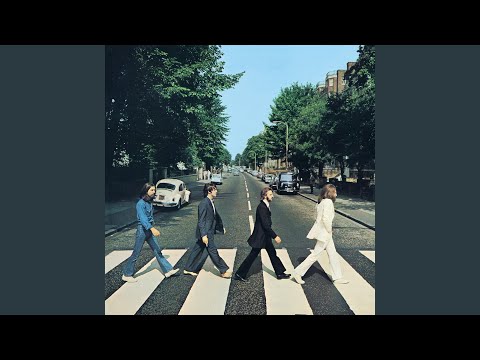
I recently read J. C. Ryle's A Call to Prayer, another gift from another friend that hearkens back to another time and place. Ryle was the first bishop of Liverpool, an earthy blue-collar town that would give birth, some sixty years after Ryle and fifteen years after the war, to so definitively postmodern and endearingly cynical a troupe as the Beatles. In his day Ryle didn't sell prayer to his readers; he compelled it of them. He writes as much (if not more) of our responsibility to pray as he does of the privilege and benefits of prayer. And whereas people of my generation and nationality express our opinions in personal, tentative language of feeling--"I feel that people don't pray much"--Ryle uses creedal language to assert his convictions: "I believe there are tens of thousands whose prayers are nothing but a mere form." It's brash, it's arresting, it's anachronistic, it's . . . somehow reassuring.

I'm coming to believe that what the world needs now--or at least every now and then--is a little less feeling and a little more believing. There's something oddly fresh about plain-spokenness, directness. It's odd because it's anachronistic, or maybe it's odd because we've forgotten how empowering a stiff upper lip can be.

Monday, March 12, 2012

The Value of Light: Writing as Truth-Seeking

I happened upon this post from August 2009. I think it bears repeating, for writers and other communicators who aspire to live in, and work with, the truth.

***

My day job is as an editor for a publisher of nonfiction books, and as such I try to help people frame and structure their ideas so that their reader won't nod off. Often, that's not an easy task. There are many shapes that a nonfiction book could take that readers will tolerate, but my favorite is something along the lines of this:

1. Articulate the problem.
2. Trace the history of the problem.
3. Identify the core principles that pertain to the problem.
4. Tease out the implications of the core principles.
5. Reorganize the world around those core principles and their implications.

(Of course this presumes some prior identification with the problem and some hope of a solution on the part of the reader. And so the book is packaged around the promise--an introduction and a conclusion (perhaps better thought of as a benediction) assure the reader that the ennui that led them to the book can be confronted and contended with--and sold by its solutions with a catchy, memorable, hope-filled title. Instant classic. Or something like that.)

This structure is, incidentally, how practical theologians tend to think. Practical theologians emphasize the feedback loop between the abstract work that historically has characterized theology and the world-made-by-and-sustained-by-God that inspires such abstractions. They ask questions like "Why are so many people getting tattoos? Why is the Bible seemingly so opposed to tattoos? Are the tattoos of the twenty-first centuries A.D. and B.C. the same? If not, how ought we to think about contemporary body art?"

My utter lack of body art aside, I suppose my enthusiasm for such grounded theological reflection may make me an armchair practical theologian. My patron saint in this vocation is G. K. Chesterton, who wrote the following as an introduction to his Heretics, a collection of essays playfully challenging the prevailing post-Christian minds of his day.

Suppose that a great commotion arises in the street about something, let us say a lamp-post, which many influential persons desire to pull down. A grey-clad monk, who is the spirit of the Middle Ages, is approached upon the matter, and begins to say, in the arid manner of the Schoolmen, “Let us first of all consider, my brethren, the value of Light. If Light be in itself good–” At this point he is somewhat excusably knocked down. All the people make a rush for the lamp-post, the lamp-post is down in ten minutes, and they go about congratulating each other on their unmediaeval practicality. But as things go on they do not work out so easily. Some people have pulled the lamp-post down because they wanted the electric light; some because they wanted old iron; some because they wanted darkness, because their deeds were evil. Some thought it not enough of a lamp-post, some too much; some acted because they wanted to smash municipal machinery; some because they wanted to smash something. And there is war in the night, no man knowing whom he strikes. So, gradually and inevitably, to-day, to-morrow, or the next day, there comes back the conviction that the monk was right after all, and that all depends on what is the philosophy of Light. Only what we might have discussed under the gas-lamp, we now must discuss in the dark.

I've referred several new authors to this parable lately, a reminder that they have in a sense embraced the call of this monk, and while they thus may be occasionally and even "somewhat excusably knocked down," clear and cogent books are their gift to a world that too often doesn't know what it wants or even needs. I daresay their books are their ministry, their mission.

Thursday, March 08, 2012

To Die, It's Easy: My GoodReads Review of Maus

The Complete MausThe Complete Maus by Art Spiegelman
My rating: 5 of 5 stars

One can hardly call oneself an expert in the genre of graphic novels without having read Art Spiegelman's Pulitzer prizewinning Maus, the story of his father's experience of the Holocaust interwoven with their own complicated contemporary relationship. I did just that, effectively, eight years ago when I wrote my book Comic Book Character (now in its second printing! Ha ha) without doing exhaustive research of the genre. I'm sorry for that, America. I'm repenting of that oversight and others during this, my Year of Overdue Books (books I should have read by this point in my lfe). Maus is doubly appropriate for the project, since I borrowed the two-volume set from a friend seven months ago when I saw it on her bookshelf while we were filming a promotional video for my booklet The Parable of the Unexpected Guest (now in its second printing!). I'm sorry for hoarding your stuff, Rachel. Thanks for your forbearance.

Maus was worth the wait and measured up to everything its broad acclaim made it out to be. How does one tell someone else's Holocaust story in a way that avoids melodrama on one end and reticence or dismissiveness on the other? How do you reawaken disgust and shame and repentance and reverence over a tragedy of the ages that has suffered the neglect and overfamiliarization of a short-memoried and shallow age? How do you convey the complexity of war-torn Poland and Germany and Hungary, or the complexity of the relationship betwen survivors and their children? It turns out that a comic book is uniquely up to the challenge. In bold strokes throughout, Spiegelman represents emotion and hardship both in the past and in the author's present. Portraying Jews as mice and Germans as cats (and French people as frogs), he aids the reader's understanding and communicates the particular tragedy: Nazis hunted, terrorized and devastated the Jews in the same ways that cats play with their prey; Jews were conspicuously Jewish in Europe for no really good reason apart from the broad anti-Semitism that made Naziism possible in the first place. The art in this book isn't pretty, but it's brilliant.

So is the writing. An Eastern European, old-world English dialect carries through the books; you never lose sight of the fact that Spiegelman is being told this story in his father Vladek's second tongue, but the language still is fluid and clear. Spiegelman's own English is unaffected, reinforcing the distance between a father who is usually hard to take and a son who has not yet come to terms with what the Holocaust cost. There's an intimacy between the two, in the sharing of this dreadful but sacred story, that gives full weight to the pain that so often settles in between father and son. The familiarity between the two belies the gravity of the topic; little glimpses of humor punctuate the tragedy and remind the reader that this really happened, that real human beings really did this thing to one another. We identify easily with Spiegelman, and we find ourselves surprised as we come to identify with Vladek. But what's most troubling, what's most powerful, is how we come to recognize ourselves in the villains. The casualness of the evil that pervades the Holocaust is evident in the casualness with which Vladek recalls the atrocities he faced, the lengths he went to in order to survive and protect his family, the steady reports of parents, siblings, cousins and children who died along the way. It's remarkable that Vladek lived through it, that he was able to tap into a seemingly limitless creativity to overcome what seems impossible to overcome. No wonder he was so frustrated by his son's seemingly cavalier approach to life, his apparent lack of ingenuity. No wonder his son was so irritated by his propensity to save meaningless things and destroy personal treasures. You can hardly imagine them understanding each other, but you feel you understand them both.

Maus is subtitled "A Survivor's Tale," which is apt. Vladek is a hero moreso than a victim, even though he and millions of others were victimized in the Holocaust. When you encounter a hero, you do well to listen for wisdom; Vladek's wisdom is summed up succinctly in volume one but embodied throughout: "To die, it's easy . . . But you have to struggle for life!"

View all my reviews

Both Inspiration and Cautionary Tale: Excerpts from Middling

What follows is an excerpt from the Winter 2021 edition of Middling, my quarterly newsletter on music, books, work, and getting older. I...