And on the strangest Sea—
Yet—never—in Extremity
It asked a crumb—of me.
A strong Warrior there to save you.
—Zephaniah 3:17, The Message

The second was one of the lesser lights to nineteen-year-old me, but it’s the song she used to promote this new record, and it’s doing it for me quite nicely these days. It’s hard to believe she had this much soul when she recorded it in her thirties; I don’t mean that as an insult to my thirty-something readers (that’s an age range, not a quantity), only to point out just how much soul she crams in there.
Every September I attend a retreat for the Academy of Christian Editors. A feature of that retreat is a sharing circle where we each get roughly a minute to introduce our favorite book we read over the past year. You can see this year’s complete list here.
I always find this exercise a little stressful — I want my choice to be distinct and memorable, something I won’t be judged for except to be judged as distinct and memorable myself.


A lot of my new albums are not new, however. Case in point: You’re the Man by Marvin Gaye, the (intended) follow-up to his 1971 release What’s Going On. The record was shelved until this year, when it was released to mark the late artist’s eightieth birthday. I picked it up on Record Store Day in April. It’s a double-album, but the second disc is just b-sides and alternate takes, even a Christmas song. I lean hard into the first disc, and particularly side one. The title track is a nice jam that holds up well as an exemplar of its era; my favorite track is “Piece of Clay,” not written by Gaye but delivered with his signature passionate wisdom:
Like I said, it holds up.
For my birthday this summer I asked for and received a vinyl edition of an album I loved when I was not yet married, Tanita Tikaram’s 1988 debut Ancient Heart. I already had it on CD—like I said, I’m not very disciplined these days—but I wanted to hear it scratched out at me at 33 revolutions per minute. Tikaram was, at the time, being compared to Van Morrison and other resilient voices; I eventually would buy her second disc and lost track of her after that, but something about this album really did it for me. Her breakout hit was “Twist in My Sobriety,” but every track has gravitas to it—even the sing-songy ”Poor Cow,” which my friend Chris and I would play on our college radio program as we announced the cafeteria’s lunch menu for the day. “Slice her up, slice her up, slice her up, poor cow.” Turns out I wasn’t very disciplined then either.

The year I graduated high school and started college, U2 released their film and record exploring the spirit of America. A friend and I went to great lengths to secure our copy of Rattle and Hum (along with a half-gallon or so of Drakkar Noir for the ladies). Featured on the album was “God, Part II,” Bono’s tribute to John Lennon. It featured a veiled threat against Albert Goldman for his salacious biography of Lennon, but otherwise it was a riff on the original idea of Lennon’s “God.” Instead of disillusionment with the world, however, Bono set his sights on himself: “[I] don’t believe in riches but you should see where I live” is only one of his confessions in the song. Disillusionment with the self was the theme of “God,” part 2, in the first year of my adulthood.
Fast forward 32 years. I’m turning fifty and disillusionment has gone out of favor. Everyone is a true believer - or at least wishes to be identified among the true believers; everyone is tempted at all times to be the first (or at least not the last) to out and expel the unbeliever, or the untrue true believer.
Perhaps disillusionment-fatigue is a consequence of all that we’ve learned in the intervening years about ourselves and our context. These days we’re aware that there is not one world to interact with but an aggregation of overlapping empires to be loyal or disloyal to. As Wendell Berry puts it in his masterful novel Jayber Crow,
All the world, as a matter of fact, is a mosaic of little places invisible to the powers that be.
Our little worlds are of little consequence; it's the overarching empire that breaks and makes us.
Meanwhile, there is not one self for each of us to grow tired of but an intersection of many selves to be put forward according to the demands of the moment. As the great Ben Folds puts it in his song “Best Imitation of Myself," our task increasingly seems to be putting forward one of our many selves, "withholding the rest so I can be for you what you want to see." Our intricate selves are of little consequence; it's the persona, not the person, that drives our success.
To survive in this age of overlapping empires and intersecting selves, we have by and large dispensed with disillusion - which is a shame, because as I have long held, disillusionment is a gift, even a spiritual discipline. Disillusionment is the dispersal of illusions, and so without it we are left clouded in our understanding of ourselves and our world. There is no independence to declare, no singular self to confess.
What, then, is the theme of “God,” part 3? St Paul famously wrote,
I’ve tried everything and nothing helps. I’m at the end of my rope. Is there no one who can do anything for me? Isn’t that the real question? (Romans 7:24, The Message)
The end of the rope, I think, is a fitting theme for “God, Part III.” Here’s my lame attempt to to offer an anthem to send us out into the next season of life, divested of false hope and in search of true hope.
I don’t pretend to think that my take on “God, Part III” is the only or even the best vantage point, and of course I know stepping into the shoes of Bono and John Lennon and St Paul sounds crazy. But as another poet-prophet once put it, unless we get a little crazy, we’re never going to survive.
“God, Part III”
Glory be to the Father,
and to the Son:
and to the Holy Ghost.
America is a concept through which we assert our moral vision.
Race* is a construct in which we sin against one another.
Sin is a classification by which we judge and are judged by ourselves and one another.
Church is a designation with which we settle our insecurity.
Evangelicalism (my own little place) is
a robust theology and a tenuous subculture;
The theology does not support the subculture
and the subculture does not uphold the theology.
Christianity Today does not speak for me.
The Christian Century does not speak for me.
The New York Times does not speak for me.
The Reverend Al Mohler does not speak for me.
The Reverend Jim Wallis does not speak for me.
The late Billy Graham does not speak for me.
The great David Dark does not speak for me.
President Trump does not speak for me.
Vice President Biden does not speak for me.
Nobody speaks for me, even as
Everyone speaks to me.
I don’t speak for GenX.
I don’t speak for cis-whites.
I don’t speak for men;
I sure don’t speak for women.
I don’t speak for evangelicals (my own little place).
I don’t speak for Presbyterians.
I don’t speak for Catholics.
I don’t speak for agnostics.
I sure don’t speak for Jesus
(though I trust he speaks to me).
I speak for no one but myself
And I sometimes fail to tell the truth
About and to myself.
I believe in the great American experiment
And the failure of the American experiment.
I believe in the perseverance of the saints
And the inevitable betrayal of the same.
I believe in the coming judgment
And the boundless mercy of God.
I believe that God will burn away every sin
And wipe away every tear.
I believe that I don’t know what I’m talking about.
Glory be to the Father,
and to the Son:
and to the Holy Ghost;
As it was in the beginning,
is now, and ever shall be:
world without end. Amen.
* I am aware that the cultural references in this post are overwhelmingly if not exclusively white (the invocation and benediction are inspired by John Coltrane’s masterful work of mysticism A Love Supreme"). This is an unfortunate truth about me, that I am largely if not overwhelmingly shaped by white American culture. I'm working on it.
I write an occasional newsletter (quarterly when I don't forget) to friends and family about my life: music, books, work, and getting older. I'd love to send it to you. Sign up for Middling here.
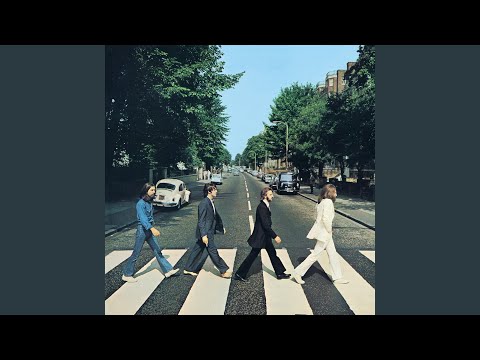
PS: Here’s another clue for you all: Bono was the Fly, John was the Egg Man, and the Walrus was Paul.


What follows is an excerpt from the Winter 2021 edition of Middling, my quarterly newsletter on music, books, work, and getting older. I...