Monday, January 10, 2022
Both Inspiration and Cautionary Tale: Excerpts from Middling
What follows is an excerpt from the Winter 2021 edition of Middling, my quarterly newsletter on music, books, work, and getting older. I'm about to send out my next edition and I'd love for you to get it. You can sign up here.
***
A few years ago I bought a book that told the story of Stax Records, ground zero of the Memphis Soul sound. I didn’t read that book till 2020 for some reason, but I’m so glad I finally did.
Respect Yourself is both inspiration and cautionary tale — it shows how a place can become a scene, and how a scene can come to define a place (and how that same scene can suddenly fall apart). At a time when Memphis, like so many southern cities, was deeply and violently segregated, Stax was startlingly integrated, with power sharing at the highest levels of both creativity and administration. Out of Stax came Otis Redding, Sam and Dave, Isaac Hayes, and other soul greats. Stax pointed the way to redemption after the killing of Martin Luther King Jr. a few blocks away, and the riots that devastated the Watts neighborhood half a continent away. Stax eventually degraded as ambition and greed eroded the sense of common mission, but the body of work that came out of its studios is still important today, and still great to listen to.
The story of Stax reminded me of a brief passage in David Byrne’s How Music Works where he considered the early days of CBGB in New York, arguably the birthplace of both punk and new wave music. I wrote about Byrne’s insights into how a place becomes a scene on my blog and I find myself referring back to it a lot. As it happens, when a place understands itself, and when people commit themselves to the flourishing of that particular place, transcendent and enduring things can come out of it. It’s really a beautiful thing, actually.
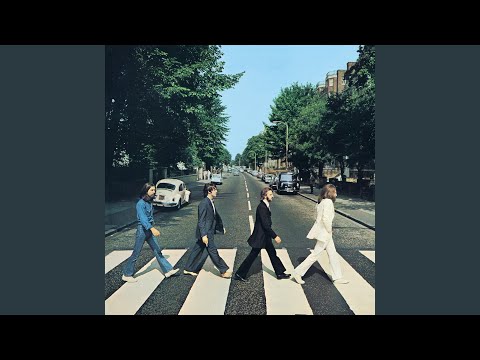
Exhibits A, B, and C in this place-scene synergy argument are records consciously connected to place. Exhibit A is the granddaddy, Abbey Road by the Beatles. The last album recorded by the band (although it was released before Hey Jude and Let It Be), Abbey Road is the Beatles at their most Beatlesque, and yet each member is in their own zone, venting their frustrations with the group and foreshadowing their post-band life. Paul gripes about the band’s finances and dreams about running away with his wife, Linda, on “You Never Give Me Your Money”; George plays hooky from a contentious finance meeting and writes “Here Comes the Sun” as an ode to brighter days to come; John mocks each band member (including himself) in “Come Together.” Even Ringo gets a track on there, wistfully imagining the happy elsewhere of “Octopus’s Garden.”
The album is named after the street on which their recording studio (also named after the street) is housed. As I learned from Steve Turner’s fantastic book A Hard Day's Write, the songs are loaded with contextual imagery. You get a real taste of the setting and the scene that surrounded the band as they recorded their swan songs.


Friday, October 22, 2021
The Resiliency of Spirit and the Banality of Evil: Excerpts from Middling
I write a quarterly newsletter called Middling, in which I reflect on books, music, work, and getting older. My next issue is going out soon and I'd love for you to get it. You can sign up here. What follows is an excerpt from the fall 2020 issue.***  As with everything in 2020, my “Year of Deep Reading in Authoritarianism” got derailed a bit, but along the way I managed to pick up the brief Russian novel One Day in the Life of Ivan Denisovich, by Aleksandr Solzhenitzyn. I expected it to be longer because, you know, Russian literature, but it really is one day, following a prisoner in the gulags as he maneuvers and manipulates to get a little extra gruel, the last puffs of someone else’s cigarettes, and the least awful work assignments. It’s remarkably evocative—I found myself immersed in every frigid moment.
 Somewhere—I don’t recall where—I stumbled on a delightful anecdote about existentialist novelist Franz Kafka. As the story goes, late in his life (he died young) he found himself in a park one day and saw a little girl crying alone. He thought she might be lost and asked if she needed help. It turns out she had lost her doll and could not be consoled. So Kafka invented a story about the doll, which became a story about himself (he was the doll’s postman), which became a daily encounter between him and the girl. The story is perhaps apocryphal and the letters he wrote in the doll’s name apparently lost forever, but the whole thing just fills me with hope for humanity. Kafka and the Travelling Doll can be read in one sitting, but I suspect if you read it once you’ll read it again, and maybe again and again.
I started out [2020]—I can’t imagine why—wanting to read as much as I could about fascism. It’s a fairly common practice for me to identify a theme for my reading for the year, and this year, that was it.

In the middle of this vivid portrayal of the absurdity of tyranny, Ivan is tasked with bricking over a broken window in an abandoned building. Ivan is a mason, and as he sets out to do the task, the tone of the novel shifts from oppression to vocation: he is (once again) a master, practicing his craft with care and precision. For a few hours he discovers and celebrates his dignity. Then he goes back to the prison camp. Worth reading for its arresting portrayal of the resiliency of spirit and the banality of evil.

Wednesday, October 20, 2021
We Are Gen-X After All: Excerpts from Middling
I write a quarterly newsletter called Middling, in which I reflect on books, music, work, and getting older. My next issue is going out soon and I'd love for you to get it. You can sign up here. What follows is an excerpt from the fall 2020 issue.***
I read once that Aimee Mann has assured us she is not depressed. That’s surprising to most people since so many of her songs are melancholy bordering on bleak. But being something of a melancholic myself, I think I get it.
I discovered her 2017 award-winning Mental Illness by accident and added it to my birthday wishlist; the pink vinyl in die-cut sleeve arrived at my doorstep and I dove right in. One listen and I declared her the voice of my generation. Time will tell if the title sticks—or if anybody even cares; we are Gen-X, after all.
I don’t think of Mann as a folk artist, but Mental Illness won the folk album Grammy in 2018 and understandably so. The tracks weave together seamlessly, setting a mood quickly and staying there determinedly. It’s an ode to that popular definition of insanity: doing the same thing over and over and expecting a different result. I keep listening to it because I’m pleased with its effect on me.
Monday, October 18, 2021
Unconscious Approaches to Each Ensuing Crisis: Excerpts from Middling
I write a quarterly newsletter called Middling, in which I reflect on books, music, work, and getting older. My next issue is going out soon and I'd love for you to get it. You can sign up here. What follows is an excerpt from the fall 2020 issue.*** 
At the outset of 2020 I knew a few things:
(1) I would be turning fifty in a few months;
(2) I would be voting for a new president—any new president—a few months after that; and
(3) I would be finishing up a fifteen-month leadership training program for work.
I hadn’t anticipated doing virtually all of this from my basement while I waited out a killer virus. I also hadn’t anticipated that the coach/mentor I was paired with for the training program would be such a gift.
I’ve not really been coached before. I’m not sporty, for one, and I’m kind of a contrarian, so the idea of someone speaking directly into my day-to-day experience was not terribly appealing. I didn’t know what to talk about or how to talk about it. I didn’t know what questions to ask. But Mark was remarkable, gently probing and graciously interrogating my unconscious approaches to each ensuing crisis. I found a little footing after each monthly call, and I learned some practices that have helped me regularly regain my sense of self since the monthly calls ended. ...
So if you’re struggling to keep your head up, give me a shout. I know a guy.

Friday, July 23, 2021
Hope Is a Matter of Vision: Excerpts from Middling
I put out an occasional newsletter about music, books, work, and getting older. You can subscribe to it in the sidebar. My next issue is coming out next week and I'd love for you to get it. Here's a taste of what happens there: This is from last summer's issue, in which I reflect on the experience of turning fifty.
***
Our publishing house sponsored an online event called the Spiritual First Aid Summit. It’s still online if you’d like to see it; really great and practical presentations from a broad swath of religious leaders, hosted by the Humanitarian Disaster Institute. Woven into the event was our recent release The Message of Hope, a curated collection of passages from The Message version of the Bible.
I’m very proud of this little collection, which isn’t just some hope-bludgeon that denies and avoids hard times and hard things. The book begins not with hope but lament, because hope is not something we begin with but something we search for. Lament is then put in conversation with the promises God makes in the Scriptures, which points us to an assurance of God’s love and newfound trust that God is with us and for us. Ultimately hope is a matter of vision—a way of seeing the world without being undone by what we see. Some projects work on me as I work on them; The Message of Hope is one of those. As Emily Dickinson writes of hope,
I’ve heard it in the chilliest land—
And on the strangest Sea—
Yet—never—in Extremity
It asked a crumb—of me.
Or, as God puts it in the Scriptures,
Your God is present among you,
A strong Warrior there to save you.
—Zephaniah 3:17, The Message
And on the strangest Sea—
Yet—never—in Extremity
It asked a crumb—of me.
A strong Warrior there to save you.
—Zephaniah 3:17, The Message
Wednesday, July 21, 2021
A Soft Soundtrack of Lowered Expectations: Excerpts from Middling
I put out an occasional newsletter about music, books, work, and getting older. You can subscribe to it in the sidebar. My next issue is coming out next week and I'd love for you to get it. Here's a taste of what happens there: This is from last summer's issue, in which I reflect on the experience of turning fifty.
***
I once read an entire book dedicated to the big transition in pop music that took place in 1970, the year of my birth. As the 1960s gave way to the 1970s, the book argues, a playlist of social disruption ceded airtime to a soft soundtrack of lowered expectations. The Beatles broke up, Simon and Garfunkel broke up, Crosby, Stills and Nash broke up. James Taylor moved into the void with his Sweet Baby James, a record that included, among other things, a veiled reference to the collapse of his own sixties-era band (“Sweet dreams and flying machines in pieces on the ground”) and a cover of “Oh! Susanna,” a Stephen Foster song first made famous by minstrel singers in blackface in the decade before the Civil War. Some progress is not progress.
The book is self-servingly myopic, largely ignoring what was taking place in every genre of pop music (let alone all other music forms) outside of its preselected subjects. But I enjoyed reading it nonetheless, and (melancholic that I am) I find it compelling that the year of my birth could be considered a year of a kind of musical death.
Some spectacular records were released in 1970, including Sweet Baby James (“Oh! Susanna” notwithstanding, it deserves its popularity), Bridge over Troubled Water by Simon and Garfunkel, Moondance by the great Van Morrison, and the soundtrack to Jesus Christ Superstar, not to mention two records from the Beatles (Hey Jude and the immortal Let It Be) and Stevie Wonder’s wonderful Signed, Sealed, and Delivered. You can hear the sixties-fatigue in the title tracks from The Beatles and Simon and Garfunkel, and in Wonder’s plaintive “Heaven Help Us All.”
We are also, notably, confronted with the harsh reality that even when we grow tired of the hard things in the world, they don’t just go away because we wish it. As CSNY sang about the Kent State shooting that year, “How can you run," they shouted in four-part harmony, "when you know?” Heaven help us all, indeed.
Monday, July 19, 2021
When I Was Younger: Excerpts from Middling
I put out an occasional newsletter about music, books, work, and getting older. You can subscribe to it in the sidebar. My next issue is coming out next week and I'd love for you to get it. Here's a taste of what happens there: This is from last summer's issue, in which I reflect on the experience of turning fifty.
***
I used to bob or bang my head in unison with The Who (“Hope I die before I get old!”) and later R.E.M. (“I can’t see myself at thirty!”). Somewhere along the way I started to stare my future in the face to a soundtrack of Neil (ironically) Young: “Old man, take a look at my life; I’m a lot like you.” The words of Steely Dan (“Are you reeling in the years? Stowing away the time?”) sent me into moments of circumspection teetering on the edge of existential crisis. I began to bob and bang my head to the (ironically) Old 97s (“I used to be the new kid!”) and to Ben (putting the old in) Folds: “Once you wanted revolution; now you’re the institution” and “He’s forgotten but not yet gone.”
Now the day has come. I am what I am, and what I am is old. If I happen to forget now and then (something that happens to those of us of advanced age), there’s always some snarky millennial nearby ready to shock me back into awareness.
People who are older still than I am occasionally pat me on the head when I fret about the aging process, which is comforting in a way. I have ample role models for aging well. But it’s the number—the roundness of it, the ffffiness of it—that stresses me out. I’m closer to a century of life than I am to my birth—a fact that naively presupposes that I’ll make it to a hundred without my heart stopping or my bank account running out of money. Fifty is a slap in the face, a rude awakening to the reality that we are all of us living on borrowed time.
Shortly before John Lennon turned twenty-five he wrote the immortal words “When I was younger, so much younger than today, I never needed anybody’s help in any way. But now those days are gone; I’m not so self-assured.” Isn’t that cute? That was less than a year before he called the Beatles more popular than Jesus. It was, in any case, an insightful line: The young are blessed with audacity, a sense of permanence and invulnerability. Only time can whittle away at it.
Fifteen years later John wrote a song called “Borrowed Time,” drafted shortly before he turned forty and recorded a few months before he was shot and killed. By this time “When I was younger” has given way to “Now I am older”; the desperation that fueled “Help” has given way to an optimism born of humility and hope:
The more that I see the less that I know for sure...
The future is brighter and now is the hour.
Humility and hope are not bad gifts to carry with me into my fifties, I suppose. I observe them in my own elders, the people I look to as guides for this new season. I look for them in myself as well, and on good days I find them there. On bad days I try to remind myself that they’re only hidden, not lost, and i can still recover them if I put in the effort.
Friday, April 02, 2021
The Virtue, Gift and Discipline of Secrecy: Excerpts from Middling
I write an occasional newsletter (quarterly when I don't forget) to friends and family about my life: music, books, work, and getting older. I'd love to send it to you. Sign up for Middling here. What follows is an excerpt from the winter 2020 issue--before the whole world shut down.
***
Considering how regularly I assail you with blog posts, tweets, instas, and newsletters, you might be surprised that a favorite recent read of mine is titled How to Disappear. Akiko Busch sucked me in with her introductory chapter, as she sat quietly in a forest observing how intentionally most of creation seeks to hide. That insight springs into a series of essays on the virtue, gift and discipline of secrecy—of not making a scene of ourselves, of allowing ourselves to be simply part of something larger. I was drawn to the book by the title, but I moved it to the top of the pile after someone suggested to me that I was too power-hungry, a critique that comes up occasionally enough that I can’t ignore it even though I kind of resent it. If How to Disappear isn’t still my favorite read nine months from now, I’ll be surprised and I’ll surely let you know.
A much less transformative but similarly knowing book I read recently is The Lager Queen of Minnesota. I heard it praised as an homage to the Midwest, and that sounded pretty good to me. And it is quite good—keenly insightful about how midwestern relationships work, even when those relationships proceed without contact over the course of decades. I want to give it to my mom because I think she’ll like it, and I want her to give it to her siblings because she thinks they’ll like it.


Wednesday, March 31, 2021
Anachronistic Today: Excerpts from Middling
I write an occasional newsletter (quarterly when I don't forget) to friends and family about my life: music, books, work, and getting older. I'd love to send it to you. Sign up for Middling here. What follows is an excerpt from the winter 2020 issue--before the whole world shut down.
***
I got some great music for Christmas. A new record by the Avett Brothers, the debut album of the Americana supergroup the Highwomen, a three-disc concept album by Sleeping at Last, and the thirtieth-anniversary reissue of one of the most personally significant records of my life.
Shawn Colvin is what might be called a folk music superstar. Her music has been the soundtrack to several significant points of my life: I first heard her cover of “Every Little Thing She Does Is Magic” by the Police while Kara and I were hot-tubbing on our honeymoon, and her collaboration with Steve Earle on the Beatles song “Baby’s in Black” was playing when a giant truck pulling a giant trailer plowed into the back of our one-week-old Toyota RAV4. My pastor and I figured out that we were probably at the same Shawn Colvin concert in the student activity center at Northwestern University in the early 1990s. But before all that, Shawn Colvin was the artist behind one of the first CDs I ever bought.
Steady On would become the Grammy winner for best contemporary folk album of 1991. (How she won two years after the fact is beyond me.) While aging teen idol Donny Osmond was reinventing himself as the “Soldier of Love,” Depeche Mode was milking the life out of “Your Own Personal Jesus,” and Milli Vanilli was pretending to sing “Blame It on the Rain,” Shawn Colvin was quietly strumming the opening chords to the title track and offering an ode to vulnerability:
“China gets broken,
and it will never be the same.”
It only got better from there, with the second track my favorite at the time.
“You’re shining—I can see you.
You’re smiling; that’s enough.
I’m holding on to you like a diamond in the rough.”
I had tracks I preferred over others, of course, but I very nearly wore the grooves off that CD. (Or however the technology works.) It occurs to me as I write this that this CD, still in my possession, is older than at least one of my coworkers. In the past that would have sent me into a fetal position, but I seem to be coming to peace with my advanced age.
Anyway, this year Shawn Colvin celebrated her thirtieth anniversary as a recording artist with a track-by-track return to this first album. Stripped away are the 1980s production values, tastefully executed at the time but certainly anachronistic today. The heart and soul of the record remains: Piercing and sober storytelling over lovely melodies and expert guitar work. Nobody does it like Shawn Colvin, and these songs prove it just as effectively as her later, more mature work.
I’ll draw your attention to two songs from the record. The first, “Cry Like an Angel,” was the song I turned to after terrorists flew two planes into the World Trade Center in New York City on September 11, 2001, and aimed a third plane at the Pentagon. “The streets of my town,” she prophesied in 1989, “are not what they were. They are haloed in anger, bitter and hurt. ... May we all find salvation in professions that heal.”
You’re smiling; that’s enough.
I’m holding on to you like a diamond in the rough.”
The second was one of the lesser lights to nineteen-year-old me, but it’s the song she used to promote this new record, and it’s doing it for me quite nicely these days. It’s hard to believe she had this much soul when she recorded it in her thirties; I don’t mean that as an insult to my thirty-something readers (that’s an age range, not a quantity), only to point out just how much soul she crams in there.
Monday, March 29, 2021
There Was a Chance 2020 Would Be Great: Excerpts from Middling
I write an occasional newsletter (quarterly when I don't forget) to friends and family about my life: music, books, work, and getting older. I'd love to send it to you. Sign up for Middling here. What follows is an excerpt from the winter 2020 issue--before the whole world shut down.
***
The safest place
Is the more or less middling: the mean average
Is not noticed.
—W. H. Auden, The Age of Anxiety
When I was a kid, I thought about 2020 a lot. That would be the year I would turn fifty, and at the time fifty seemed to me about the oldest a person could get. To speculate so far into the future seemed both pointless and irresistible. What would the world be like? What would I be like?
There were good reasons to wonder. When I was a kid, my society was enduring the aftermath of the abrupt end of a corrupt presidency. We were facing global tensions on several fronts; I read more than one library book about inter-continental ballistic missiles before I was ten. The Middle East was a powder keg. The economy was sputtering. People hadn’t learned not to pollute yet. There was disco music.
It wasn’t all bad, of course. Sure, we had Barry Manilow to deal with, but we also had the Ramones. (And Schoolhouse Rock: Rest In Peace, Jack Sheldon.) Sure, the rain had acid in it, but there was also this owl and this Native American guy actively appealing to us to give a hoot and not pollute. There was a chance I’d make it to fifty. There was a chance 2020 would be great.
I think about the past differently than the future or the present. In my memories, the hard stuff is less hard, because I know I’ve survived it. The scary stuff is less scary because it’s become more known than unknown. Even the lofty ambitions are right-sized by the passage of time. We aren’t cured of the past—we carry it with us—but the passion and the pain of it levels off. We become detached enough from it to consider it with grace.
In a matter of months I’ll be hitting my fiftieth birthday. Having reached this year of my preoccupation, I suppose it’s time to be preoccupied with something else—2070, perhaps, when I'll be a hundred years old, which seems like just about the oldest a person can get. Meanwhile, it occurs to me that there will be people thinking back to this unfolding decade with the same mix of melancholy, nostalgia, and (I hope) gracious detachment as I now think of the 1970s. Maybe one of those people will be me. Maybe it will be you. Maybe we should start practicing such gracious detachment even today.
"Fifty Nifty," Schoolhouse Rock
Is the more or less middling: the mean average
Is not noticed.
—W. H. Auden, The Age of Anxiety
Monday, September 21, 2020
Hashtag Winning: Excerpts from Middling
I write an occasional newsletter (quarterly when I don't forget) to friends and family about my life: music, books, work, and getting older. I'd love to send it to you. Sign up for Middling here. What follows is an excerpt from the fall 2019 issue.***  I had a number of books that came to mind, including the one I was still reading as I flew to Nashville for the retreat: The Nickel Boys, by Colson Whitehead. This novel inspired by true events is set in the mid 1960s at a “reform school” for boys. All the students are tyrannized by the staff, but the black kids are routinely terrorized and brutalized. Whitehead is a master at creating characters and carrying the reader into and through terrible things, and he does so here again. Schools like this one existed in my lifetime. Maybe they still do. I’m haunted by that: How many other atrocities are we allowing to exist, and why are we allowing it?
 But I hadn’t finished The Nickel Boys yet, so instead I put forward Mandela and the General, a beautifully drawn graphic novel recounting the true story of how newly elected South African President Nelson Mandela, who was actively dismantling the century-old system of apartheid that had privileged whites over people of color, met with and earned the respect and loyalty of the leader of a nationalist resistance group bent on taking South Africa back for the whites. A story I’d never heard before — powerful, compelling — and nobody else had picked it. #winning
***
Thanks for reading! If you'd like to get Middling in your in-box, give me a shout and I'll set you up.
Every September I attend a retreat for the Academy of Christian Editors. A feature of that retreat is a sharing circle where we each get roughly a minute to introduce our favorite book we read over the past year. You can see this year’s complete list here.
I always find this exercise a little stressful — I want my choice to be distinct and memorable, something I won’t be judged for except to be judged as distinct and memorable myself.


Monday, September 14, 2020
Resilient Voices: Excerpts from Middling
I write an occasional newsletter (quarterly when I don't forget) to friends and family about my life: music, books, work, and getting older. I'd love to send it to you. Sign up for Middling here. What follows is an excerpt from the fall 2019 issue.
***
I may have let my discipline slip a bit lately. I’ve been indulging my interest in vinyl a lot this year, which is at odds with my original purpose for switching to vinyl-only, which was to force myself to be more discriminating. Vinyl records are expensive and they take up a fair bit of space. But it can’t be helped when there’s so much good music to keep up with.“That’s what’s wrong with the world today:
Everybody wants somebody to be
Their own piece of clay.” ***
Thanks for reading! If you'd like to get Middling in your in-box, give me a shout and I'll set you up.
A lot of my new albums are not new, however. Case in point: You’re the Man by Marvin Gaye, the (intended) follow-up to his 1971 release What’s Going On. The record was shelved until this year, when it was released to mark the late artist’s eightieth birthday. I picked it up on Record Store Day in April. It’s a double-album, but the second disc is just b-sides and alternate takes, even a Christmas song. I lean hard into the first disc, and particularly side one. The title track is a nice jam that holds up well as an exemplar of its era; my favorite track is “Piece of Clay,” not written by Gaye but delivered with his signature passionate wisdom:
Everybody wants somebody to be
Their own piece of clay.”
Like I said, it holds up.
For my birthday this summer I asked for and received a vinyl edition of an album I loved when I was not yet married, Tanita Tikaram’s 1988 debut Ancient Heart. I already had it on CD—like I said, I’m not very disciplined these days—but I wanted to hear it scratched out at me at 33 revolutions per minute. Tikaram was, at the time, being compared to Van Morrison and other resilient voices; I eventually would buy her second disc and lost track of her after that, but something about this album really did it for me. Her breakout hit was “Twist in My Sobriety,” but every track has gravitas to it—even the sing-songy ”Poor Cow,” which my friend Chris and I would play on our college radio program as we announced the cafeteria’s lunch menu for the day. “Slice her up, slice her up, slice her up, poor cow.” Turns out I wasn’t very disciplined then either.
Monday, September 07, 2020
Teaspoons of Something or Other: Excerpts from Middling
I write an occasional newsletter (quarterly when I don't forget) to friends and family about my life: music, books, work, and getting older. I'd love to send it to you. Sign up for Middling here. What follows is an excerpt from the fall 2019 issue.
***
Twenty-five years ago I was a twenty-four-year-old man-child in the throes of newly wedded bliss. Kara and I got married a few months after she finished her undergraduate degree. Our church at the time met in a rented theater, so to hold our wedding service we had to rent a church. Our friend Keith performed the ceremony, his first ever wedding. I remember he wished us ladles of honey for every teaspoon of something else—vinegar, maybe? Our wedding was an over-the-top affair, with a guest list that included pretty much everyone we ever met, testing the credit limits of both our sets of parents. Then we settled in to married life. There have surely been teaspoons of something or other over the years, but we’ve had plenty of honey to wash it down.
This month we celebrated twenty-five years with a vacation in Maui, Hawaii. We were a few steps from a beach and a few more steps from a donut shop (malasadas in the local lingo). We drove the Road to Hana, a long and winding route that is more about the journey than the destination, with plenty of stops along the way to see beautiful things. Not a bad embodied analogy for a marriage—or for life itself, I suppose.

***
Thanks for reading! If you'd like to get Middling in your in-box, give me a shout and I'll set you up.

Monday, June 22, 2020
"God, Part III"
The year I was born John Lennon wrote what was essentially a Declaration of Independence. “God” was the tenth track on his first post-Beatles record (featuring the Plastic Ono Band), and it called out everyone from Elvis and Bob Dylan to Jesus and Hitler. A kind of epitaph for the 1960s, it might reasonably be considered an anthem for Generation X: “I don’t believe in Beatles,” he sang. “I just believe in me. ... The dream is over.” Disillusionment with the world characterized “God” in the first year of my life. *** ***
The year I graduated high school and started college, U2 released their film and record exploring the spirit of America. A friend and I went to great lengths to secure our copy of Rattle and Hum (along with a half-gallon or so of Drakkar Noir for the ladies). Featured on the album was “God, Part II,” Bono’s tribute to John Lennon. It featured a veiled threat against Albert Goldman for his salacious biography of Lennon, but otherwise it was a riff on the original idea of Lennon’s “God.” Instead of disillusionment with the world, however, Bono set his sights on himself: “[I] don’t believe in riches but you should see where I live” is only one of his confessions in the song. Disillusionment with the self was the theme of “God,” part 2, in the first year of my adulthood.
Fast forward 32 years. I’m turning fifty and disillusionment has gone out of favor. Everyone is a true believer - or at least wishes to be identified among the true believers; everyone is tempted at all times to be the first (or at least not the last) to out and expel the unbeliever, or the untrue true believer.
Perhaps disillusionment-fatigue is a consequence of all that we’ve learned in the intervening years about ourselves and our context. These days we’re aware that there is not one world to interact with but an aggregation of overlapping empires to be loyal or disloyal to. As Wendell Berry puts it in his masterful novel Jayber Crow,
All the world, as a matter of fact, is a mosaic of little places invisible to the powers that be.
Our little worlds are of little consequence; it's the overarching empire that breaks and makes us.
Meanwhile, there is not one self for each of us to grow tired of but an intersection of many selves to be put forward according to the demands of the moment. As the great Ben Folds puts it in his song “Best Imitation of Myself," our task increasingly seems to be putting forward one of our many selves, "withholding the rest so I can be for you what you want to see." Our intricate selves are of little consequence; it's the persona, not the person, that drives our success.
To survive in this age of overlapping empires and intersecting selves, we have by and large dispensed with disillusion - which is a shame, because as I have long held, disillusionment is a gift, even a spiritual discipline. Disillusionment is the dispersal of illusions, and so without it we are left clouded in our understanding of ourselves and our world. There is no independence to declare, no singular self to confess.
What, then, is the theme of “God,” part 3? St Paul famously wrote,
I’ve tried everything and nothing helps. I’m at the end of my rope. Is there no one who can do anything for me? Isn’t that the real question? (Romans 7:24, The Message)
The end of the rope, I think, is a fitting theme for “God, Part III.” Here’s my lame attempt to to offer an anthem to send us out into the next season of life, divested of false hope and in search of true hope.
I don’t pretend to think that my take on “God, Part III” is the only or even the best vantage point, and of course I know stepping into the shoes of Bono and John Lennon and St Paul sounds crazy. But as another poet-prophet once put it, unless we get a little crazy, we’re never going to survive.
“God, Part III”
Glory be to the Father,
and to the Son:
and to the Holy Ghost.
America is a concept through which we assert our moral vision.
Race* is a construct in which we sin against one another.
Sin is a classification by which we judge and are judged by ourselves and one another.
Church is a designation with which we settle our insecurity.
Evangelicalism (my own little place) is
a robust theology and a tenuous subculture;
The theology does not support the subculture
and the subculture does not uphold the theology.
Christianity Today does not speak for me.
The Christian Century does not speak for me.
The New York Times does not speak for me.
The Reverend Al Mohler does not speak for me.
The Reverend Jim Wallis does not speak for me.
The late Billy Graham does not speak for me.
The great David Dark does not speak for me.
President Trump does not speak for me.
Vice President Biden does not speak for me.
Nobody speaks for me, even as
Everyone speaks to me.
I don’t speak for GenX.
I don’t speak for cis-whites.
I don’t speak for men;
I sure don’t speak for women.
I don’t speak for evangelicals (my own little place).
I don’t speak for Presbyterians.
I don’t speak for Catholics.
I don’t speak for agnostics.
I sure don’t speak for Jesus
(though I trust he speaks to me).
I speak for no one but myself
And I sometimes fail to tell the truth
About and to myself.
I believe in the great American experiment
And the failure of the American experiment.
I believe in the perseverance of the saints
And the inevitable betrayal of the same.
I believe in the coming judgment
And the boundless mercy of God.
I believe that God will burn away every sin
And wipe away every tear.
I believe that I don’t know what I’m talking about.
Glory be to the Father,
and to the Son:
and to the Holy Ghost;
As it was in the beginning,
is now, and ever shall be:
world without end. Amen.
* I am aware that the cultural references in this post are overwhelmingly if not exclusively white (the invocation and benediction are inspired by John Coltrane’s masterful work of mysticism A Love Supreme"). This is an unfortunate truth about me, that I am largely if not overwhelmingly shaped by white American culture. I'm working on it.
I write an occasional newsletter (quarterly when I don't forget) to friends and family about my life: music, books, work, and getting older. I'd love to send it to you. Sign up for Middling here.
PS: Here’s another clue for you all: Bono was the Fly, John was the Egg Man, and the Walrus was Paul.
Monday, June 08, 2020
Add Some Beauty to Your Life: Excerpts from Middling
I write an occasional newsletter (quarterly when I don't forget) to friends and family about my life: music, books, work, and getting older. I'd love to send it to you. Sign up for Middling here. What follows is an excerpt from the summer 2019 issue.
***
 I’ve started reading George Orwell: A Life in Letters, and I’m enjoying them, although I have the sneaking suspicion that he might have been a jerk. He’s awfully sardonic, which you would think as a cynic I would appreciate (and most of the time I do). But he’s writing letters during the rise of the Nazis, and his morose predictions for the health of the world come off a little uncaring, as though despotism is little more than an annoying intellectual curiosity. In fairness to Orwell, he’s famous for speaking out and less famous for but equally engaged in joining the fight against tyranny. I'm only partway through the book and he's already fought in a war against fascists. Meanwhile, I’m sitting at home toggling back and forth between 24/7 news channels while shaking my head and chuckling at the collapse of democracy. So who’s the jerk?
 A more engaging recent read was An Ocean of Minutes by Thea Lim. I’ve described it elsewhere as The Road with bureaucrats. A time-slip novel with scenes separated by decades of a world-reshaping pandemic, we watch the lead character lose her great love and fight to get it back. We see her great strength in the face of manipulation by people with power and the petty betrayals of people without. It reminds me some of Colson Whitehead's The Underground Railroad, another powerful journey story featuring a strong female lead. Good stuff.
 Now and then I edit a book that I’d be content to be remembered for. Such books are usually a perfect storm of literary craftsmanship, creative thesis, sound thinking, and struggle credentials. Given, by Tina Boesch, is one such book, a study of what the Bible means by blessing. It’s born of Tina’s experience living overseas, where the language of blessing is woven throughout society. In the face of this culture of blessing, the way Americans encourage one another seems woefully thin, so Tina turned to the Bible and discovered that “blessing” is not just a pronouncement but an ethic to be lived into. Tina commits herself to the dignity of every person and place she describes. It’s a beautiful book because blessing begets beauty. Pick it up and add some beauty to your life.
***
If you'd like to get Middling in your in-box, give me a shout and I'll set you up. In the meantime, check out my review of The Underground Railroad alongside my review of Space Opera. You can find it here. Thanks for reading!


Monday, June 01, 2020
People of Unclean Lips: A Lament
I journaled this weeks ago in reaction to the murder of Ahmaud Arbery. I considered posting it upon the killing of Breonna Taylor, but I held back. And then George Floyd was killed by police in Minneapolis and Christian Cooper was threatened by a white woman in New York, who told him she'd call 911 and say an African American man was threatening her, after he reminded her she was legally obligated to leash her dog. This reflection has haunted me with every new news report, and it's high time I posted it. I'm not under any illusions that it will change any minds or serve any real redemptive purpose. But to let it sit in draft as person after person is killed or threatened with racialized violence in broad daylight seems cowardly and inauthentic at this point.*** This is a lament and is to be used as a lament.
Ezekiel 19:14
Trigger warning: If you don't like asterisks, you're not going to like this post.
If you don't like reflections on uncomfortable topics, you're not going to like this post either.
I am a man of unclean lips, and I live among a people of unclean lips.
Isaiah 6:5
The world is a f***ed up place.
These are the words that keep coalescing in my head, the only words that I can muster up when I try to articulate the emotions that surface for me around Ahmaud Arbery. He was shot and killed months ago — I keep trying to remind myself that this assassination is not new news — but I only learned of it when video evidence of the killing finally surfaced. Another execution of another black man at the hands of white men. Another act of degrading violence. Another anecdote in the centuries-long history of racial tyranny and terrorism in the United F***ing States.
I can’t bring myself to type “f***” because I am a Christian and Christians don’t say such words. When I was a kid I used to entertain myself by citing Cohen v. California, the Supreme Court case that affirmed the very sensible argument that freedom of speech extends to vulgar language, so that saying “f***” is our constitutional right. I was a stupid f***ing kid — not because I would occasionally say “f***” but because I took such glee in indulging stupid stuff like this for myself when real human beings were getting shot in the streets for stupid stuff. I was a f***ing Karen before Karen was a f***ing thing.
But I was a child then, and I have since put childish things behind me. I recognize now that when I was enamored with Cohen v. California I was being a stupid f***ing kid, like those f***ers over in Michigan who thought they’d show all of us by marching into government buildings wearing weapons of mass f***ing destruction and ranting about how the state was taking away their f***ing rights by requiring them to change their behavior during a global f***ing pandemic. Those f***ers went home to sleep in their own f***ing beds that night. I’ll be they high-fived each other on their f***ing social media accounts before they kissed their f***ing kids good night.
For some stupid f***ing reason those f***ers can get away with provocative actions like that and Ahmaud Arbery can’t even go for a f***ing run in his own f***ing town without getting shot and killed by a couple of f***ing a**holes who think they’re part of a master race or something. And when they’re caught in the f***ing act they just appeal to some f***ed-up arbitrary law that some f***ing politician threw at the f***ing wall to appease his f***ed up constituency, and then all the other f***ed up politicians who were looking to score some easy points voted yes instead of “hell no” or “what the f*** is this bulls***?” and so suddenly white people with guns can shoot black joggers and call it a f***ing citizen’s arrest.
This is the same f***ed up logic that got Trayvon Martin killed for walking home from a f***ing store, that got Jordan Davis killed for listening to f***ing music in his own f***ing car, that got little twelve-year-old Tamir Rice shot dead for playing with a toy f***ing gun while grown-a** white men in f***ing Michigan are prancing around in camouflage playing with real-a** f***ing semi-automatics in full view of the f***ing police without any f***ing consequence. The world is a f***ed up place.
I can’t say “f***” because I’m a Christian, and Christians can’t abide by vulgar language. We can, apparently, abide by vulgar legislation, vulgar acts of public provocation, vulgar expressions of unchecked entitlement, and countless other displays of vulgarity that demonstrate plainly how f***ed up the world is and yet don’t rise to the level of gross impiety of four-letter words.
Comedian Buddy Hackett used to do a bit about the word “f***.” As I heard the bit, he asked some nice-looking Christian lady in the audience if she ever cussed. Of course not, was her proper and predictable response. He then offered a scenario, say, dropping an anvil on your foot. The immediate, visceral reaction is not one of propriety but something guttural, something vulgar: “Ouch! I broke my f***ing foot!” Some words, he argued, are particularly suited for the moment, even though they wouldn’t normally make it through our filters. Some moments defy filters. Some filters muddy up a moment.
I'm reluctant to sign my name to this because I’m a Christian, and it wouldn’t be nice to do so. I think it’s entirely possible that by owning this rant, I'll be subjected to shame by my church friends and my Christian employer will call me down to HR for a chat. But more than that, I’ll resist the idea of putting my name to it because I have shaped my filters in such a way that such language has no place, and in turn my filters have shaped me into a person who is focused on scrupulously moderating his language so as to describe gross violations of human dignity like the killing of Ahmaud Arbery in nice, polite terms, rather than demanding in an outdoor voice and with the most visceral, arresting language available to me that all of us, starting with myself, refuse to tolerate such demonstrations of our inherent vulgarity as a society, and instead scrupulously refashion society in the manner of Jesus, who among other things stood between a vulnerable woman and a crowd that thought it would be both cool and well within their rights to stone her to death; Jesus who stood between a man healed of his blindness and authorities who felt entirely entitled to coerce him and his family into betraying Jesus and one another; Jesus who told his followers in starkly plain language to obey God and not cower before people who were in the habit of enforcing their social power with weapons of mass intimidation; Jesus who threw the opportunists out of the temple and welcomed marginalized ethnic communities into the family of faith.
That’s a long sentence, a byproduct of the filtration system I’ve been enculturated into and have reinforced with my own participation in it. The world is a f***ed up place, and I’m right there f***ed up in the middle of it. May God have mercy on every f***ing one of us.
Ezekiel 19:14
***
This lament is for Ahmaud Arbery, and Breonna Taylor, and George Floyd, and Christian Cooper, and for Tamir Rice, and for Trayvon Martin, and for Sandra Bland, and for Philando Castile, and for Botham Jean, and for Eric Garner, and for Michael Brown, and for Atatiana Jefferson, and for Freddie Gray, and for Emmett Till, and for so so so many others.
Monday, May 25, 2020
The Sandwich Season: Excerpts from Middling
I write an occasional newsletter (quarterly when I don't forget) to friends and family about my life: music, books, work, and getting older. I'd love to send it to you. Sign up for Middling here. What follows is an excerpt from the summer 2019 issue.
***
I’ve reached the age where the generation behind me is hitting its markers of adulthood. My oldest niece has graduated high school. One of our youngest cousins has gotten married. I had to wear a suit (a jacket, but really what’s the difference?) to the wedding; fortunately it still sort of fit.
And then of course there’s the other side, the generation before mine. Health scares among uncles, aunts, and parents. Major moves to ensure they’ll be cared for as they get older. This is the sandwich season, which makes the fact that my suit jacket still fits all the more remarkable.
I recently got my hair cut by my wife’s stylist. I like her—she has moxie, and I respect moxie. She told me I was long past due for a grown up haircut (she told me considerably more than that, but I’ll preserve my dignity and spare you the details). She offered to make me look like Christian Bale, and so I am now somewhere on the spectrum between Dick Cheney and Batman. Depends on the day, most days—and a little bit on what I had to eat.


***
I’m a kickstarter—I kickstart things. Most recently I kickstarted the vinyl reissue of a fantastic record from my young adulthood. Charlie Peacock is a musician living in Nashville, where he and his wife founded the influential gathering place Art House America. He mostly produces music these days, including the late great Civil Wars, but he’ll drop a track or two now and then. Back in the day he straddled two genres: jazz fusion and contemporary Christian pop. That marriage of interests gave birth to some truly distinct music, showcased on his three-volume West Coast Diaries. I kickstarted the vinyl reissue of volume 2.
 Charlie’s voice is fragile, wispy. You kind of naturally picture him wearing a fedora (the “big man’s hat” of a key track, perhaps) and carrying a messenger bag. But there’s a lot of soul riding those sound waves. Several tracks function as extended riffs, a tip of the chapeau to his jazz roots, with Charlie sparring/dancing vocally with his collaborator the late great Vince Ebo. Some songs are especially plaintive, such as “Down in the Lowlands,” but every track inhabits a similar overall groove, which makes for an especially coherent, groovy record.
For my birthday Kara got us tickets to see the legendary Stevie Wonder at Red Rocks Amphitheater just outside of Denver. I only own one Stevie Wonder record but it’s a great one: Songs in the Key of Life, which may be the best album title of all time. It’s from this record that we get the infectious “Sir Duke,” The enchanting “Isn’t She Lovely,” and the desperate “As.” I was pretty young when this record dropped—but in case he hadn’t already, it seems to me Songs in the Key of Life cemented Stevie's credentials as a voice for his generation. And I think he realized it: He sings with a calm and settled assurance that is itself reassuring. My favorite track is the first: "Love's in Need of Love Today." I play it when I need it, and I think you will too once you hear it.
***
Thanks for reading! If you'd like to get Middling in your in-box, give me a shout and I'll set you up.


Monday, May 11, 2020
An Exchange I Found Especially Humorous: Excerpts from Middling
I write an occasional newsletter (quarterly when I don't forget) to friends and family about my life: music, books, work, and getting older. I'd love to send it to you. Sign up for Middling here. What follows is an excerpt from the spring 2019 issue, a compare-and-contrast of two visionary books.
***
I've recently read two books that are authors reflecting on and advocating for their particular vision of their particular vocation. One you've likely heard of: Marie Kondo has made a worldwide business of helping people get rid of stuff, taking her most recently to Netflix. The book that made her a phenom is The Life-Changing Magic of Tidying Up: The Japanese Art of Decluttering and Organizing. In it she unpacks her KonMari method, which involves (among other things) holding everything you own in your hands and asking yourself whether it sparks joy. If it doesn't, thank it for its service and send it on its way; if it does, find its proper place in your home. I borrowed this book from a coworker. (I loaned her in exchange the book Messy: The Power of Disorder to Transform Our Lives, by Tom Harford, a book I very much enjoy, and an exchange I found especially humorous.) I found myself largely skeptical about Kondo's book for a couple of key reasons:
 This "Japanese art" is Japanese only insofar as Kondo herself is Japanese. She found a market for her services in Japan precisely because so many people were so bad at dealing with clutter; even her family found her tidying annoying. In fairness to Kondo, she comes off as very much herself in this book--she would have written this book very differently if she weren't Japanese--and she makes no contention that what she's doing is some ancient cultural secret she's bringing to the world. So I blame the publisher for this point: Someone on that team decided the book would sell better if it were classed as a "Japanese art" rather than simply an "art." This prompted a mild ethical dilemma for me, actually, since publishing is my gig: Acquiring authors and marketing their books can, it turns out, come uncomfortably close to cultural appropriation. (That's a long bullet point. I apologize. It makes my next bullet point just a wee bit hypocritical.)
For a person whose whole brand is decluttering, Marie Kondo doesn't write especially sparingly. I found myself wondering fairly often when she would get back to the point.
Unlike many of my reading and writing friends, I wasn't particularly put off by Kondo's controversial suggestion that you limit your book collection to around thirty titles. (I was more offended that she suggested you keep those books in your shoe closet.) She makes an interesting point about the purpose of the things we have, and she's certainly correct that we read most of our books once if we read them at all, so to keep them around has more to do with our reluctance to let go of things than our desire to be stretched by them. Nevertheless, I haven't gotten rid of any books since reading Kondo's (except hers, I suppose, since I returned it to my friend when I finished it).
 The other vision of vocation I read recently might not qualify in some people's minds as a book. Grant Snider is a comic artist, creating strips under the moniker of Incidental Comics. His strips explore the nature of art, the industry of publishing, and, in this book, The Shape of Ideas: An Illustrated Exploration of Creativity. This book is a curated collection of his previously published work, organized in a way that maps and mines the creative process. He's insightful and soulful, and his art hits far more than it misses. You can read this book quickly, but you can reread this book often. I'm not sure it would make the cut if I limited myself to thirty books, but I haven't put it away since I finished reading it.
***
Speaking of reading, thanks for reading this post! If you'd like to get Middling in your in-box, give me a shout and I'll set you up.


Monday, April 27, 2020
The Hulk Is a 9: An Enneagram Adventure | Epilogue: “More to You Than You Like to Show”
What follows is an epilogue to a running series on the Enneagram. For previous posts, click here.
***
The Hulk, it can at last be acknowledged, does not exist. He was the figment of Stan Lee’s imagination when he was introduced to the world more than fifty years ago. He’s been a comic book character, a television character, a cartoon character, and a movie character. He has never been flesh and blood.
So a series of posts like this is something other than a diagnosis of an actual, lived personality. This series has been, essentially, an extended confession. In labeling the Hulk an enneagram 9, I have been projecting onto this fictional being what I think is true of myself. I suspect any person of any enneagram type could have done something similar, finding quirks of the character that echo back some basic truth about themselves. A friend recommended I assign an Avenger to every type, but I think for me this deep dive with the Hulk has been more intellectually honest. In any event I’ve found it a helpful excuse to try to better understand myself.
At the outset of this series I said I would disregard the two official Hulk movies. They were both released before the Mark Ruffalo version of the character was introduced as part of the fully conceived Marvel universe. I’m still inclined to disregard the Ed Norton film — as good an actor as he is, that film seemed most interested in blowing stuff up. (It was, incidentally, retrofitted as part of the Avengers continuity when a scene featuring Tony Stark was tacked onto the credits. I mention this only to shore up my nerd cred.)
But I recently revisited the Ang Lee-directed film simply titled Hulk. I loved that movie when it was released back in 2003, and while its virtual lack of CGI effects leaves it looking pretty dated today, it still stands as the most thorough exploration of the character.
We first meet not Bruce Banner but his father, David, a scientific genius who becomes obsessed with discovering a cure for a genetic deformity he has accidentally passed to his son. His compulsiveness gets worse as Bruce grows from an infant to a toddler, ultimately getting him fired from his job, bringing calamity to his community, and subjecting his home to tragic violence.
Enneagram scholar Chris Heuertz identifies our parents’ inevitable inability to shield us from the tragedy of the world, and our subsequent efforts as small children to recover some safety and security, as a seminal moment in our formation in enneagram types. We create “programs for happiness” (borrowing from Fr. Thomas Keating) that demonstrate insight into what’s going on around us, but we are simply not mature or sophisticated enough to count the cost of these programs, even as we increasingly rely on them to order our worlds for us.
Young Bruce gets hurt while playing with a friend. He doesn’t cry, even though he’s obviously in pain. A neighbor parent is surprised, but Bruce’s mom is not. “Bruce is like that,” she says, with a sigh of resignation. “He’s just really bottled up.”
Bruce learned this response to trauma. His dad is combustible; it does no good to add to the stress of a moment. Even as his mother screams in terror and his father runs toward him with mania in his eyes and a knife in his hands, Bruce sits still, watching passively. He loses both parents that day, but he fully realizes the persona that will accompany him into adulthood.
Inevitably our programs for happiness betray us. St. Paul tells us in 1 Corinthians 13 that to mature is to leave childish things behind us, and we might be forgiven for grunting “Duh!” in response. But it turns out that leaving behind these childish things is incredibly difficult. What shapes us in childhood is deeply rooted in us, and we spend decades reinforcing the flawed logic of the meaning we assigned to things when we were little.
By the time we meet the adult Bruce, we realize quickly that he is pretty good at sabotaging himself. The obvious love interest, Betty Ross, is his former girlfriend and current coworker. When Bruce asks her if they can still work well together after having been “close,” she jumps on the point: “We were close?”
Bruce is flummoxed by the question, but his response is reflective of how his programs for happiness have betrayed him: after decades of passive impassiveness—sloth, the besetting sin of the enneagram 9—he is unable to express himself to someone he clearly loves and who clearly loves him: “If I could be more, whatever, you know ...”
Betty demonstrates great compassion and insight in letting him off the hook while also letting him know he hasn’t fooled her: “I figure there’s more to you than you like to show.”
Eventually Bruce is exposed to radiation that will unleash the Hulk inside him. Along the way we learn that his father is alive and keeping tabs on him. His father has not changed; he views the world (and Bruce) in the same way—as inherently adversarial, someone/thing to be exploited and dominated. When he first reveals himself to Bruce, he elicits feelings that Bruce doesn’t know how to manage, and the monster almost emerges. His father’s response is belittling, cynical, lacking in love: “You’re going to have to watch that temper of yours.” Good luck with all that.
Bruce eventually does discover that the Hulk is living inside him. Betty is with him as he processes the experience: “What scares me the most is that when it happens, when it comes over me and I totally lose control, I like it.”
I identify with this fear. I regularly indulge in fantasies of giving vent to my anger. These fantasies are not physically violent, but they are what you might call rhetorically violent. I imagine myself saying things that are biting and penetrating, digging into vulnerabilities and leaving my opponents fully defeated and broken. There is no effective counterargument in these fantasies: I am always right and always fully vindicated. There is always someone permanently impacted by the encounter.
It’s worth quickly noting that I rarely — hardly ever — actually engage in such arguments. When I do, I don’t know how to feel afterward. I recently called our insurance company in a fit of rage over a rise in our rates and an accompanying letter that I very much did not like. When the representative explained the issue and reduced our rates by 60 percent — 60 percent! — I said “Thank you” and “I’m sorry” repeatedly. I didn’t know what to do with so much anger that had yielded such great results, and I felt incredible guilt. But I also felt enormous — like one of my fantasies had become reality, like I had been right about everything for my entire life.
I still don’t totally know how to think about that experience — and I still feel really bad about how I talked to the customer service rep.
Why do people like me treat anger as a disease? Why do we respond to it in extremes — either dissociation or violent expression? Betty offers her diagnosis as a condemnation of Bruce’s father: “All you’ve given Bruce is fear — fear of life.” I think she’s right: if sloth is the perpetual challenge of the nine, I think fear might be the underlying motivation.
But, as St John reminds us, perfect love casts out fear. Hulk movies don’t have happy endings per se — the hero is still a monster at the end of it — but they do have moments of reconciliation. We see Bruce find a place where he can make a meaningful contribution to the world. We see him start to manage and channel his rage in at least slightly more productive ways. But the moment that was most striking to me came before all that. It came when the Hulk comes face to face with Betty and she helps him find his way back to himself.
Bruce: You found me.
Betty: You weren’t that hard to find.
Bruce: Yes I was.
At the end of the film Bruce has become a monster but he has discovered his humanity. The path to that discovery was love. It’s love — the perfect love of God that St John evokes but also the stumbling but significant love of the people around us — that reconciles us to ourselves. It’s love that empowers us to become the best, fullest version of ourselves. It’s love that defeats our demons and helps us live in the truth.
It’s love that every nine needs — and eight, and seven, and six, and five, and four, and three, and two, and every one. “So let us love one another,” writes St John, “for love comes from God.”
That’s it.
***
Want another email in your life? I put out a quarterly newsletter about music, books, work, and midlife. I'd love to send it to you. Sign up for Middling here.
Monday, April 20, 2020
In Praise of Drew Blankman
I first met Drew Blankman when I was interviewing for my first real editing job. Drew was interviewing for the same job. Seriously, our interviewer introduced us to each other. I was wearing a suit; Drew was wearing, as I recall, a Hawaiian shirt. Drew got the job, I didn't.
I got a similar job a couple of weeks later at the same place. Another editor had announced she was leaving, and I had proved that I was a good speller (and a sharp dresser, I might add). So I moved into an office down the hall from Drew, and gradually we became friends.
Drew is a few years older than I am, and he recently texted me to let me know he's retiring this year. It's a big deal to me, because Drew shaped me as an editor probably more than any other person.
Among other things, Drew helped me not to approach an author with starry eyes. It's a big deal to write a book, but to write a book doesn't make a person a big deal. As important as platform (or celebrity, let's be honest) has become in deciding what books to publish, content rightly belongs at the center of any book: attention to craft, credibility in relation to topic, struggle credentials, passion and vision are the true difference makers in a book. Especially for the task of editing, celebrity is a distraction, and the best editors (I learned from Drew) don't allow themselves to be distracted by it.
Drew also helped me to be a believer in what I was editing. If the first lesson was to not drink the Kool-aid, the second lesson was to catch the vision. As my work gradually moved from copyediting (the line-by-line effort to bring a manuscript to internal coherence and stylistic consistency) to acquisitions (the author-by-author effort to bring books into a publishing program that contribute to a coherent publishing identity), a willingness to be moved by a book became incredibly formative not only in my work but in my life. Over the years I've come to greater clarity about my convictions book by book by book, and Drew was a catalyst for me to take the books I edited as seriously as a serious book should be taken.
Drew and I once set out to write a book together. We grabbed lunch on the regular to talk about how such a book might take shape, how we might divide the labor, that sort of thing. I think the working title was The Unsettled Life or somesuch. We never wrote the book together - I think we both realized that we didn't have the platform to pull it off - but if there has been any slowing in my life of the entropy that tends to settle in on us as we move through adulthood, it's probably largely due to those regular conversations with Drew.
Drew and I also wrote an editorial style manual together. For people of our craft, that's roughly equivalent to building your own light saber. I can't tell you how long our style guide guided the style of our publishing house, but I can tell you that it's guided my own thinking about what is (or ought to be) normal in a manuscript ever since. And when I think of that style manual, I think of an old bit by comedian Colin Quinn (at the time the "Weekend Update" anchor on Saturday Night Live) in which he compares Matt Damon to Hitler:
***
Want another email in your life? I put out a quarterly newsletter about music, books, work, and midlife. I'd love to send it to you. Sign up for Middling here.
You have the two best friends, Matt Damon and Ben Affleck, you know, they wrote the movie together, Good Will Hunting, but you know it was Ben Affleck that did all the typing, you know, while Matt Damon was on the bed doing hammer curls.In this scenario, Drew was Ben Affleck, and I was Matt Damon. I mean that as a compliment. Put another way, Drew is Batman, and I bought a zoo. All this to say, I'm glad I got to work with Drew along the way, and I for one am sad for Christian publishing that we are now entering its post-Drew-Blankman era. I hope we all remember and are regularly reminded to never drink the Kool-aid but to always be open to catching the vision, to always resist the temptation to settle into an unexamined life, and to always strive for coherence in our words and our thoughts. I hope we'll work hard and enjoy ourselves, and someday retire with a consciousness that we made a real and concrete contribution to our craft. I hope, in other words, we all get the experience that I had so many years ago: the opportunity to ride in Drew's wake.
Subscribe to:
Posts (Atom)
Both Inspiration and Cautionary Tale: Excerpts from Middling
What follows is an excerpt from the Winter 2021 edition of Middling, my quarterly newsletter on music, books, work, and getting older. I...
-
 In a previous post I recounted the eight priorities of making a scene, according to Talking Heads frontman David Byrne in his recent book H...
-
 I've recently begun reading the collected novels and short stories of Sherlock Holmes as written by Arthur Conan Doyle. I'm a trend-...