Monday, January 07, 2013

Moron Making a Scene: David Byrne on How Christianity Works

In a previous post I recounted the eight priorities of making a scene, according to Talking Heads frontman David Byrne in his recent book How Music Works. Based on his observations of the 1970s hub of groundbreaking music, CBGB in New York, these elements of a scene interest me as a (former) musician. I welcome innovations like those that took place at CBGB, launching such interesting and unique artists as Blondie, the Ramones and Talking Heads. I wonder if a similar gestation to that of CBGB is what led to the recent rise of innovators such as Arcade Fire, Avett Brothers and the Lumineers, whose sounds all overlap in my imagination.

But I'm actually more interested in the elements of a scene as they apply to new directions in the life of the Christian church. That's where my energy goes these days, after all: as an editor of Christian books I'm compelled by what's new and fresh, intrigued by the people who look and act different from the churches of my youth but who nonetheless stand in the continuous Christian tradition and, I think, are setting its course for the future.

Byrne follows his chapter on making a scene with a chapter on how music shapes culture. Here he rants considerably on the hegemony of classical music and other genres tied to Western modernity and the Industrial Revolution. (Arguably the forms of church that have been handed down to us have similar ties.) Classical music gets underwritten by the people populating the halls of power, but it creates only a small cadre of virtuosos who commit themselves totally to the genre, on one hand, and an ever declining class of passive consumers of the genre, on the other. The bar is set too high for the general populace to participate meaningfully in classical music, just as (possibly) the bar is set too high in the church of modernity for people to embrace membership in it.

Meanwhile, "popular" music sets the bar much lower and feels no loyalty to the constraints placed on pedagogy by classical music education. Children are encouraged to play around with instruments rather than being rushed into scales and arpeggios. Students pluck out melodies and tease out harmonies by ear and experimentation rather than first learning to read and score music. In the process children are learning less about appreciating music and more about making something, which they ultimately come to appreciate on their own. Along the way they learn to collaborate and cooperate with one another, to give artistic expression to the feelings they otherwise might struggle to convey, to relate to their environment in ways that are harmonious and, consequently, redemptive rather than consumeristic and competitive (and too often, consequently, violent).

I'm sure an apologist for classical music would go hard after Byrne for his hagiographic write-up of popular music. It's not the Messiah, after all--neither the Messiah of classical music nor the Messiah of Christianity. But for those of us who do follow the Messiah (see what I did there), Byrne's argument raises legitimate questions for how we practice and propagate Christianity in a postmodern era.

So, here's how I might apply Byrne's eight elements of making a scene to contemporary discipleship and spiritual formation. I'm sure I'll have more to say (and I hope you will too), but here's a quick send-up:

  • There must be a venue that is of appropriate size and location in which to present new material. The architectural structure of most churches doesn't allow for this. They are presentational and authoritarian by design: an elevated pulpit that fits one person standing over rows and rows of seated students; that person officially sanctioned by credentialing schools and elder boards to present a gospel rigorously vetted by centuries of religious writing and internecine conflict. Whatever traditional church structures convey, they don't convey "new" material. Especially in the West, churches signal to their neighbors that whatever is taking place inside those walls, they've heard it all before. Faith communities that aspire to make a scene will make concerted efforts not just to look different but to foster newness by the environment they create for themselves.
  • The artists should be allowed to play their own material. There is a class divide within the church between those who are ordained and those who are not. It's ultimately gnostic; those who are ordained know something the rest of us don't, and they are better than us because of it. There's a better function for ordination--Moses, for example, got plenty sick of being the only ordained person in the entire tribe of Israel and actively sought out ways to lend authority to others. Once he did that, he became less the voice of God and more a trainer for how to hear and convey the voice of God. Everybody, from Moses to the most marginalized children of Israel, was better off for it. So the ordained folks should consider themselves not authoritative voices but curators of content and patrons of the Christian message. The pulpit, such as it is, should be as open as possible.
  • Performing musicians must get in for free on their off nights (and maybe get free beer too). A scene starts out as a third place, which means the space is as open as possible and a tight, mutually encouraging band of regulars is considered a good thing. These regulars are "behind the scene," though; their ownership of the scene results not in cliquishness but in a sense of responsibility for the scene's flourishing and concern for (and care of) newcomers.
  • There must be a sense of alienation from the prevailing music scene. There has always been a sense of alienation from the prevailing church scene. This is almost laughably axiomatic. But such alienation can be channeled, as St. Francis channeled the disillusionment with proper Christian society in Assisi into a vital, stunningly redemptive Christian order. Clusters of disillusioned Christians are always a scene waiting to happen.
  • Rent must be low--and it must stay low. I read recently that the "cost" of a single baptism on the mission field is currently calculated at @$762,000. That outrageous figure is largely based on the kind of bloat that takes place over centuries as an organic impulse gets institutionalized. Remove the barriers that such bloat erects, and it's like scales falling from your eyes. Keep missions cheap should be rule number one.
  • Bands must be paid fairly. Keeping missions cheap can't come at the cost of human well-being. Martyrdom should come at the hands of enemies of a movement, not from its champions or beneficiaries. People who are making a scene make plenty of sacrifices, but the curators of that scene should not add to the pain of mission.
  • Social transparency must be encouraged. Again, ordination and cliquishness are enemies of the church. They are, in fact, enemies of the gospel. That sounds mildly scandalous in the case of ordination, but when we set up a special class of people, who are perceived as more spiritual or closer to God, we are saying something about God in relation to his creation that is not true. Ordination doesn't have to look like that; it can look like something much truer to the gospel and can function in a way much more effective to the transmission of the gospel.
  • It must be possible to ignore the band when necessary. This, in fact, is how you subvert the creep of bloat and special spiritual classes. People's participation in the life of a community is not predicated on their giving attention and deference to the architects of that community. The ethic of people of the way of Jesus is to love God and love one another; it's not to kiss the rings of the preacher, the teacher, the elder, the bishop.
These are my thoughts. I'm sure there are more to come. In the meantime, to see a scene up close, check out Mark Scandrette's Jesus Dojo in San Francisco. He's one of many who are doing something different.

Tuesday, January 01, 2013

So This Is the New Year . . .

And a happy new year to all that is living
To all that is gentle, kind, and forgiving
Raise your glass and we'll have a cheer
My dear acquaintance, a happy new year

Friday, December 28, 2012

This Ain't No Memoir: How to Make a Scene, According to David Byrne

I've been moving slowly through How Music Works, the colossal tome by Talking Heads frontman David Byrne, over the past few months. My pace started picking up in the second half of the book; there he stops sounding like a grad student with an overreaching thesis and starts demonstrating why he's right about everything, why we should trust his understanding of music and its interplay with our world. Most of the reviews I've read complain about Byrne not telling enough stories on himself, but I think the flaw in the book is limited to those opening chapters and his attempt to be a dispassionate analyst of music rather than writing from the gut. Passion, after all, is what has always inspired him in the music he makes, consumes, enters into, enjoys. Byrne tells plenty of stories in How Music Works, but I suspect we and he would get quickly bored by a chronological regurgitation of his career. How Music Works is the title of the David Byrne book I wanted to read: not a memoir but a training of the eye and ear by someone whose authority is rooted in experience.

So, for example, I was thrilled (as are many reviewers) by the chapter "How to Make a Scene." Here Byrne revisits CBGB, the crowded, cruddy manger where punk was born and music was reinvented. CBGB, we've come to learn in hindsight, was a "scene"--a place where something new was begun. And Byrne was there for the whole of it, as this chapter demonstrates. But he doesn't tell stories about CBGB; he dissects it. Missing from the chapters are photos of the chaotic mess that so many have reveled in and, Byrne alludes, that marketers in Vegas and beyond have tried to exploit. In place of such photos are sketched blueprints of the layout; I imagine them on napkins as Byrne meets with his editor over coffee. Byrne the musicologist doesn't want to revel in his glory days but understand how what got started actually got started. His analysis is helpful for historians, for music lovers, but also for those of us who have scenes we'd like to make today.

Read the whole thing, but in the meantime here are the eight elements of a scene in the making, according to Byrne.

  • There must be a venue that is of appropriate size and location in which to present new material. CBGB was located in a cheap, rundown area, ignored by the yuppies and other commodifiers of culture. But it was also in New York City, where new cultural forms have a chance to be picked up and broadly disseminated. (Byrne overlooks this factor, which I consider essential.) It was small enough that an unknown band could sell it out, which had important implications both financial and psychological.
  • The artists should be allowed to play their own material. Byrne credits the owners of CBGB with the counterintuitive decision to let unknown bands play their own material, which meant the club wasn't just one more place to hear crappy covers of Fleetwood Mac or Donnie and Marie, but rather a place where people went to be stretched, to discover, to participate.
  • Performing musicians must get in for free on their off nights (and maybe get free beer too). CBGB was where people wanted to be, not just where they wanted to play. And by building cohesion and a family culture it allowed for generative cross-pollination and a (sometimes begrudging) mutual appreciation and support. Bands didn't pay to hear each other play, but they heard each other and came to understand and respect each other, and ultimately rely on each other.
  • There must be a sense of alienation from the prevailing music scene. Alienation has great power over us; by itself it isn't generative, but when it has a place, crazy cool stuff can happen.
  • Rent must be low--and it must stay low. Making a scene is costly--not solely in the financial sense, as CBGB clearly demonstrated. While major record labels were spending ridiculous amounts of money to pack arenas and establish the sound of the seventies, artists orbiting CBGB were cramming themselves into low-rent apartments so they could survive as they continued to practice their craft. CBGB artists sacrificed their comfort, their privacy, their financial security to do something different. In the process they reinvented pop music.
  • Bands must be paid fairly. As Saint Paul once said, "Never muzzle an ox when it's treading out the grain." If that's too artsy fartsy for you, here's what he meant: "The worker deserves his wages." A scene is an ecosystem, and there has to be a common commitment to establish equilibrium and allow for the flourishing of the whole.
  • Social transparency must be encouraged. The line between performer and consumer must be porous if the movement is to gain traction. There's no special ordination or dispensation for those who are making the music; the audience has an equally important part to play in making the scene.
  • It must be possible to ignore the band when necessary. No scene survives if it is imposed on people. A scene is a social contract, a covenant of equal partners.
CBGB gave us Talking Heads, the Ramones, Blondie and any number of other trailblazing bands that redefined music in the late-1970s and early 1980s. The gestation taking place there was subconscious, for the most part. Byrne and his fellow artists didn't know what the future held; they were totally in the moment, in the scene, and the scene allowed them to imagine a lifelong vocation involving music. Those of us who want something similar in our own vocation--whether it's the dissemination of ideas via book publishing, or the rebirthing of the church in a new age, or something entirely different--would do well to seek out places like what CBGB represented and commit ourselves wholly to the scene being made. Who knows what will come of it, but at least we'll have actually made something.

Tuesday, December 25, 2012

Christmastime Is Here

Oh! that we could always see such spirit through the year.

Happy holidays from Loud Time.

Monday, December 24, 2012

The Mystery That Animates All Beings

Tomorrow my friend Margaret Feinberg's book Wonderstruck releases. I wrote about it briefly here. Tomorrow is also Christmas day. Both events call to mind for me a reflection by Abraham Heschel, which I discovered at the very lovely website Inward/Outward:

"To pray is to take notice of the wonder, to regain a sense of the mystery that animates all beings, the divine margin in all attainments. Prayer is our humble answer to the inconceivable surprise of living."
--Abraham Heschel, Quest for God
Tonight, as visions of sugar plums dance in your head, I hope you also take notice of the divine margin in all attainments. And tomorrow I hope you wake up to wonder and, like Mary and the church after her, conceive the inconceivable surprise of living.

Merry Christmas from Loud Time!

Friday, December 21, 2012

Songs in the Wake of Silence

The governor of Connecticut has called for a moment of silence a week after the tragic shooting in Newtown. Silence can be deeply poignant and can focus our thoughts. But what we do in the moments after the silence can be quite awkward and even seem to undercut the sacredness of the silence. There are a number of songs, however, that can punctuate the silence with a kind of federal expression of lament. The following songs have served that purpose for me at different times in my life, so I offer them here for you as you grieve and as you take up the challenge of life after grief.

But if you could, do you think you would
trade in all the pain and suffering?
Ah! But then you'd miss the beauty
of the light upon this earth
and the sweetness of the leaving

Calling all angels . . .
Walk me through this world.
Don't leave me alone . . .
And finally, this benediction from the Finn Brothers.

Go in peace. God help us all.

Wednesday, December 19, 2012

You Just Don't Know 'Bout Me: David Byrne on Beyonce, and Other Concerns

I'm continuing my trek through How Music Works by David Byrne, former lead singer of Talking Heads. It's shockingly slow going, to be honest--although I think that has less to do with the book and more to do with me. Every time I pick it up I'm glad I did, but there are only a few days a week I see my way clear to pick it up in the first place.

I'm at the point in the book, however, where when I do pick it up, I'm rewarded for doing so. Today I'm reading from the chapter on collaboration, which ends with a reflection on "emergent storytelling" in songwriting, or how the attempt to match words sonically and rhythmically with music that's already been written often results in a song writing itself--snatches of lyrics that, upon reflection, relate naturally and intimately to one another and combine to tell a coherent and resonant tale. "This might seem magical," Byrne admits, "but it's true."

Therein lies the danger: words have the capacity to stamp out magic.

At times words can be a dangerous addition to music--they can pin it down. Words imply that the music is about what the words say, literally, and nothing more. If done poorly, they can destroy the pleasant ambiguity that constitutes much of the reason we love music. That ambiguity allows listeners to psychologically tailor a song to suit their needs, sensibilities, and situations, but words can limit that, too. There are plenty of beautiful pieces of music that I can't listen to because they've been "ruined" by bad words--my own and others. In Beyonce's song "Irreplaceable," she rhymes "minute" with "minute," and I cringe every time I hear it (partly because by that point I'm singing along). On my own song "Astronaut," I wrap up with the line "feel like I'm an astronaut," which seems like the dumbest metaphor for alienation ever. Ugh.
I can actually imagine David Byrne singing that Beyonce song, actually. In case you don't know it, it goes a little something like this:

To the left, to the left . . .
Everything you own in a box to the left . . .
Don't you ever for a minute get to thinking you're irreplaceable.
Whereas Beyonce sounds strong and defiant, as is typical of her, David Byrne's version sounds much more plaintive in my head. Beyonce keeps her head up, but Byrne's head is decidedly down.

I was surprised by how candidly Byrne throws Beyonce under the bus in this passage, but in his defense, he does sing along. Not to mention that rhyming a word with the same word is a pet peeve of mine as well. I once got so vocal about it that a friend wrote a poem to mock me for it. Each line ended with the word me, which was extraordinarily funny. The only line I remember, however, is this:

Loathing--such loathing!--for me and my clothing.
That, my friends, is a great little lyric. I daresay that my friend was engaged in emergent storytelling twenty years before David Byrne wrote a book about it.

Monday, December 17, 2012

God Is No Gentleman: An Advent Reflection

When the angel Gabriel visited our world, he went first to the Temple of the Lord in Jerusalem. There he met Zechariah, an old man who worked as a priest for the people.

Well, not for the people, exactly. Zechariah would walk behind the curtain separating the holy from the unholy, and then he would walk behind the curtain separating the holy from the holy of holies. Whatever he did back there, it was for the people only in the most formal, most clinical sense. Mainly he was what you might call a maintenance engineer—he did what needed to be done to perpetuate the temple system. He was rewarded for that work with prestige, prominence and power.

That's all well and good, but all the prestige, prominence and power in the world can't absorb the shame and hurt that a person feels when their secret dreams have gone unfulfilled decade after decade. Zechariah and his wife wanted children and didn't have any. So imagine the mix of feelings Zechariah felt when the angel Gabriel came to the Temple of the Lord and promised him a son.

One of those feelings is surely incredulity. In the face of this powerful promise the old man, on whom the faith of a nation was currently resting, griped to Gabriel, "How can this be?" Power, it seems, had come to mean very little to this priest of the Living God.

"Shut up," replied the angel Gabriel. Or words to that effect. And Zechariah did shut up, for roughly nine months, until his son was born and the Lord allowed him to speak once again.

Fast forward a little bit. The angel Gabriel had made his way from the Temple of the Lord in Jerusalem to the little town of Nazareth, where he came upon a young girl of little account, named Mary. Gabriel greeted her with a very similar promise to the one he had offered Zechariah: "You will have a son."

"How can this be?" Mary responded, undoubtedly with the inflection of a range of emotions—one of which was surely anxiety, since as an unmarried young girl she would not be celebrated (as Zechariah likely would) but rather publicly shamed, perhaps even worse.

Whatever the angel Gabriel said to her, it surely wasn't "Shut up." Mary became pregnant, filled with the gestating life of the Son of God; but, as the angel Gabriel promised, she was also filled with the Holy Spirit and immersed in the power of the Most High. She would face challenges, most definitely, but God would be with her.

I've heard it said that God is a gentleman; he will not act upon someone without their consent. That doesn't seem to be the case with Zechariah, whose miracle child was imposed upon him. I think perhaps that God is less like a gentleman and more like a parent, who does us good sometimes against our protestations, but who asks sacrifices of us only alongside the promise of support and accompaniment.

The challenge for us is to recognize the good God gives us when we see it; and to recognize the promises God makes as he asks hard things of us. This is how we live well in the world, and, as Mary demonstrates each Christmas, how we bring God's good into the world.

Friday, December 14, 2012

Here We Come A-caroling: My Christmas Playlist

Around this time last year I posted a list of Christmas songs I don't hate. Here they are again, with new entries in bold type. Go get em.

***

These Are A Few of My Favorite Singles

  • "O Holy Night," by Tracy Chapman. A song that's far too often overblown (see this for an example) is made especially poignant and pensive by a reliable folkie.
  • "We're Following the Wrong Star," by Billy Bragg and Ben Sollee. I can never seem to get enough of Billy Bragg, and the fact that he even has a Christmas song fills me with Christmas cheer.
  • "Gabriel's Message," by Sting. Sting recorded this song for the Very Special Christmas project years ago; the version on his more recent holiday album isn't as good, but it's still good.
  • "St. Stephen's Day Murders," by Elvis Costello with the Chieftains. Leave it to Elvis to sing about murder for a holiday album.
  • "Angels We Have Heard on High," by Crystal Lewis. This contemporary Christian musician turned jazzy for her Christmas album, and this one is the best tracks among a number of greats. "Slow down, fellas," she jokes during the band's jam. "What's your hurry?"
  • "God's Own Son," by Nicole C. Mullen. I want to write a Christmas play just so I can choreograph this song. Funky tuba--what else needs to be said?
  • "I Saw Three Ships," by Bruce Cockburn. I've actually only ever heard this once, and I've never found it since. But it's awesome.
  • "Go Tell It on the Mountain," by Margaret Becker and Jennifer Knapp. I've always liked these two singers, and here they sound defiant and strong, singing a song that often sounds campy and quaint.
  • "I Don't Need No Santa Clause," by Fiction Family. Another great pairing--Jon Foreman of Switchfoot and Sean Watkins of Nickel Creek--this is snappy and jangly.
  • "Getting Ready for Christmas Day," by Paul Simon. This isn't on a Christmas album, but it's incredibly catchy. Samples from a gospel preacher just add to the fun.
These Are a Few of My Favorite Albums

  • Shawn Colvin, Holiday Songs and Lullabies. I'd listen to this all year round if it didn't make me self-conscious. Best tracks are "Love Came Down at Christmas" and "Little Road to Bethlehem."
  • Jars of Clay, Christmas Songs. I like Jars a lot; we've seen them in concert several times. They interpret songs in really interesting ways. Best tracks are "Winter Skin," "Wonderful Christmastime" and "I Heard the Bells on Christmas Day."
  • The Brian Setzer Orchestra, Boogie Woogie Christmas. Seriously, who's cooler than Brian Setzer? Best tracks are "Blue Christmas," "Sleigh Ride," "The Nutcracker Suite" and "The Amens."
  • The Blind Boys of Alabama, Go Tell It on the Mountain. The singing group collaborates with an eclectic bunch of singers. Best tracks are "Last Month of the Year," ""Born in Bethlehem" (with Mavis Staples) and "I Pray on Christmas" (with Solomon Burke).
  • Oh Starling! Joy. This is probably hard to find, since it was produced as a fundraiser a couple of years ago for Scum of the Earth Church in Denver. But it's cool. Look for "God Rest Ye Merry Gentlemen."
  • Bing Crosby, The Voice of Christmas. C'mon. It's Bing. "Mele Kalikimaka" is wildly entertaining, and "Adeste Fideles" is old-school brilliant.
  • The Fab Four, A Fab Four Christmas. Christmas songs arranged to sound like Beatles songs. "Away in a Manger" sounds just like "You've Got to Hide Your Love Away." This will probably eventually get old, but it hasn't yet.
  • Sufjan Stevens, Songs for Christmas. Every year for five years, Sufjan and friends put out an EP of Christmas-themed music. Then they boxed it. I lost volume 2 somewhere along the way, which is bitterly disappointing, since it includes "Once in Royal David's City." But "We're Goin' to the Country" and "Lo! How a Rose E'er Blooming" are great, as is everything else.
  • She & Him, A Very She & Him Christmas. Zooey Deschanel and M. Ward run Christmas hits through their ethereal 50s pop-chanteuse filter for some great tracks. Best singles are "Little St. Nick." and their gender-bending "Baby It's Cold Outside."
That's what I've got. What have you got?

Wednesday, December 12, 2012

Come Thou Unexpected Jesus: Intro to a Parable

Once upon a time there was a knock at my door.

I didn't typically get a lot of knocks. I live on the top floor of my building, and (at that time, at least) most of the other apartments on my floor seemed empty. I kept my door locked anyway, just in case.

You can imagine my surprise, then, when I heard the knock.

Now imagine my surprise when I found myself answering it.

I wasn't particularly social, to be honest. I avoided others when I could. I tended to think of people generally as . . . two-dimensional, more like objects than people--annoying, or dangerous, or beneath me, or (I can admit it now) better than me.

See what I mean? Not exactly the "answer the door" type.

But this time, for whatever reason, I answered it. And there he was, standing at my door. Looking pretty wild, too, and not in a particularly attractive, Johnny Depp-y kind of way. His hair--messy, but in a way that suggested fresh air, not neglect. His skin--tight, wrinkled around the eyes, not clean exactly but not unclean either. His clothes--simple and functional, but not quite in style, like he never stopped walking.

Of course, I recognized him immediately. I guess I should have seen him coming.

He locked at me and smiled. I smiled and looked away.

"He you," he said. "Can I come in?"

I paused. Just because I knew who he was didn't necessarily mean that I could predict what would happen next. Especially when I realized I didn't actually know him well.

And yet . . .

There was just something about him standing there. The knock on the door had morphed somehow from an irritation, to an invasion, to a relief. Now that I had a guest, I suddenly felt less secure in my apartment by myself, and more isolated, alone.

"Sure," I found myself saying as I stepped aside to let him enter.

I still can't say why I did it. What will the neighbors think? crossed my mind, until I remembered that I didn't really have neighbors. Still, it is mildly scandalous for a single woman to let such an odd-looking man into her home. Maybe that's why I let him in.

He came inside. I took his coat and asked if he would remove his shoes, which he did immediately.

"Nice to see you, Jesus," I said.

***

Contact me for a special holiday discount on The Parable of the Unexpected Guest.

Monday, December 10, 2012

Mayan Apoca-Mix

On December 21, the world will end--not with a bang, but with the whimpering wind-down of an ancient Mayan calendar. For the Mayans, there was no December 22. There may be for us--only time will tell--but just in case, here are some songs I'll be listening to on the last day of the world. (In alphabetical order, with the exception of R.E.M.)

"It's the End of the World as We Know It (and I Feel Fine)," by R.E.M. An obvious choice. I performed this once, and my audience was wildly impressed with me.

"The Afterlife," by Paul Simon. This is on his most recent album. Pretty dang catchy.

"Airline to Heaven," by Wilco (with Billy Bragg). I play this track off of Mermaid Avenue, Vol. 2 as I drive away from every funeral.

"All That You Have Is Your Soul," by Tracy Chapman. Possibly my favorite of her songs--possibly the last thing I ever want to hear.

"All the Trees of the Field Will Clap Their Hands," by Sufjan Stevens. Winsome and melancholy--not a bad way to put a world to bed.

"Bad," by U2. Why not, really?

"Break It Down Again," by Tears For Fears. "Fast off to heaven, just like Moses on a motorbike."

"Bring On the Night," by the Police. "Time to kiss yesterday goodbye."

"Consider Me Gone," by Sting. A little jazz won't prevent an apocalypse, but it'll make it a little more snappy.

"Could Be a Lot Worse," by the Vigilantes of Love. All things considered, it probably could be.

"Dance Me to the End of Love," by Leonard Cohen. Or you could just listen to only Leonard Cohen.

"Dirt to Mud," by Paul Westerberg. This song ends mid-thought, which is probably how everything ends, come to think of it.

"Dog Days Are Over," by Florence + the Machine. I like it because it's accurate.

"Don't Dream It's Over," by Crowded House. I might pick the live one for this, because if it's over, it'd be nice if we all went out singing together.

"...Dust," by Elvis Costello. Nihilistic, atheistic. Given the circumstance, appropriatistic.

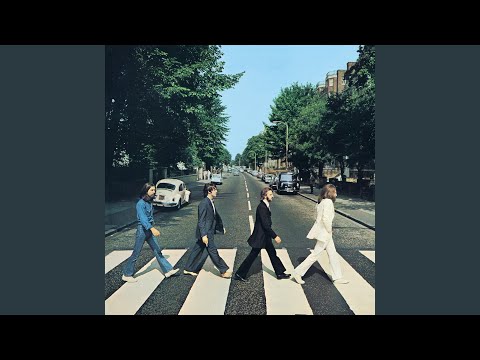
"The End," by the Beatles. Everyone wants the last word, but the Beatles might actually get it with this song.

"Final Hour," by Lauryn Hill. "Keep your eyes on the final hour." Not bad advice, actually.

"Glad Tidings," by Van Morrison. If you want a happy ending for the end of the world, this will make you smile as you fade away.

"Gone," by Ben Folds. If the end of the world were a break-up, this would make for a good break-up song.

"In My Life," by the Beatles. If the world is ending, everyone should look back at least once.

"Last One Standing," by Neil Finn. "Show what you're made of; surprise us both."

"Let It Be," by the Beatles. In the end, this one will beat out "Hey Jude" as the closer.

"Love This Life," by Crowded House. "Don't wait till the next one comes."

"The Luckiest," by Ben Folds. Hold someone close and tell them you're glad they existed.

"My Year in Review," by Bill Mallonee. Pensive, which I expect to be at the end of the end.

"O Come O Come Emmanuel," by the Civil Wars. It is Advent, after all.

"Out of Time," by Sam Phillips. A little dated, but hey, aren't we all?

"Redemption Song," by Bob Marley and the Wailers. Won't you sing with me?

"Sigh No More," by Mumford & Sons. Not a bad way of reframing an apocalypse.

"Sing Their Souls Back Home," by Billy Bragg. I want Billy Bragg in my last mix ever. You can't stop me.

"That I Would Be Good," by Alanis Morissette. One last prayer before we hit the road.

"True Love Will Find You in the End," by Mates of State. So say we all.

"Wanderlust," by Paul McCartney. "O, where did I go wrong, my love?"

"Wild Mountain Thyme," by Lucy Wainwright Roche. "Will you go, laddie? Go, and we'll all go together."

"I'm Gonna DJ (at the End of the World)," by R.E.M. These guys know how to jam when everything comes crashing down. This might be the first song of the rest of my life.

OK, that's my list. What's yours?

Both Inspiration and Cautionary Tale: Excerpts from Middling

What follows is an excerpt from the Winter 2021 edition of Middling, my quarterly newsletter on music, books, work, and getting older. I...