Monday, September 28, 2015

Cover Girls: New Music by Shawn Colvin and Natalie Imbruglia

The music I've gotten the most excited about this year has been inherently and unashamedly unoriginal. Two albums were released that featured great singers covering songs by great songwriters. The songwriters are almost exclusively men; the singers are both women. I find it impossible to not compare the singers to each other, which I suppose is one of the many burdens of womanhood.

The singers are both blasts from the past: Natalie Imbruglia, who came rushing out of Australian television in the mid 1990s with her devastating single "Torn," released her collection of interpretations of songs by male songwriters (Male) mid summer. It was followed in late September by Uncovered, the second collection of cover songs (third if you include her Christmas album) released by Shawn Colvin, best known for her mid-90s single "Sunny Came Home." I used to have a thing for both of them, if I'm being honest.

These two singers could hardly be more different. Imbruglia had all the marks of a pop sensation when she broke. She had cut her teeth as a soap opera actress, and she looked the part. There was great drama in "Torn"; you could imagine her feeling "all out of faith ... lying broken on the floor." She sold the story of the song with her voice, and the video only drove it home for her.

Meanwhile, Shawn Colvin had come from the ground; paying her dues in the heartland before taking a risk on New York, "walking these streets forlorn" (maybe the least impressive phrase in her brilliant song "Polaroids") until she won a Grammy for her first record and again years later for "Sunny." Imbruglia was a pop princess; Colvin was a folk goddess. I used to have a thing for both of them, if I'm being honest.

The heyday for both singers was a millennium ago, of course. But they have not gone away, and this year they both had great ideas for albums. Imbruglia's Male was a kind of thought experiment: These guys wrote these great songs; how would their meaning, their resonance, change if the voice behind them were a woman's rather than a man's? What emerges from the songs when their arrangements come from the heart of a woman?

Some of these experiments fare better than others, honestly. Her song selections are ambitious and somewhat eclectic, ranging from the urgent "Instant Crush" to the spartan "Only Love Can Break Your Heart" and the done-to-death "Melt with You." I knew nine of these twelve songs in their original versions, which suggests to me that Imbruglia didn't waste a lot of time researching her playlist. I can see the sense in that, actually: The point of the project is comparison, so the shorter the path to recognition, the better.

Some of her interpretations, unfortunately, suffer from comparison. There was nothing whatsoever wrong with "I'll Follow You into the Dark" by Death Cab for Cutie, and Imbruglia's modest lullaby version just makes the inherent fatalism in the song seem misplaced and confused. Why would you subject a baby to such sadness? When I hear "Let My Love Open the Door" these days, I don't think of Pete Townshend, as great as his original is; I think of Steve Carell's heartfelt performance in the film Dan in Real Life; Imbruglia's cover is certainly different and nicely feminine (again, I could picture singing this to a child, something that never occurred to me with other versions of the song), but it's still an odd comparison. She's at her best when she's less maternal and more sad and/or desperate: with "Instant Crush," "Naked As We Came," "Summer," and covering Neil Young, of all people.

The big weakness of Male, I think, is in the production: The recording sometimes sounds like it was started in Imbruglia's home studio in Australia and then finished off at a music factory in an LA suburb. Her voice is way out in front on every track, and aspects of some arrangements seem to be afterthoughts (for example, the hoots and hollers in "I Melt with You" and "Friday I'm in Love") .I think she would have benefited from collaborating with someone a little further removed from the pop charts, like Damien Rice (she covers his "Cannonball") or Duncan Sheik (another 90s standout). I'm reminded of the excellent collaborations of Bangles singer Susannah Hoffs and Matthew Sweet, for example. Still, I love the concept of the album, and I find myself cheering her with each new listen.

Meanwhile, back at the ranch, nobody interprets a song like Shawn Colvin. Her previous collection (Cover Girl) features some of my favorite songs of my early adulthood, and it seems to me she puts a cover single out whenever she needs a little money. (Exhibit A: "Crazy" by Gnarls Barkley.) I only recognized half of the songs on Colvin's "Uncovered," and most of those songs are either deep tracks or decades removed from cultural memory. Here the song itself is the point, not the space between interpretations or the role of gender in making meaning. If Imbruglia is a singer interpreting other singers; Colvin is a songwriter paying tribute to fellow songwriters.

In a smart, smart move, Colvin released a few of these tracks early, including the Creedence Clearwater Revival song "Lodi" and "Hold On," a song I was sure came from Emmylou Harris but actually came from Tom Waits. Either way, every time I hear it I come thisclose to crying, and then I listen to it again. Likewise, Bruce Springsteen's "Tougher Than the Rest" cuts through your defenses and puts you in touch with the vulnerability of love and the urgency of commitment. Even the poppy "Give Me a Little Sign" (featuring Marc Cohn, whose cover album 1970 is a favorite) picks up some edge and pathos in Colvin's capable hands. Best tracks: "Tougher Than the Rest," "American Tune," "Private Universe" and, of course, "Hold On."

Colvin's Uncovered released just in time for me to listen to it on a flight to Oklahoma City, but as with much of her catalog, it's ideally suited to a road trip. Male, in contrast, is meant to be heard in spurts; listening straight through the album requires too many gear shifts. But I'm glad I have it, and I expect I'll dip into it now and then, just as I'll regularly return to Colvin's disc. If I'm being honest, I used to have a thing for both of them.

Monday, September 21, 2015

Best Books of the Year: As Put Forward by Book Editors

For the past several years I've been part of an association of book editors who are Christian, known as the Association of Christian Editors (ACE). You would think, being part of such an organization, that I could write a better opening sentence than that. But I can't. Deal with it.

Every year ACE puts on a retreat, rotating from Chicago to Colorado Springs to Nashville to Chicago again, based on where our membership tends to live, along with proximity to airports. This year's retreat was put on in Colorado Springs, where I live, which made it easy to attend. The retreat is always good and particularly so this year, with an emphasis on soul care and wellness, along with the typical commiseration and idea sharing about industry-specific concerns. A highlight of every retreat is Friday evening, when we circle up and share with one another our favorite book of the past year.

There are few rules regarding this time of sharing. The book may or may not be new. You may, although most don't, share a book you edited. You may, although most don't, share a book that someone else has already shared. You may not, although most do, exceed the allotted time for sharing, nor may you (though you likely will) mention more than one book. This year's list follows. I've removed editor's names to protect their privacy, but I'm thankful to the member who took the following (lightly revised) notes, and I'm thankful to each member for taking the time to share. (I believe the notes are themselves adapted from sales copy on the website of some online bookseller.)

So many books are written haphazardly or edited sloppily, and these unfortunate variables don't necessarily factor in to a book's success. Editors' work is in this way thankless - a book succeeds or fails largely irrespective of the quality of editing - but as we slouch our way to Bulwer-Litton, help save Western civilization by adding these books to your wish-list.

All the Light We Cannot See by Anthony Doerr
From the highly acclaimed, multiple award-winning Anthony Doerr, the beautiful, stunningly ambitious instant New York Times bestseller (and Pulitzer Prize winner) about a blind French girl and a German boy whose paths collide in occupied France as both try to survive the devastation of World War II.

Code Name Verity by Elizabeth Wein
Oct. 11th, 1943. A British spy plane crashes in Nazi-occupied France. Its pilot and passenger are best friends. One of the girls has a chance at survival. The other has lost the game before it's barely begun. A Michael L. Printz Award Honor book that was called "a fiendishly-plotted mind game of a novel" in The New York Times.

A Man Called Ove by Fredrik Backman
In this bestselling and “charming debut” (People) from one of Sweden’s most successful authors, a grumpy yet loveable man finds his solitary world turned on its head when a boisterous young family moves in next door. (Honorable mention: Something Must Be Done about Prince Edward County by Kristen Green.)

The Boys in the Boat by Daniel James Brown
The #1 New York Times bestselling story about American Olympic triumph in Nazi Germany.

Small Victories by Anne Lamott
Anne Lamott writes about faith, family, and community in essays that are both wise and irreverent. It’s an approach that has become her trademark. Now in Small Victories, Lamott offers a new message of hope that celebrates the triumph of light over the darkness in our lives.

The Invention of Wings by Sue Monk Kidd
Writing at the height of her narrative and imaginative gifts, Sue Monk Kidd presents a masterpiece of hope, daring, the quest for freedom, and the desire to have a voice in the world. This exquisitely written novel is a triumph of storytelling that looks with unswerving eyes at a devastating wound in American history, through women whose struggles for liberation, empowerment, and expression will leave no reader unmoved.

Vango: Between Earth and Sky by Timothee de Fombelle
In a world between wars, a young man on the cusp of taking priestly vows is suddenly made a fugitive. Fleeing the accusations of police who blame him for a murder, as well as more sinister forces with darker intentions, Vango attempts to trace the secrets of his shrouded past and prove his innocence before all is lost. (Also check out book two: A Prince Without a Kingdom.)

Station Eleven by Emily St. John Mandel
Kirsten Raymonde will never forget the night Arthur Leander, the famous Hollywood actor, had a heart attack on stage during a production of King Lear. That was the night when a devastating flu pandemic arrived in the city, and within weeks, civilization as we know it came to an end. Twenty years later, Kirsten moves between the settlements of the altered world with a small troupe of actors and musicians. They call themselves The Traveling Symphony, and they have dedicated themselves to keeping the remnants of art and humanity alive.

Benediction by Kent Haruf
From the beloved and best-selling author of Plainsong and Eventide comes a story of life and death, and the ties that bind, once again set out on the High Plains in Holt, Colorado. Bracing, sad and deeply illuminating, Benediction captures the fullness of life by representing every stage of it, including its extinction, as well as the hopes and dreams that sustain us along the way. (Honorable mention: Flight Behavior by Barbara Kingsolver.)

Gutenberg’s Apprentice by Alix Christie
An enthralling literary debut that evokes one of the most momentous events in history, the birth of printing in medieval Germany.

Deep Down Dark by Hector Tobar
When the San José mine collapsed outside of Copiapó, Chile, in August 2010, it trapped thirty-three miners beneath thousands of feet of rock for a record-breaking sixty-nine days. After the disaster, Pulitzer Prize-winning journalist Héctor Tobar received exclusive access to the miners and their tales.

The Wright Brothers by David McCullough
Two-time winner of the Pulitzer Prize David McCullough tells the dramatic story-behind-the-story about the courageous brothers who taught the world how to fly.

Out of My Life by V. Raymond Edman
Vignettes and spiritual takeaway by the fourth president of Wheaton College, published by Zondervan in 1960/61. (Honorable mention: Lila by Marilynne Robinson.)

The Road to Character by David Brooks
With the wisdom, humor, curiosity, and sharp insights that have brought millions of readers to his New York Times column and his previous bestsellers, David Brooks has consistently illuminated our daily lives in surprising and original ways. Now, in The Road to Character, he focuses on the deeper values that should inform our lives.

Conscious Capitalism by John Mackey and Rajendra Sisodia
Whole Foods Market cofounder John Mackey and professor and Conscious Capitalism, Inc. cofounder Raj Sisodia argue that both business and capitalism are inherently good, and they use some of today’s best-known and most successful companies to illustrate their point.

The Churchill Factor by Boris Johnson
From London’s inimitable mayor, Boris Johnson, the story of how Churchill’s eccentric genius shaped not only his world but our own. On the fiftieth anniversary of Churchill’s death, Boris Johnson celebrates the singular brilliance of one of the most important leaders of the twentieth century.

The South and the Southerner by Ralph McGill
A wide-ranging blend of autobiography and history, The South and the Southerner is one prominent newspaperman's statement on his region, its heritage, its future, and his own place within it.

In other media, one editor couldn't recall a book that rose to the top this year. Instead she recommended the British spy series MI5 (ten seasons, all on Hulu and Netflix).

Monday, September 14, 2015

The Power of a Slow Burn: Staying Is the New Going

I recently attended a celebration, hosted by one of my authors, on the eve of the release of his book. Alan Briggs is a pastor in Colorado Springs; his book Staying Is the New Going is a rallying cry to reject the wanderlust that fuels so much of our consumer-tourism (even missions and charity tourism), and instead to commit ourselves to the places we live. It's a good, brisk, energizing book, and I hope a lot of people pick it up and reimagine how they relate to their communities.

It struck me, as Alan was thanking his guests, what a spectrum he had at the table, from recent relocates (some who left the more exotic mission field to settle in the Springs) to people whose families helped found the town nearly two centuries prior. This notion of staying isn’t just about where you find yourself; it’s about your posture toward your place. We can stay and consume a place, or we can go and consume a place. When you get down to it, tourism isn’t all that different from the home-as-castle/city-as-fiefdom consumer mentality of most people. There’s nothing magic about staying or going in and of themselves. The magic is in the attitude: Missionary isn’t something you do; it’s something you are, and that’s irrespective of where you find yourself. Alan and his friends are exemplars of cultural participation and missionary concern, and it came through brilliantly at that dinner party.

TWEET THIS: Missionary isn’t something you do. It’s something you are, irrespective of where you find yourself.

I once heard Andy Crouch talk about institutions, and I was pretty conflicted by his presentation. On the one hand, it seemed like I was being chided for being too self-centered, for failing to appreciate the institutions I had been born into and grafted into — this despite all the clear failings of any number of institutions, from the church to the government to corporations to employers. Why should I just shut up and take what these big behemoths dished out?

As I thought about it, however, I thought about our mortality, and our simultaneous impulse for eternity. How does that play out on this temporal plane, in this physical space? I may want to live forever — in Christ, I may in fact live forever — but what meaning does that have for where I work or where I live? These things predated me, and they will, in all likelihood, outlive me. If I’m to have meaning in the material world — if I’m to find meaning in the material world — I have to look to these institutions that I find myself in symbiotic relationship with.

The secret value of Alan's book, I think — the value that only emerges as someone puts the book down and picks the vision up — is the rediscovery that place doesn’t matter as merely a place but as a partner in our work in the world. Where we are informs what we do, and by extension, who we become. And who we become shapes where we are. And so on and so forth.

TWEET THIS: Where we are informs what we do and who we become. And who we become shapes where we are. And so on and so forth.

I think this book will have a slow burn, both as a seller and as a conversation generator. I think that’s a good thing; the kinds of conversations it will generate should take time, because participants move slower than consumers, and institutions such as neighborhoods and cities are not going anywhere. The space this dinner party created — for people to celebrate the culmination of a year of hard work while simultaneously reflecting on their own life decisions, life patterns and missionary postures — is a great example of the power of a slow burn, and the change it can ultimately ignite.

Monday, September 07, 2015

A People's Commentary on the New Testament: Matthew 4

I've been slowly but surely (but mostly slowly) building what I'm calling a people's commentary on the New Testament. So far only one other person, to my knowledge, has joined me in this task. The gist of it? The Scriptures are, by and large, set in a context of oppression and marginalization. Sometimes the audience is the oppressed; sometimes it's the oppressors. Sometimes both audiences are, for all intents and purposes, one and the same. We overlook stuff when we forget that those of us who are comfortable are not necessarily the ones to whom God is speaking words of comfort.

In this project I attempt to notice in the Scriptures a running theme of "striving" (in the words of people's historian Howard Zinn) "against corporate robber barons and war makers, to make ideals [professed in public] a reality — and all of us, of whatever age, can find immense satisfaction in becoming part of that." Here's how it works:

  1. Pick a chapter of the New Testament and interpret it online.
  2. As you write, think about people you know (or see, or imagine) who are not sitting in the halls of power.
  3. Think of the author of your particular scripture text not as someone with an advance on royalties in the bank and a Macbook Pro on their lap but as someone with no place to lay their head.
  4. Use the hashtag #PeoplesCommentary so the rest of us can find it, and so eventually we can sync the whole thing together.
I'm up to Matthew 4. (You can read Matthew 1 - 3 here.) Here we go.

***

Next Jesus was taken into the wild by the Spirit for the Test. The Devil was ready to give it. This is a test; it is only a test. But the stakes are high. Jesus, we have come to learn, is the Son of God, the Word of God made flesh, an unprecedented experiment: How fleshy is flesh? Would common, even primal temptations, so enticing to people made in the image of God, prove to be enticing to one who was not merely the image of God but God himself? The results were never in doubt - this is God we're talking about, after all - but the test was no less a trial, no less a sacrifice, as is evident in his preparation for it: "fasting forty days and forty nights [which] left him, of course, in a state of extreme hunger."

We are meant, of course, to recall the exodus of the Jews from their enslavement in Egypt. That was less a moment of liberation than a change of allegiance, both because technically the Jews were not slaves in Egypt (they had their own property and representation before the government) and because God was in fact inviting them into a new kind of enslavement to God. When the devil challenged Jesus, “Since you are God’s Son, speak the word that will turn these stones into loaves of bread,” he was enticing Jesus with his own agency, with the temptation to flourish by any means necessary. Jesus responded with God's instructions to the Jews on exodus: “It takes more than bread to stay alive. It takes a steady stream of words from God’s mouth.” We owe our lives, our livelihood, to God, not to our own self-sufficiency or even, as the exodus proved, the provision of those who would declare themselves our overseers. This recognition that no one controls us without our complicity is an act of liberation at a high level.

For the second test the Devil took him to the Holy City. Here we see how our sacred structures, even the Words of God, can be used maliciously, to serve an evil purpose: We are ushered to the Temple of Jerusalem, where the devil dares Jesus to jump by quoting Psalm 91: “He has placed you in the care of angels. They will catch you.” But Jesus is still thinking not of his power but his people's liberation, so he again quotes the texts of the exodus: “Don’t you dare test the Lord your God.” Obviously, then, we can test the Devil, and as Jesus will surely show in the chapters that come, we can test those who would assert control over us. Only God is above us.

The Devil [pointed] out all the earth’s kingdoms. . . . “Just go down on your knees and worship me, and they’re yours.” From basic provision to absolute power, the Devil has run the gamut of temptation. At our most benign, we want to feed ourselves, and to hell with everything/one else. At our most brazen, we want to rule the world. Neither of these is appropriate because neither is necessary: The world already has a ruler, and that ruler provides for our needs, and the needs of everyone around us. Jesus tells the devil to “Beat it!” and reiterates his vocation of liberation by once again quoting Deuteronomy: “Worship the Lord your God, and only him. Serve him with absolute single-heartedness.”

So ended the test. Exit the devil; enter the angels, who "took care of Jesus' needs" as he prepared to move from Test to Work.

When Jesus got word that John had been arrested, he returned to Galilee. He had been raised in Nazareth, but now his work would take him to Galilee, "crossroads for the nations," according to Isaiah. Jesus' work would be the shedding of light - good news for people "sitting out their lives in the dark." We are told that Jesus "picked up where John left off" - John, whose harsh words for those in power were balanced with words of comfort for the afflicted. John's ministry was important: heralding the coming kingdom. In Jesus, the kingdom had come.

“Come with me. I’ll make a new kind of fisherman out of you." For whatever reasons, these new, first disciples asked no questions and surrendered life as they knew it without a word. The work God calls us to is not so different from the work we take on for ourselves. A lot is made of this statement from Jesus, but in fact "Jesus made the same offer" to the next two disciples he recruited, and Matthew didn't see the need to repeat it. "they were just as quick to follow, abandoning boat and father." Instead of giving our focus to the exploitation of resources for our sole benefit, we are to give our focus to the people around us, made in God's image, sitting out their lives in the dark, waiting for light.

God’s kingdom was his theme. Beginning right now, God was their sovereign authority - not the Romans, not the high priest, not their parents, not their own will to power. God proved worthy of the responsibility, as Jesus "healed them, one and all" of whatever they were plagued by. This new kingdom was self-sufficient in a way that no prior kingdom had been. It was all to the good, an absence of suppression and oppression. The people Jesus met were finding themselves released from bondage and invited into a bondage that looked and felt exactly like liberation.

Sunday, July 05, 2015

First Annual Day of Ignorance

I don't mean to brag, but the social media tracking site Klout has deemed me an "expert" in the following:

  • Authors
  • Bible
  • Books
  • Christianity
  • Churches
  • Evangelism
  • Faith
  • Freelance Writing
  • Marriage
  • Nonfiction Books
  • Publishing
  • Religion
  • Spirituality
I can, in fact, if I understand Klout correctly (and please note that I am not considered an expert in Klout), be an expert in up to twenty-three things. I'm pretty sure expertise is gauged by how often I post to social media on these topics, and not on any demonstrated mastery of the subject matter. My wife, for example, might dispute my expertise on marriage; my authors (I'm an editor) might take issue with my mastery of them.

But such is the nature of our times. We get immediate affirmation for our briefest, most passing thoughts. I tweet 140 characters about freelance writing and someone "favorites" (not a verb) my tweet; there's exhibit A in my case for expertise. I post to Facebook a quick bon mot about religion, someone likes it, and I'm on the fast track to "expert" status. There's no harm in trying - there's no dislike button - and so we post and repost and repost. Measured in volume, our opinions are profound. Measured in depth? There is no such measure.

We want to participate in the urgent and weighty conversations of our time. And we are raised to perceive (or at least portray) ourselves as omnicompetent. And we are offended by disagreement. Put them all together and what do you have?

You have a mess, is what you have. A never-ending argument, pitched at high volume in the public square to the lowest common denominator. A false sense of expertise and a compounding pile of hurt feelings. More heat, less light. More feigned and presumed expertise, papering over a crisis of collective incompetence. As the proctor of the final exam said to Adam Sandler in his critically acclaimed film Billy Madison (did I mention I'm an expert on the cinema?), "Everyone in this room is now dumber for having listened."

Funny, right? But it can get tragic. When we weigh in on serious matters with unconsidered thoughts, we derail important conversations and forestall social progress. We listen to the wrong voices in a debate because they out-shout the voices who have invested the time and passion to come to know what they're talking about.

We need a regular reminder to ourselves, a common clearing of the air. We need a kind of Yom Kippur to acknowledge and divest ourselves of nor our sins but our ignorance. So I'm calling for a first (and, let's be honest, probably last) Annual Day of Ignorance.

Ignorance because to admit we are not experts in something doesn't prohibit us from becoming experts. Competence in any area of consideration isn't a natural gift; it's a learned skill. To confess our ignorance can be to commit ourselves to become informed.

Day because having something on the calendar means we can anticipate it and prepare for it. We can recall it when it's over. And for twenty-four hours we can lean into what we want, which is less heat, more light, more humility and, yes, more competency.

Annual because our current environment fosters the problem we're trying to solve, and so even as we earnestly seek to minimize the damage our individual ignorance may cause, and even as we strive to speak more meaningfully into the weighty matters of our day, there are insidious, automatized forces encouraging us to speak without thinking, to make summary judgments without discerning, to let our tongue loose before we have listened. We need to enter into a pattern of admitting what we don't know, and only then might our public discourse and our social action become more responsible and more effective.

When we admit our ignorance and commit to pursuing competency, we might just have our eyes opened to who the true experts are. As just one example, Professor Soong-Chan Rah often says (regarding one of my supposed areas of expertise, religion), "“If you, as a white person, want to move into an urban setting and do ministry, and you don’t have any non-white mentors, you’re not a missionary, you’re a colonialist.”

This informed critique of the collision of a missionary impulse, evangelistic zeal, and a naivete about matters of systemic racial privilege, confronts our ignorance and challenges us toward circumspection and thoughtfulness.

There are countless other conversations taking place today that would benefit from us listening and not speaking, learning and not preaching, finding true experts and inviting them to advise us in the things that concern us. Just when we think we've overcome our ignorance in one area, another issue surfaces and exposes the vastness of what continues to elude us. And still we are encouraged at every turn to see ourselves as omnicompetent, our opinions as authoritative. We need this, folks: We need to accept the limitations of our competency and embrace our responsibility to listen, learn, grow and do better.

I propose that we mark each July 5 as an Annual Day of Ignorance. July 5 is the birthday of P. T. Barnum, who once famously (or so the Internet tells me) said, "There's a sucker born every minute." One minute years ago, you were that sucker. So was I. So is everybody.

Monday, June 29, 2015

In Praise of 45

In this post:

  • Great music.
  • Reflections on the music of the 1970s.
  • A birthday request.
When I was your age, you didn't download a song off the internet. You didn't even listen to it streaming on the internet. You didn't even order it from a store on the internet. You bought it at the mall, and you took it home, and you took it out of a paper sleeve, and you put it on a record player. And a needle read that song off a disc spinning at 45 revolutions per minute.

I have today reached the age of 45, and yet I grew up in the age of 45s - a generation much like this, in which singles are king and full length albums are for suckers. The pop age of today is like the disco age of my youth, when older artists struggled to remain relevant while young, fresh faces put confection after forgettable confection in front of children and encouraged them to imbibe. Rarely can a child appreciate the full canon of an artist's work, reaching past the hits to the deep tracks that extend the listening time of the slow-spinning LP record. A child's world is pop-pop-pop, defined by the radio and (soon enough) the video. Two songs by the same artist--the A side of the 45, reserved for the officially released, radio-friendly track, and the B side, often assumed to be a throwaway just filling empty space--test the tolerance of a kid, let alone a full album's worth; 33-1/3 revolutions per minute are, with few exceptions, wasted on the young.

So, when I was a kid, I rarely listened to full-length albums, preferring instead to play the A side of a 45 and, if I were inspired or even just lazy, flipping the 45 over and listening to the B side. The two 45s seared into my memory from childhood are very different from one another, but I loved them both.

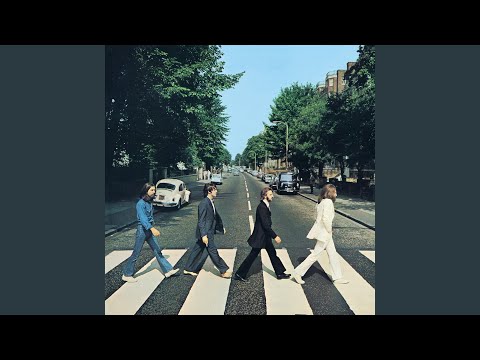
The Ballad of John and Yoko

"The Ballad of John and Yoko" is a jaunty, jaded journey through Europe. Performed by the Beatles, it's a song of a particular moment, a commentary on his current reality that would come to characterize much of John Lennon's solo work. I have no idea what John is singing at times, but I like this song a lot, particularly Paul McCartney's background harmonies and prominent bass line. On the B side was "Old Brown Shoe," written by George Harrison. More a product of its era, it sounds unlike most Beatles songs, foreshadowing again George's solo work to come. This song was a rocker, and I loved it in a way that made me more open to B sides and other deep tracks to come.
Old Brown Shoe

The other 45 I wore out as a kid featured two songs by, of all people, Nancy Sinatra. Like the Beatles 45, I inherited this from some uncle or second-cousin-once-removed; I would never have found it on my own, because even if it had graced the radio in its first release, those days were more than a decade gone. But its tracks reflect an entirely different popular genre from the Beatles. Hers was what came to be known as "incidental music," the music of camp. "These Boots Are Made for Walkin'" is as American as the Beatles were British; it had a great, catchy bass line too.The boots were surely go-go boots, zipped all the way up to the thigh.

I was, frankly, less likely to flip this 45 over from the A side to the B side, but I was occasionally in the mood for "The City Never Sleeps at Night." There's a 60s-era New York sensibility to this track that I like.

These songs exiss as singular entities, but they also play off each other, A side and B side, to give a fuller portrait of the artist. We consume the A side, we discover the B side. You don't get a B side when you download a song off iTunes; music streaming services leave artists behind after one track in search of something sonically similar. The gateways between music consumption and musical discovery are no longer easily accessible to us.

For my birthday this year, I'm hoping you'll accompany me on a journey of musical discovery. I'm asking you to recommend 45s to me - two songs by artists you appreciate: a popular, released track, along with deeper tracks that are less familiar to the masses but that demonstrate why you're a fan. List them here in the comments, post links to my social media, whatever you like. I hope you'll include in your recommendations a comment on what makes these songs great for you, or a story that explains why they linger in your memory.

I'll expand my musical library based on what you recommend. And if I'm not too intimidated by the technology, I'll build a playlist of all your recommendations on Spotify, so we can discover some great music together. "A splendid time," John Lennon once promised from the B side, "is guaranteed for all."

Monday, June 22, 2015

My Top Five Superheroes (and Why)

My sister asked me, the other day, to list my top five superheroes. She may have been fishing for birthday ideas; she may have been looking for ways to raise her son's standards higher than Hawkeye. Whatever the case, I gladly listed the following (in order):

  1. Daredevil
  2. Batman
  3. Robin
  4. Captain America
  5. Moon Knight
I struggled more than I expected to finish this list. The top three were easy; the bottom two were hard, and I suspect that I'll second-guess this list even before I post it. But I do notice some commonalities:

  • None of these heroes is super-powered at a cosmic level. There is no Superman or Hulk. Captain America is, of course, a "super soldier," and was recently listed among the most powerful superheroes in the Marvel Universe, but his power is essentially enhanced strength, coupled with shocking discipline and focus, and high moral character.
  • Only two of these heroes are not in the Marvel Comics universe, and those two (Batman and Robin) are tightly connected to each other.
  • Only one of these heroes has a public identity; the rest are in the shadows, although they have a tight network of supporters who know their secret.
  • Each of these heroes is associated with a particular place.
Daredevil, as ably demonstrated in the Netflix series of the same name, sets his focus on Hell's Kitchen in New York, a neighborhood that has never enjoyed the benefits of New York's hubris. While the Avengers are saving New York from giant robotic lizards coursing through a wormhole to another universe in the skies above, Daredevil is confronting drug dealers and dismantling crime networks in the same span of city blocks he grew up in and refuses to leave.

Batman and Robin are inextricably identified with Gotham City, which is Superman's Metropolis after the lights have gone out. Although their adventures have taken them to the farthest reaches of time and space, Gotham remains a principal character in their story. It's no surprise, in fact, that the city has its own television series; place matters supremely in the Batman universe.

Captain America's association is right there in his name. He was created jingoistically; his first cover shot as a superhero showed him punching Adolf Hitler in the nose. In his first iteration during World War II he was a salute to the greatness of his country of origin, but in subsequent iterations, beginning in the comics in the 1960s during widespread civil unrest and carrying over into contemporary films with the cynical sensibility of the postmodern age, he represents the tension between our sense of our national potential and our unease of our tragically flawed history as a country.

Of all five superheroes, Moon Knight is my least familiar and also the most tenuous connection to a place. Whatever power he has comes from Egypt, but he locates himself in New York - except when he doesn't, when he moves to the West Coast or meanders throughout the world. There's a kind of schizophrenia to Moon Knight's story; his superhero persona is only one of the many characters he plays in his life, and his sense of dislocation does damage to his relationships and even his psyche. Maybe that's why I'm so intrigued by him; Moon Knight is what happens to us when we aspire to greatness but lose sight of our placedness.

Obviously there's more to the story than placedness with these characters. Three of the five have capes; two of them don't. I don't think that's overly significant, although a childhood fascination with comic book superheroes surely has something to do with the color and fluidity of the art. It's sort of trendy to claim that placedness is the primary driver of my hierarchy of superheroes; I recognize that. But the fact that place is one of the particularly cool things about these heroes is not lost on me, and I wonder how much their broad acceptance in the broader culture (with the exception of the relatively rootless Moon Knight, all of them have a strong foothold in pop culture) is tied to the idea that a particular place breeds a particular kind of hero - the hero a place needs, the hero each of us could commit ourselves to being.

Monday, May 04, 2015

Charlie Chaplin: The Cautionary Tale of a Missional Genius

My boss sometimes takes me to bookstores. It's not a habit of mine, oddly enough, even though I'm a book editor and a lifelong reader. It's the sort of thing I'm supposed to equate with nerd heaven, and I do enjoy it, but it's not something I regularly indulge in.

But when my boss takes me to a bookstore, I like to pick something up, especially when the bookstore is an independent. Most recently we went to the Tattered Cover in Denver, a sprawling store in the classic sense. Picture tall shelves with rolling ladders. Picture effusive recommendations from staff. Don't picture music or teapots or "Readers do it spine-out" bumper stickers; true believers don't need such ornamentations. Tattered Cover is a booklover's bookstore.

I wandered the shelves, making mental notes, but the book I bought was in the last place I looked: Charlie Chaplin: A Brief Life is a relatively new biography of the most celebrated actor of the silent film era, the first worldwide celebrity, the icon of a generation. I've watched many (though by no means most) of his films and remember Robert Downey Jr.'s portrayal from the 1990s, but I'd not dug into his story. Now seemed as good a time as any.

Watch early talkie movies and you'll quickly see how married to the stage the medium was. The actors deliver their lines to the back row of the theater, not to the overhead boom, and their reactions are exaggerated in ways that film doesn't require. It was in the silent era, the age celebrated in the recent film The Artist, that the particular strengths of film as a new medium were explored and tested. One director cut every fourth film cell to his action scenes to give a heightened sense of frenzy; chases and other intricate scenes were carefully choreographed so that the impossible seemed both unavoidable and entirely natural. Early films were short - around eleven minutes on average - but they packed a lot of punch.

Chaplin came up in the theater scene and honed his craft mainly by observation. His capacity for acting drunk became legendary; his lampoons of class divisions were spot-on. But the thing that struck me, the thing that took his work from caricature and spoof to high art and cultural relevance, was rooted in observation. In the first days of his foray into film, after success in vaudeville in Britain and the States,

He wandered for some days among the actors and sets without actually being assigned a role. Then the moment came. ... He was not yet the Little Tramp; he was reprising the role of stage villain complete with cravat, top hat, monocle and costume. He had become a "dude" or seedy "toff." In this first film he is insidious, wheedling and oddly threatening. When he kisses a girl's hand, he then goes all the way up the arm. That is an early Chaplin touch. He was rpobably the first to do it on the screen. He already has a full range of facial mannerisms, twitching and smiling and scowling. He also tries out a distinctive walk, the ancestor of a more famous one. ... Moving Picture World said that "the clever player who takes the part of a sharper ... is a comedian of the first water."
Observation is the first virtue of comedy and really any meaningful engagement of society. I once heard theologian Soong-Chan Rah tell an audience of missionaries, "If you seek to change a city without first becoming a student of that city, you're not a missionary, you're a colonialist." Acting without first observing is destructive and is ultimately exposed as artifice, as imposition - at its worst, as violence. But critical observation that informs action is almost inherently transformative. The student of a culture, whether that culture is film or fashion or faith or something entirely different, discovers what that culture values, what it fears, what it longs for, what it assumes to be true. Even the culture under consideration is not as aware of these things as its student. We need the student, ironically, to teach us who we are and what we need.

TWEET THIS: We need the student, ironically, to teach us who we are and what we need.

With the release of Kid Auto Races at Venice, his second or third film (the sequence is unclear, but shot within five days of his first film), Chaplin had discovered the character his audience wanted: a Little Tramp, clearly conscious of high society but far removed from its benefits, never welcomed into the in crowd but never defeated by its rejection. He is the outsider looking in, lifting up society's quirks for society to laugh at, making a hero of an outcast.It is this character, who will evolve over the course of many films, who becomes known the world over and who will define the new art form of film.

He is already dressed in a distinctive fashion, with clothes that are too small for him. ... He "hogs" the scene, serenely self-confident of his own image and aggressive to those who hinder his presentation of himself. He is bristling with the desire to perform. He gets in the way of the camera filming the races, and resists every attempt of the director to exclude him. He wants to commune with that camera but, more significantly, with the vast and unknown audience that is assembled behind the lens. He sets up a direct relationship with those who are watching him, both mocking and conspiratorial. ... He is absurdly solipsistic, as if to say that only he matters. Only he is worth watching. Chaplin would maintain these sentiments for the rest of his film career.
Film is barely a thing, and already Chaplin has knocked down the fourth wall separating the actor from the audience. This is, in fact, what they want - in an impersonal, detached medium Chaplin has supplied personal connection and attachment. The audience identifies with him; they cheer him on even as he violates social protocol right and left. Armed with that trust, Chaplin will go on to expand and ennoble the craft of filmmaking; no longer confined to slapstick, the laughable Little Tramp becomes our guide into a world in which the poor cannot escape poverty because the system is hard-wired against them.

Chaplin had learned early on, in his stage career in London, the proximity of laughter to lament. As actress Marie Lloyd told him, "I believe that's what real comedy is, you know, it's almost like crying." And yet this lament that Chaplin led his audience to was never the final word: The young man who overcame adversity to become the most recognizable person in the world would end his films with a kick of the heels and shuffling strut off to his next adventure. In the world Chaplin observed and acted upon, there was always hope and never defeat.

This was Chaplin's genius, and it is a good model for those of us who follow Christ to emulate. We study our society, we learn what is laughable and lamentable about it, and we bring it to the foreground so that it is no longer overlooked. We help those around us to see what must be seen, and we offer hope that what we see will not defeat us.

TWEET THIS: We help those around us to see what must be seen, and we offer hope that what we see will not defeat us.

If that were all there was of Chaplin's story, that'd be a great thing. But Chaplin has sixty-some years to go, and while much of his art is brilliant, much of his life is tragic. The rewards he earned for his careful observation and sympathetic portrayal went to his head. There's little worse than a student who thinks they have nothing left to learn. Chaplin was officious and tyrannical as a director, going so far as to ignore obvious gaffes in his films because he was convinced the audience would never notice them, being as focused as they were on his performance. He was notorious for his treatment of women, most of whom began as muses and ended as used-up lovers. He liked young girls for their innocence, but he repeatedly stole innocence from them. He visited the tenements of his childhood but recoiled at the notion that he shared anything in common with their occupants. And over time this hubris affected his art as well, so that his characters became less a portrayal of Everyman and more a patronizing send up of everyone but himself.

TWEET THIS: There's little worse than a student who thinks they have nothing left to learn.

Chaplin's tragic story has lessons for us as well: our successes in life don't make us better than our neighbors, and the true student of society never graduates. We've never fully uncovered the mystery of our neighbors, and whatever story we might tell on their behalf is never complete. It is always an honor, always a burden, and however we tell such stories, we must always look not just for what's laughable or lamentable in it but for the defiant hope on the other side of it. Without hope, even our most profound portrayals degrade into caricature. Without hope, all comedy degrades into tragedy.

Monday, April 20, 2015

Take Off Your Shoes: The Holy Ground of Airport Security

A woman hasn't seen her sister in eleven years when she learns that her sister is dying. A car accident bogged down her effort to visit, and her sister died before she could get there. She went for a walk on the beach and found a long knotted rope. She started untying the knots, thinking about her sister as she loosened the knots and untangled the rope. Six hours later the rope was neatly collected and she was ready to take her place as the family matriarch.

She hasn't flown in a plane since 1987. She just got married, so all her identifications show her maiden name. Her husband, a merchant marine, is at sea for two weeks. Her flight was, of course, booked at the last second. But you have to go, to return and be restored to your place in the family, as much for your family as for you.

I want to call my sister, to tell her I won't let the years separate us. I want to cull the herd of my life so I can quickly go where I need to be in a hurry. I want to say something more profound and resonant than "She's in a better place" and "She's looking down on you in love" or "I'll be praying for you," as much because that can't really be comforting, even though she's clearly comforted by it, as because I must be a better wordsmith, a more sophisticated thinker, than that.

I've got nothing. I just offer my prayers and nod in agreement. Her sister is in a better place than the place where she contracted lung cancer and lost touch with her sister for more than a decade. She is looking down in love, because love is the thing that survives death.

We're in line together at security, and the TSA agent is wonderfully compassionate, even though she thought we were a couple when clearly I'm younger and could do better, right? And then we are through security and she's going to concourse N and I'm going to concourse C. I say goodbye and she doesn't hear me because she's in her own head. I haven't made a friend; I've just made my way through the security line. And it's not even 7am yet. But the world spins madly on, and the finger of God holds the axis steady, and my shoes are off, because the place where I am standing is holy ground.

Sunday, April 05, 2015

Throw Down Your Ace in the Hole: Happy Easter from Loud Time

Such is the way of the world
You can never know

Just where to put all your faith
And how will it grow?

***

Peter got really nervous and swore, “I never laid eyes on this man you’re talking about.” Just then the rooster crowed a second time. Peter remembered how Jesus had said, “Before a rooster crows twice, you’ll deny me three times.” He collapsed in tears.
***

Such is the passage of time
Too fast to fold

Suddenly swallowed by signs
Lo and behold

***

Mary stood outside the tomb weeping. As she wept, she knelt to look into the tomb and saw two angels sitting there, dressed in white, one at the head, the other at the foot of where Jesus’ body had been laid. They said to her, “Woman, why do you weep?”

“They took my Master,” she said, “and I don’t know where they put him.” After she said this, she turned away and saw Jesus standing there. But she didn’t recognize him.

Jesus spoke to her, “Woman, why do you weep? Who are you looking for?”

She, thinking that he was the gardener, said, “Mister, if you took him, tell me where you put him so I can care for him.”

Jesus said, “Mary.”

***

Gonna rise up
Burning black holes in dark memories

Gonna rise up
Turning mistakes into gold

***

Monday, March 23, 2015

A People's Commentary on the New Testament: Matthew 3

The Scriptures are, by and large, set in a context of oppression and marginalization. Sometimes the audience is the oppressed; sometimes it's the oppressors. Sometimes both audiences are, for all intents and purposes, one and the same. We overlook stuff when we forget that those of us who are comfortable are not necessarily the ones to whom God is speaking words of comfort.

Hence the ongoing project I'm working on:

A People's Commentary on the New Testament

In this project I attempt to notice in the Scriptures a running theme of "striving" (in the words of people's historian Howard Zinn) "against corporate robber barons and war makers, to make ideals [professed in public] a reality — and all of us, of whatever age, can find immense satisfaction in becoming part of that."

I invite you to undertake it as well:

  1. Pick a chapter of the New Testament and interpret it online.
  2. As you write, think about people you know (or see, or imagine) who are not sitting in the halls of power.
  3. Think of the author of your particular scripture text not as someone with an advance on royalties in the bank and a Macbook Pro on their lap but as someone with no place to lay their head.
  4. Use the hashtag #PeoplesCommentary so the rest of us can find it, and so eventually we can sync the whole thing together.

So far at least one other person has taken me up on this populist crusade. Let me know if you take it on; I'd love to see what you come up with.

And now, without further ado, a people's commentary on Matthew 3.

***

His message was simple and austere, like his desert surroundings. John the Baptizer, born into privilege as son of a temple priest, was also a miracle child, having been born to parents who had long before given up on having children. His character here demonstrates the turbulent religious climate at the time of Jesus' ministry, as he rejected the formal religious system of his father and embraced the ascetic lifestyle ("a diet of locusts and wild honey") and fiery message of a renegade prophet: "Prepare for God's arrival! Make the road smooth and straight!" Here he references the prophet Isaiah:

Every valley shall be raised up,
every mountain and hill made low;
the rough ground shall become level,
the rugged places a plain.
And the glory of the Lord will be revealed,
and all people will see it together.
(Isaiah 40:4-5)

While these words allude to a great leveling in society - bad news, generally, for people who had secured power for themselves - its context is a message of comfort: "Speak tenderly to Jerusalem," Isaiah is instructed by God. It is worth remembering at all times that God offers good news to people who struggle and suffer; God's words of confrontation always have a larger context of loving concern.

TWEET THIS: God's words of confrontation always have a larger context of loving concern.

That John drew diverse crowds is noteworthy, both as a demonstration of the religious upheaval taking place, and as a context for Jesus' first public display of his divine mission.

When John realized that a lot of Pharisees and Sadducees were showing up for a baptismal experience because it was becoming the popular thing to do, he exploded. As is often the case, sincere acts of repentance often degrade into pious performance; much as politicians who make a show of going to church, or scandalized televangelists who make a tear-filled public confession of scandalous behavior and immediately return to fundraising, such appropriations of earnest acts of commitment simultaneously buttress the public profile of people in power while also subverting the enduring value of more authentic demonstrations. John's response is telling: "Descendants of Abraham are a dime a dozen. What counts is your life." As Jesus himself will affirm, John declares that public spectacles and public behavior alike are suspect; our character and commitment are revealed in small, even secret ways, far removed from any derived benefit.

“The main character in this drama — compared to him I’m a mere stagehand — will ignite the kingdom life within you." As powerful and momentous as John's ministry was, it was effectively remedial; the more proactive, constructive, directive ministry was still to come, through Jesus. "He’s going to clean house — make a clean sweep of your lives." If John represents a renaissance of the prophetic tradition, with strong confrontational language leading to a renewed commitment to justice and social parity, then Jesus (at least according to John) represents revolution, a total overhaul of the social order.

Note that John sees himself, and consequently his ministry, as subordinate to Jesus. He is "a mere stagehand" for the main act to come. And when Jesus ultimately presents himself for baptism, John objects: “I’m the one who needs to be baptized, not you!”

“God’s work, putting things right all these centuries, is coming together right now in this baptism.” Why would Jesus, self-conscious of his unique mission, accept a baptism of repentance by John, who himself admits his inferiority? A recurring theme in Jesus' teaching (and, importantly, his visions of the end) is the great leveling of Isaiah 40, the flattening of social hierarchies. Guests at the wedding banquet that represents the end of the age range from the powerful to the penniless; moreover, men and women of ill repute and little to no means made regular appearances alongside Jesus at meals throughout the Gospels. It isn't the pecking order in this baptism that is important to Jesus; it's "God's work [of] putting things right" that matters. In this respect, both John the Baptizer and Jesus the Messiah are playing roles in an epic story; their vocation is fulfilled not by achieving status but by playing their part well.

“This is my Son, chosen and marked by my love, delight of my life.” Jesus may be playing a part in a story, but he is the central character in it. He will have his credentials repeatedly challenged by powerful people in scenes to come, but here his credentials are clear: God himself participates in Jesus' baptism, which becomes effectively an ordination, a king's anointing:

"You are my son;
today I have become your father.
Ask me,
and I will make the nations your inheritance,
the ends of the earth your possession. ...
Therefore, you kings, be wise;
be warned, you rulers of the earth.
Serve the Lord with fear
and celebrate his rule with trembling.
Kiss his son, or he will be angry
and your way will lead to your destruction.
(Psalm 2:7-10)

TWEET THIS: Jesus' mission is good news for the people, but bad news for those who have achieved power and status.

This first public declaration of Jesus' mission is good news for the people, but once again it is bad news for those who have achieved power and status, often on the backs of people they were sworn to serve and protect. Jesus' anointing is a warning to "you rulers of the earth": they, like everyone else, are subject to the ultimate Sovereign God of creation, and their rejection of Jesus - and the social order he represents - will be counted as treason, and dealt with accordingly.

Both Inspiration and Cautionary Tale: Excerpts from Middling

What follows is an excerpt from the Winter 2021 edition of Middling, my quarterly newsletter on music, books, work, and getting older. I...