Tuesday, August 30, 2011

The Shallows: My Goodreads Review

The Shallows: What the Internet Is Doing to Our BrainsThe Shallows: What the Internet Is Doing to Our Brains by Nicholas G. Carr

My rating: 3 of 5 stars


Well, I finally did it. After a year of private grumbling and modest pushback against the devotees of Nick Carr's The Shallows, I finally read it for myself. I did so as an act of intellectual humility, in part, and to accommodate another act of intellectual humility--I had invited some Carrites to present their buzzkill take on the Internet era at a retreat I was coordinating, and all we retreatants had effectively committed ourselves to reading it in advance. So I read it. And my opinion has not changed by much.

What I never really doubted was the strength of Carr's writing and research. He's almost literally voluminous, drawing on insights spanning millennia and a variety of professions and disciplines to offer what is necessarily a preliminary critique of the Internet as a cultural phenomenon. You have to admire Carr's capacity to synthesize these disparate data and anecdotes, even to find them and intuit their value to his argument. What bugs me about The Shallows is what a buzzkill it really is.

The premise of the book comes from Carr's article "Is Google Making Us Stupid," and his most journalistic material is a sort of corporate philosophical biography of that organization. Google is admittedly audacious and self-righteous in its quest to efficiently collect and disseminate all the world's information, and Carr rightly wonders what is lost when Google becomes the de facto conduit through which all the world's information--from protons and neurons to War and Peace--funnels into our sensory and meditative minds. We become less researchers, less readers, less inquirers, and more, well, googlers.

That much is obvious; what's most interesting about Carr's book is what that evolution/devolution entails, which is a radical rewiring of our brains. I'm reminded of a scene from The Office, in which Michael Scott is challenging the new web-oriented sales pitch of his paper company. Eager to prove the enduring strength of good old fashioned pressing the flesh and hand-delivering fruit baskets, Michael sets out in his Chrysler Sebring convertible, and the car's GPS promptly instructs him to drive into a lake. Any idiot would have stopped the car, but Michael is not just any idiot; no matter how much he protests his enslavement to the virtual gods of computer code, he does what they tell him and suffers for it.

This is not exactly Carr's point, but he does suggest, in Mcluhanite form, that as we enjoy the benefits of the Internet and its recalibration of information-gathering, we are also forsaking/abandoning/being stripped of intellectual capacities that don't fit the mold of the online age. Principal among these capacities are deep analytical and meditative thinking, empathy and moral judgment, long-term memory, and whatever else of the classic intellect requires time and nonlinear inefficiency to flourish.

I know, right? Buzzkill. Especially because Carr doesn't offer any clear suggestions for mitigating this remapping of our brains. They're there, I suppose--go for walks in nature, read booklength treatments on paper, sleep regularly--but they're not pointed suggestions, and they hardly seem adequate to combat the Internet juggernaut. I found myself thinking that someone read Carr's article on Google and thought These five thousand words were good; I'll bet fourteen times as many words on the same topic would be great! Carr writes, I suspect, mainly to impress, to remind us that human beings can think and process information and make alarmist prophecies better than any old Internet. That he does; what he doesn't do is give us any guidance into keeping our brains appropriately nimble and sharp and deep and strong.

I probably came to the book with this assessment from the beginning, I'm willing to admit. Carr's reminder is that while something is gained via new technologies, something is also lost. He needs to be regularly reminded, of course--especially given the futility that charges throughout the book--that while something is lost, something is also gained. Maybe it's my profession--as an editor at a Christian publisher--but I've been trained and charged to regularly present "payoffs" in the pages of a book. We call them "cookies," and we try hard to "put the cookies on the bottom shelf" so that people are sure to find them and put them to good use. Carr's book is cookie-less; it's seventy-thousand-some words of drinking castor oil in the vain hope that it will somehow fix what ails us. Knowledge is power, Carr agrees with Google, but unlike Google, you leave Carr's book without a good sense of what to do with the power you've been given.

The Smothers Brothers once recorded a take on the story of John Henry, who laid tracks for cross-country rail. John Henry was the fastest, strongest worker on the line, but one day the powers that be brought in a steam drill to do the line-worker's work. It could outpace everyone, and to prove it, John Henry was challenged to a duel. "Wop wop wop," the Smothers Brothers sang, giving voice to the tense drama of man versus machine, the futile battle against human obsolescence. Their song ended as follows:

"Well, John Henry said to the captain,
'By God, I ain't no fool.
Before I die with a hammer in my hand
I'm gonna get me a steam drill too.'"

Nick Carr uses Google. He may well be on the Internet right now. To him, to the powers that be, to myself, to all of us, I say: Keep exercising your brain in a variety of ways. And when new technologies present themselves and threaten to rewire us in their image, well, shut up and deal with it.


View all my reviews

Saturday, August 27, 2011

Let It Be Chords: Or, Thoughts on the Petrified Paragraph

I think in paragraphs. I would like to think differently.

Paragraphs are singular, linear thoughts. They begin and end with hard returns. They're completely self-contained and, certainly in the case of nonfiction, they're generally intended to isolate and direct the thinking of the reader.

Meanwhile . . .

Poets think in lines, in syllables, in phonetics.

Musicians assign tones to words, so that "G" is for "When I find my" and "A" is for "self" and "E" is for "in" and "G" is for "times of" and "C+D" is for "trou+ble."

Programmers think in code--sequences of characters that make no linear sense but create something vibrant and utterly different.

Filmographers and cartoonists think in scenes which words then embellish. Painters think in scenes which words only obscure and diminish.

Writers and editors, like me, think in paragraphs--a steady, unrelenting progression of letters and spaces and punctuation marks that demand coherence and linearity. Each word matters but only in relation to the whole; a misplaced word, meanwhile, unsettles the whole bunch.

I think in paragraphs. I would like to think differently--at least on occasion. I would like to write, at least now and then, like a poet, like a musician, like a programmer, like a filmographer or cartoonist, like a painter.

Ah, but allowing myself to write in these ways, even and perhaps especially only now and then, is to extract myself from the swirling eddy of the paragraph, and how does one do that? And how--and even why--would one then return?

***

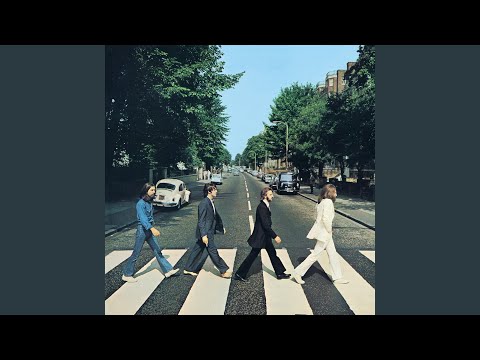
Sorry, feeling a bit hippy-trippy today. Apparently I've been listening to too much late-sixties Beatles music lately.

Tuesday, August 23, 2011

The Shallows: The Rise of the Machines

Someone ought to write a novel or screenplay about this theory of technology, as described in Nicholas Carr's The Shallows. Maybe, in fact, someone already has:

For centuries, historians and philosophers have traced, and debated, technology's role in shaping civilization. Some have made the case for what the sociologist Thorstein Veblen dubbed "technological determinism"; they've argued that technological progress, which they see as an autonomous force outside man's control, has been the primary factor influencing the course of human history. Karl Marx gave voice to this view when he wrote, "The windmill gives you society with the feudal lord; the steam-mill, society with the industrial capitalist." Ralph Waldo Emerson put it more crisply: "Things are in the saddle / And ride mankind." In the most extreme expression of the determinist view, human beings become little more than "the sex organs of the machine world," as [Marshall] McLuhan memorably wrote in the "Gadget Lover" chapter of Understanding Media. Our essential role is to produce ever more sophisticated tools--to "fecundate" machines as bees fecundate plants--until technology has developed the capacity to reproduce itself on its own. At that point, we become dispensable.
I'm reminded of Soylent Green, which you may recall "is people!" But that's more Marxist than Emersonian; the corporation is still in the saddle there, whereas techno-determinists are warning us that we don't actually control the technologies we're creating and mass-producing. The assembly line, with its drone workers, extends far beyond the manufacturing plant to the brainstorming session, where tablet computers and Blackberries allegedly conspire to plant thoughts in our slave-brains to make them better, stronger, faster. Right now they still need us to propagate their species. But what will become of us when our gadgets start mating? The thought of it is enough to make me make sure that my wife's iPhone and mine stay in separate rooms.

Saturday, August 13, 2011

Male-Pattern Exhibitionism

I have a new cause I'm fighting for: an end to male-pattern exhibitionism. This, it seems to me, is among the more pressing concerns of our day, ranking alongside the imminent end of America's global economic domination (after which we'll have to settle for being the world's only remaining military superpower), the questionable nature of muppets Bert and Ernie's relationship (the best word I've heard on this was thirdhand: "Everybody cares whether Bert and Ernie are gay; nobody cares that Oscar is homeless"), and the looming fall television lineup. I've seen the signs of it all summer: guys walking around shirtless, and everybody else accepting this as normal.

Friends, this must not stand.

The tragedy of male-pattern exhibitionism is pervasive, reaching far beyond the gym. It's not just Ryan Gosling and the Situation who are showing off their abs, but men with beer guts the size of Delaware and backs as hairy as Snooky's extensions closet. I've seen toddlers and octogenarians wandering around shirtless; I've seen topless men on park benches and at outdoor concerts and, sigh, on the sidewalk outside my house. I'm honestly dreading our church's fall picnic because any number of my fellow congregants haven't gotten the message that WE DON'T NEED TO SEE THAT.

Frankly, I don't understand the appeal at all of walking around shirtless. It makes some sense at the beach or the pool, I suppose, but in the parking lot of a grocery store? In the audience at a tent lecture on social activism at a Christian music festival? Maybe I'm too self-conscious about my body, but there are reasons for me to be so. And trust me, there are reasons for you to be self-conscious about your body too, Mr. Navel-Gazer.

All physical quirkiness aside, there's a more troubling aspect of male-pattern exhibitionism, considering how widespread women's body-image issues are. Many women fret and anguish over their bodies. Men--at least a certain genome of men--seem to suffer no such self-consciousness. They flaunt their physical selves, while undoubtedly at least some of the women around them suffer self-loathing in their ill-fitting clothing. The men live free, letting it all hang out with wild abandon, daring the rest of us to look negatively or judgmentally on their physique.

There's something admirable about that, I suppose. I once read an article by a woman who noticed how much more assertive men were with their body posture on public transportation than women were--women sat tightly and took up as little space as possible, while men sprawled out and enveloped the space around them. So she started sitting like a man and felt immediately empowered by the experience. A liberated sense of body image is something we all ought to strive for; our bodies are temples, you might say, and to let others determine the value of our temple is to show disrespect for the One who lovingly crafted our temple in secret.

But the solution to the tyranny of body image isn't exhibitionism. Nudity never solved anything, did it? (Insert joke here.) By flaunting their physicality men assert a kind of cultural dominance over women, whether they think they do or not. "In a civilized society, clothing is mandatory for everyone, but less mandatory for men." The truly liberated man will recognize that his freedom is caught up in the freedom of others, so he will express his solidarity by remaining fully clothed, and instead rejecting the manifold small and large ways that our culture oppresses us all by defining beauty in severely limited ways.

But honestly, guys, mainly I just want you to put on a shirt. I want it so badly that I'm thisclose to praying for an early winter. Because honestly, guys, WE DON'T NEED TO SEE THAT.

***

Support the crusade against male-pattern exhibitionism! For a two-dollar donation I'll ship you a copy of The Parable of the Unexpected Guest. Click on the "buy now" button in the right sidebar under the book cover image.

Tuesday, August 09, 2011

Papa's Blessings: My Goodreads Review

Papa's Blessings: The Gifts That Keep GivingPapa's Blessings: The Gifts That Keep Giving by Greg Bourgond


***Full disclosure: The author sent me this book with the understanding that I would review it.***


I've never been into the men's movement. When I was fresh out of college, churches were going gaga over Promise Keepers, a nationwide movement and series of rallies designed to get men more active in their families and their churches. Lots of my friends went to PK events and benefited from them; I always resisted. Maybe it's an authority issue for me, but for whatever reason, I wasn't interested.

Likewise with the late-modern "focus on the family" that characterizes much of contemporary evangelicalism and coincides pretty naturally with the evangelical men's movement. There's a common convergence between the father wound, on the one hand, and the calling to be a good father, on the other. I have a good relationship with my dad and have yet to discern a father wound, and I don't have kids, so my focus has largely been on other things. As such, I've not read much on the subject of Greg Bourgond's Papa's Blessings. Bourgond has as much experience in what I might call the "culture of blessing" as I have a lack of experience. In Papa's Blessings we are introduced to his family, his proteges, his mentor, and other people who taken together make up his culture of blessing.

It's important to acknowledge that "blessing" incorporates a much broader set of phenomena than what makes up Bourgond's focus. He offers a helpful brief explanation of three types of blessing: the "action-oriented" blessing, in which we notice need and work to address it; the "responsive" blessing, in which we notice possibility (or, negatively, an absence of hope) and speak hope into it; and the "strategic" blessing, in which we notice the people in our lives, speak meaning into their future and mark significant moments of transition. Strategic blessings offer a unique vitality and momentum to the people being blessed, and indeed the community witnessing the blessing. Bourgond is writing about strategic blessing, and he's an expert on it.

The logic of strategic blessing is found in the Scriptures, principally in a few key passages--Jacob stealing his brother's blessing, Jacob later blessing two of his grandchildren in reverse order, the apostle Paul commissioning his protege Timothy to lead the second generation of the church. Each of those is a unique story, of course; I would have liked to see a fuller exposition of the scriptural grounding for blessings, one that synthesizes these various stories. But really that's not the point of this book. In Papa's Blessings Bourgond is offering a roadmap. We watch him bless each of his grandchildren and see a picture of the "wall of blessing" where those statements are permanently installed. Every time the kids come over, we learn, they visit the wall, and the blessing is reiterated. We watch Bourgond bless his protege, and in turn we watch Bourgond be blessed by his mentor. We read the words and get a good mental image of the setting in which each blessing takes place. We feel the hand of blessing on our shoulders, feel the breath of blessing on our foreheads. We find ourselves observing a culture in which blessing is normal, and we see the benefits: values being internalized as personal virtues, vocations being accepted and undertaken, new opportunities being opened and embraced.

If you're drawn to the culture of blessing, but are a bit unclear about their real value or confused about how to get started, this book will be useful. It reads quick, offers a ton of examples and suggestions, and is warm and familial in tone. Read it, and you'll find yourself well on the way to creating a culture of blessing in your own context.


View all my reviews

Saturday, August 06, 2011

Goodreads Book Review: Bossypants, by Tina Fey

BossypantsBossypants by Tina Fey

My rating: 3 of 5 stars


My year of memoir/autobiography/biography continued with Bossypants by Tina Fey, which had been built up in my imagination more than most books are in any given year. Tina Fey is a lot like Barack Obama--young and impressive, accomplished and endearing, a kind of American story that people like to claim for America. In the first year of his presidency Obama was granted the Nobel Peace Prize; in her fortieth year Fey became the youngest-ever winner of the Mark Twain Prize for American Humor. Both awards felt, to me, a little like reading the last page of a mystery novel before you read chapter one: a perfectly sensible but utterly premature climax.


I'm the same age as Fey, and I think as I read that I identified with her view of the world and how she communicates it. She struck me as being slightly uncomfortable but generally un-self-conscious in the oscillations between absolutism and relativism that characterize the late twentieth and early twenty-first century. For Bossypants this collision manifests itself in hyperbole that extends well beyond the comic: Alec Baldwin could not be, and consequently is not, as brilliant and unparalleled an actor as Fey makes him out to be. Neither is she, in that Gen-Xy preemptively disappointed way, "the worst," as she reiterates repeatedly late in the book. Not every slight or snub or insult is rooted in misogyny, but sometimes in Bossypants that seems to be the argument. This is who we are, we forty-somethingers--mid-career, mid-epoch, and struggling to find our footing, alternately making mountains out of molehills and molehills of ourselves.


I have a great deal of respect for Tina Fey. She's talented, funny, historically significant. 30 Rock is hilarious. I can see why she's won so many accolades so early in her career. But she's only forty, and while Mark Twain was once advised that forty is the age to start your memoir, there's no need to rush things. I read Steve Martin's memoir Born Standing Up earlier this year, and found it both shorter and slower-paced than Bossypants, and a more enjoyable reading experience. Martin waited some twenty years to write about his first thirty years, and I learned from it. In contrast, Bossypants felt rushed, like another angst-producing item Fey wanted desperately to check off her to-do list. I'd invite her to slow down and enjoy life a little more, and write her memoir with the benefit of hindsight. She might do well to reflect on this line, from the part where she writes about Oprah's guest spot on 30 Rock, shot on the same day as her Saturday Night Live spot with Sarah Palin: "When Oprah Winfrey is suggesting you may have overextended yourself, you need to examine your f***ing life." I look forward to twenty years from now, when I can curl up with my eyeglass-frame computer and read Bossypants II.


View all my reviews

Wednesday, August 03, 2011

Word to Your Father: Tina Fey on Her Dad and People of His Ilk and Era

From Bossypants:

When I was a kid there was a TV interstitial during Saturday morning cartoons that went like this: "The most important person in the whole wide world is you, and you hardly even know you. / You're the most important person!" Is this not the absolute worst thing you could instill in a child? They're the most important person? In the world? That's what they already think. You need to teach them the opposite. They need to be a little afraid of what will happen if they lose the top of their Grizzly Adams thermos. . . .

The Silent Generation . . . are different from their children. They cannot be "marketed to." They don't feel "loyalty" to Barnes and Noble over Borders. If you told Don Fey that you never go to Burger King, only McDonald's, because you "grew up with the Hamburglar," he would look at you like a moron.

Something to think about, yes?

Sunday, July 31, 2011

1000000 Miles in 1000 Years: My Review

A Million Miles in a Thousand Years: What I Learned While Editing My LifeA Million Miles in a Thousand Years: What I Learned While Editing My Life by Donald Miller

My rating: 4 of 5 stars


It's been a while now since I've read a Donald Miller book. I read Blue Like Jazz long after it came out in order to figure out why everyone was freaking out over it. I enjoyed it, although I don't make a habit of reading memoir, so I don't think at the time I could rightly judge whether it was good, great or something other. Anyway, in the interim between reading BLJ and now reading this, I've read a number of articles by Don Miller, seen him speak a number of times, and I know that when he writes a book, it's because he can't get something out of his mind. For this book, the things he can't get out of his mind are the mechanics of storytelling, and the notion that God is a storyteller, and we are God's stories.


A Million Miles in a Thousand Years is ostensibly about the process Miller went through when he was approached to make a movie out of BLJ. As it happens, books, particularly memoirs, don't become movies overnight. He went through all kinds of uncomfortable epiphanies about how thinking is not necessarily living, how comfort is not necessarily compelling. In refashioning BLJ into something that other people might actually sit through for two hours, Miller began to wonder whether the life he was living was a good enough story. We meet an array of interesting people, live vicariously through several of Miller's more interesting episodes (hiking the Andes, biking the United States, et cetera, et cetera) and reflect with Miller on how the dynamics of story intersect with the demands of life.


The thing about Miller's writing is how effortlessly informal it is. He writes as though ideas have just come to him; one wonders how he types with his shoulders seemingly perpetually shrugged. He has a dry wit, so dry you actually wonder if the clearly hyperbolic act he's attributed to his roommate actually happened. It's a winsome style of writing that needs no justification, really. No wonder people love him. The thing more worth wondering about is how such a plainspoken approach has landed him not only so many book contracts, but so many book sales.


I work in Christian book publishing, and I've lost track of how many first-time authors compare themselves to Donald Miller, compare their book to BLJ. The intuitively understand, even as they try to convince us otherwise, that Miller's publishing story is utterly anomalous, totally unique. That is, after all, how a story ought to be.


View all my reviews

Wednesday, July 27, 2011

Bono: My Goodreads Review

Bono: In Conversation with Michka AssayasBono: In Conversation with Michka Assayas by Michka Assayas

My rating: 5 of 5 stars


It's hard to communicate how thoroughly I appreciated this book. My wife (or was it my mother-in-law?) bought it for me about six years ago, but I didn't read it till the week before I saw U2's last US stop on their 360 tour, in Pittsburgh. Having just read up on Bono's theology, his philosophy of art, his political philosophy, his memories of thirty years with the band, I was set up for a particularly immersive concert experience. Bono reflects repeatedly on the "moral force" of the issues he's bringing before world leaders on behalf of the voiceless, and he leans heavily on the idea of a closed but not locked door being openable with the right push. You understand freshly how participatory/inclusive the band has been throughout its career, why they wish crew members and world leaders alike happy birthday from the stage. Bono is a collaborationist, an appreciative artist, a faith-full friend. If you like the band, read the book; if you wonder what the deal is with this rock-star activist, read the book. If you're tired of Jesus making an appearance in U2s lyrics so often, read the book; at least you'll understand why he invokes Jesus so much.


View all my reviews

Wednesday, July 20, 2011

Break the Fast: An Imagined Lament

This week I'm taking a voluntary seven-day fast from whistling. I managed to offend somebody at the grocery story over the weekend, merely by whistling, and while I think he was being overly sensitive (and yet, simultaneously, highly insensitive--weird), I thought it'd be a good challenge for me to refrain from whistling for a while--to track down why I so often, and so unconsciously, resort to it.

Two days into the fast, whistling seems to be all I'm thinking about. I'm listening to Neil Finn's "Try Whistling This" (which includes, on the song "Last One Standing," the line "Break the fast," so I guess it's OK that I've caught myself about six times already starting to pucker and blow). I'm substituting clicking my tongue or drumming my teeth; I'm posting constant updates on my fast to various social media. I'm even imagining snappy retorts to the guy at the grocery store. All these things would seem to defeat the purpose of fasting, but actually I think it's a good mental exercise for me, something short of an epiphany but along the same lines.

As part of today's obsession, I rewrote the lyrics to "Instant Club Hit (You'll Dance to Anything)" by the Dead Milkmen, reimagining it as a lament taken up by professional whistling artisans as they watch sputtering swine like me trampling over the pearls of their craftsmanship. Here, for your amusement (and mine, I freely admit), goes nothing with "You'll Whistle Anything," by Whistling Jack Smith, Fred Lowery, Professor Pond and their peers in professional and amateur whistling (as imagined by me):

Oh, David, what’s the word?
Don't you sound like Andrew Bird.
How long’d it take to train your embouchure?
What a terrible waste of atmosphere!
You purse your lips and pretend you’re creative;
The sad truth is you're derivative.

Get into the groove and get out of my space.
I came here to work, not to hear from your face.
So why don't you just take it on home
'Cause if you want to whistle you should do it alone.

You'll whistle to anything! [x2]

Don't try to tell me that you're improvising
'Cause you're just boring—not mesmerizing.
"I once whistled Rhapsody in Blue—aren’t you impressed?"
Blow it out your nostrils 'cause you sound like a mess.
Puckered up like Lauren Bacall making moves on Bogie.
Like you had too many peppers on your spicy hoagie.

Know what you are? You're a measly
Blowhard! Blowhard! Blowhard! Blowhard!
Choke on this, you Whistler’s Momma’s Boy!

You'll whistle anything by Justin Bieber.
You'll whistle anything by the Black Eyed Peas.
You'll whistle anything by Michael Buble.
You'll whistle anything by Lady Gag-Gag.
You'll whistle anything by Ke$ha and U$her.
You'll whistle anything by Willow Smith or her brother.

You'll whistle anything by any bunch of industry stooges who pollinate your imagination with the offal from their face paint and jack up their merch prices till you crack your head on the debt ceiling when you should be giving your cash to decent masters of the nonverbal oral music arts, such as ourselves!

Friday, July 15, 2011

Confessions from a Crowded House: Scenes from a Sequel

The most memorable (and, in my mind, most legitimate) critique of my book Deliver Us from Me-Ville is how individualized the content is. Although there's a chapter on how God calls us together and the challenges that come with the call--not to mention the title of the book--on balance the book is a matter of personal spirituality, and at least one person called me on it.

You'd think, then, that I would have learned from my mistake and broadened the scope of whatever I wrote next. That didn't turn out to be the case; The Parable of the Unexpected Guest is similarly personal, and so suffers a wee bit from the me-'n'-Jesus menace that plagues so much of contemporary evangelical writing. (I did, in my defense, try to fold relationships and social responsibility into the story, and I do offer discussion questions for group reading. But it's still a me-'n'-Jesus story in the most literal sense.) Don't get me wrong; I think it's a good story and a helpful thought experiment, but I think there's more to be thought about, more to be experimented with.

Assuming that my publisher will want a breather before dealing with me as an author again, I thought I could start my secondary thought experiment here, with some imagined scenarios picking up where the Parable left off. So look for occasional posts with the header "Confessions from a Crowded House," which for the record is an homage to the great band of the same name and its singer-songwriter, the brilliant Neil Finn, who I got to see up close and personal recently with his new band Pajama Club.

This is as close to creative writing as I get, so you could really help me out if you seeded my clouds with some of the perplexities you've observed about living faithfully in communion with one another. And while you're at it, do me a favor and give The Parable of the Unexpected Guest a chance; it's super-cheap and may give you and your friends something new to think about, talk about, experiment with.

Both Inspiration and Cautionary Tale: Excerpts from Middling

What follows is an excerpt from the Winter 2021 edition of Middling, my quarterly newsletter on music, books, work, and getting older. I...